


 Shkruar nga Pamfleti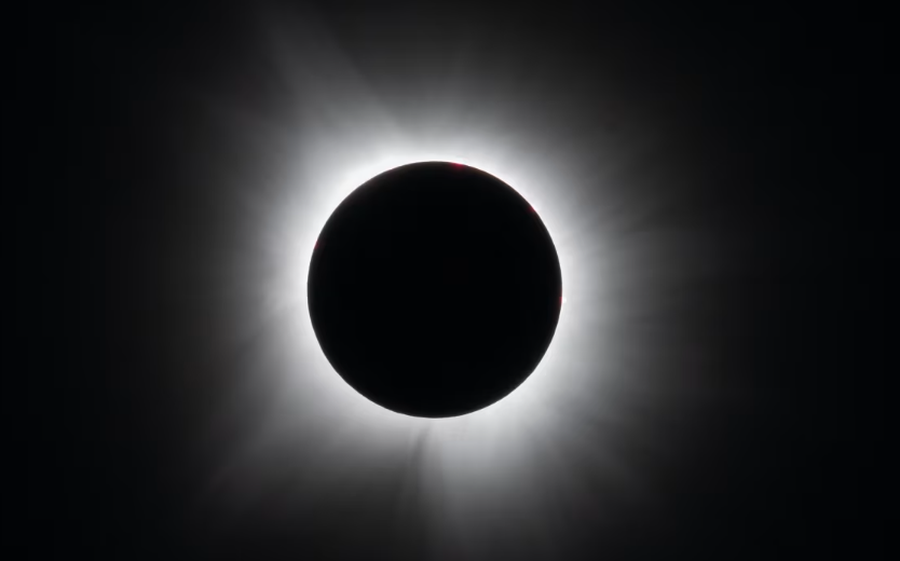
A total solar eclipse will create a rare spectacle in the sky on August 12, marking the first total solar eclipse visible in the world in more than two years.
A total eclipse occurs when the Moon passes between the Earth and the Sun, casting its shadow on the planet and completely blocking the Sun's light in certain areas. During this phase, known as "totality," the sky darkens for a few moments and the solar corona becomes visible.
According to NASA, observers in parts of Greenland, Iceland, northern Spain and northeastern Portugal will be able to see the total eclipse, while a partial eclipse will be visible in parts of Europe, Africa and North America.
A special event for Europe
The last total solar eclipse visible from continental Europe occurred in 2006. Meanwhile, this year's event has special significance for Spain, as it will be the first total solar eclipse visible from the Spanish mainland since 1905.
This is also the first of three solar eclipses that Spain is expected to experience until 2028.
"A total solar eclipse is one of those rare moments when millions of people can look up together and feel awe and curiosity," said Carole Mundell, director of science at the European Space Agency (ESA).
Where will the eclipse be seen?
The path of totality will stretch for about 8,300 kilometers. The phenomenon will start over the Arctic regions, pass near the North Pole and then continue over Greenland, Iceland, Portugal and northern Spain.
In Greenland, observers will have the chance to see more than two minutes of totality. In northern Spain, totality is expected to last about 20 seconds, depending on weather conditions.
In Spanish territory, the eclipse will pass over Galicia and then over the Balearic Islands, creating a special effect as it coincides with the evening hours and the approach of sunset.
For those not in areas where the phenomenon will be visible, ESA has announced that it will broadcast the eclipse live from the Javalambre Astrophysical Observatory in Spain.
When will the next eclipse occur?
According to NASA, the next total solar eclipse will occur on August 2, 2027 and will be visible from southern Spain, North Africa, Saudi Arabia, and Yemen.
Meanwhile, the United States will have to wait until March 30, 2033 to see another total solar eclipse, which will only be visible from Alaska.
How to observe safely?
Experts warn that the Sun should never be viewed directly without proper eye protection.
Observers should use certified eclipse glasses or special solar filters. Regular sunglasses do not provide the necessary protection and should not be used for this purpose.
It is also not recommended to view the Sun through telescopes, binoculars, or cameras without special filters, as the concentration of the rays can cause serious eye damage.
What can scientists learn from eclipses?
Solar eclipses offer rare opportunities to study the Sun and its corona, the outermost layer of the solar atmosphere.
During the August 12 eclipse, researchers plan to launch balloons to high altitudes to photograph the Moon's shadow and conduct scientific measurements in the atmosphere.
Part of the experiments aim to recreate the historic 1919 study, which helped confirm Albert Einstein's theory of general relativity.
The European Space Agency has also invited citizens to participate in scientific projects, measuring atmospheric changes that occur during temporary darkening of the sky.








Lini një Përgjigje