


 Shkruar nga Pamfleti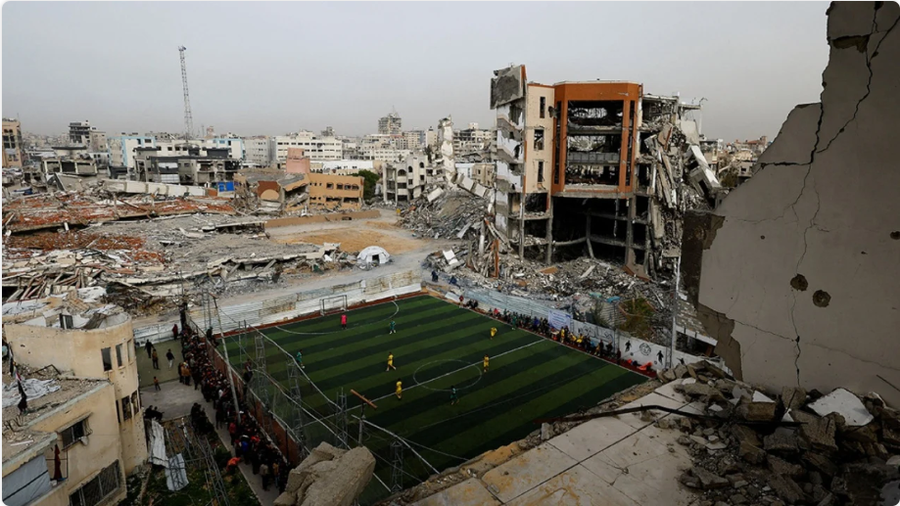
After a two-year hiatus, the first organized football tournament took place in the ruins of the Tal Al-Hawa neighborhood in Gaza City, in an environment dominated by destruction and insecurity.
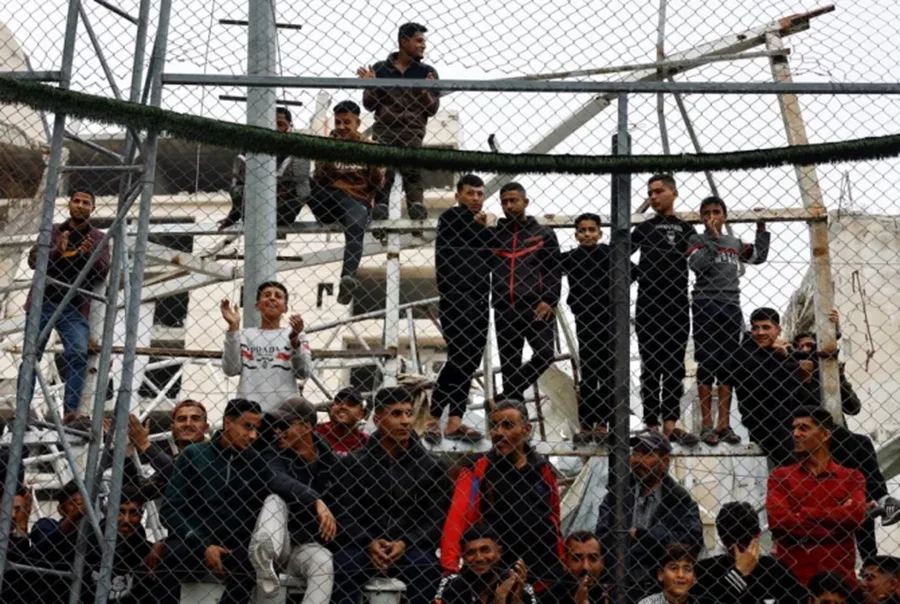
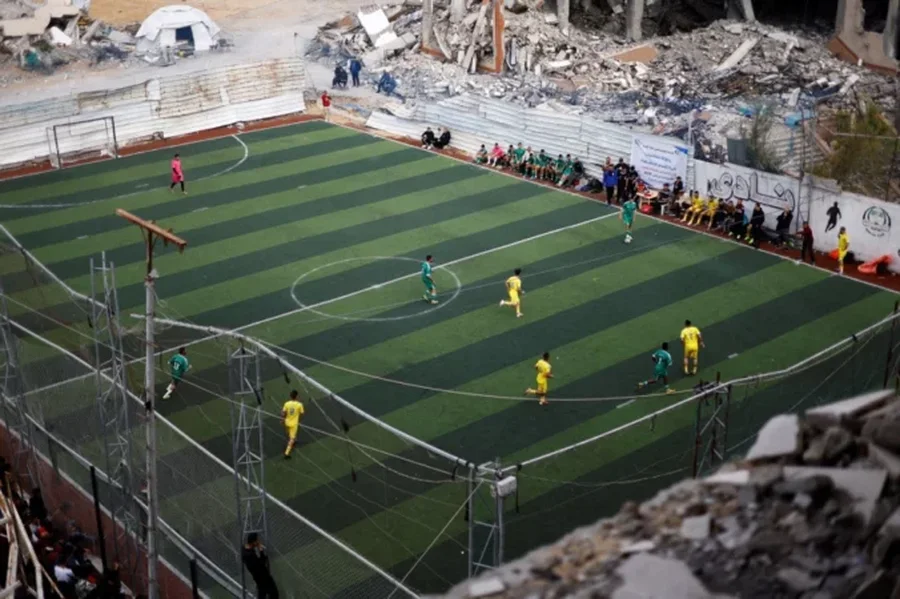
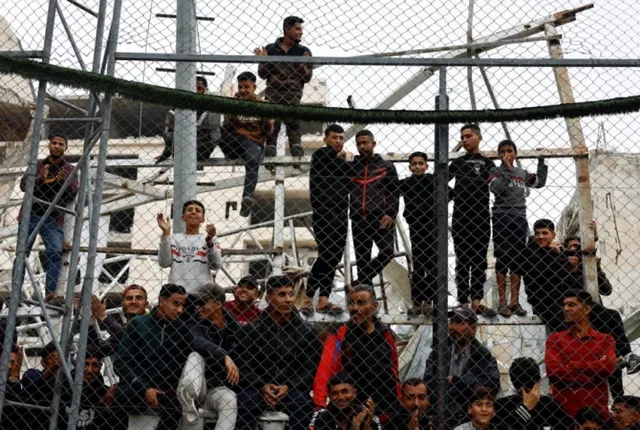
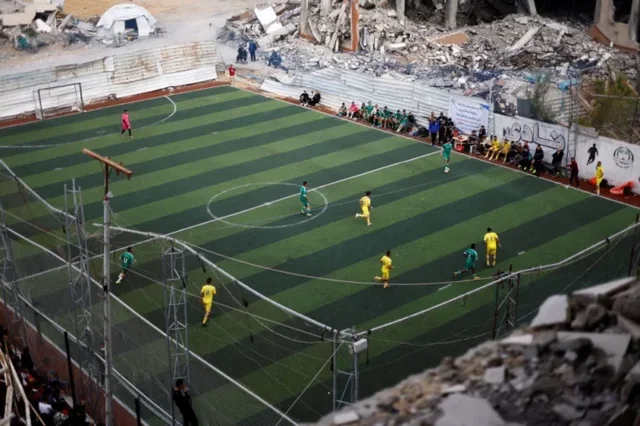
The scenes from the field are shocking: a plastic mat preserved in relatively good condition, dozens of people gathered near a makeshift metal fence, and ten young men on the field, focused on the game. For a few hours, football became an attempt to forget everyday reality.
However, around the field, the panorama was the same: destroyed houses and the ruins of war. In this context, the organization of the tournament was considered by the participants as a sign of a return to normal life, albeit a fragile normality.
Results take a back seat
The outcome of the matches was of secondary importance. According to the organizers and players, the development of the sporting activity itself was the main goal. The two matches of the tournament, Jabalia Youth–Al-Sadaqa and Beit Hanoun–Al-Shujaiya, ended in a draw.
Spectators cheered for every positive action, shaking the metal fence and beating drums, in an attempt to create the long-missing atmosphere.
" Confused. Happy, sad, happy," said 21-year-old Yousef Jedidiah, a player for Jabalia Youth, as he described the emotions of returning to the field. "People are asking for water, food, bread in the morning. Life is a little bit difficult. But there is a small part of the day left when you can come and play football and express a little bit of the joy that you have inside ," he said.
He added that the absence of teammates – killed, injured or away for medical treatment – makes the joy incomplete.
Reconstruction, still intact
Four months after a ceasefire ended intense fighting, reconstruction in Gaza remains limited. Israeli forces have reportedly ordered the evacuation of residents from a significant portion of the territory, confining more than two million people to a narrow strip along the coast, many of whom live in makeshift tents or damaged buildings.
The 9,000-seat Yarmouk Stadium is among the buildings destroyed during the war. The area where the playing field once stood has been turned into a shelter for displaced families, who live in tents pitched on the muddy ground.
To organize this week's tournament, the Football Association managed to remove rubble near one side of the field, install a new fence, and clean up debris from the damaged artificial grass.
Beit Hanoun player Amjad Abu Auda, 31, said participating in the tournament was a symbolic message. " Despite what happened and the devastation that hit us, we continue to play and live. Life must go on ," he said.
The tournament, although modest in size, for many residents represents an attempt to restore sporting activity and maintain a sense of community in extraordinary conditions.






Lini një Përgjigje