


 Shkruar nga Agron Alibali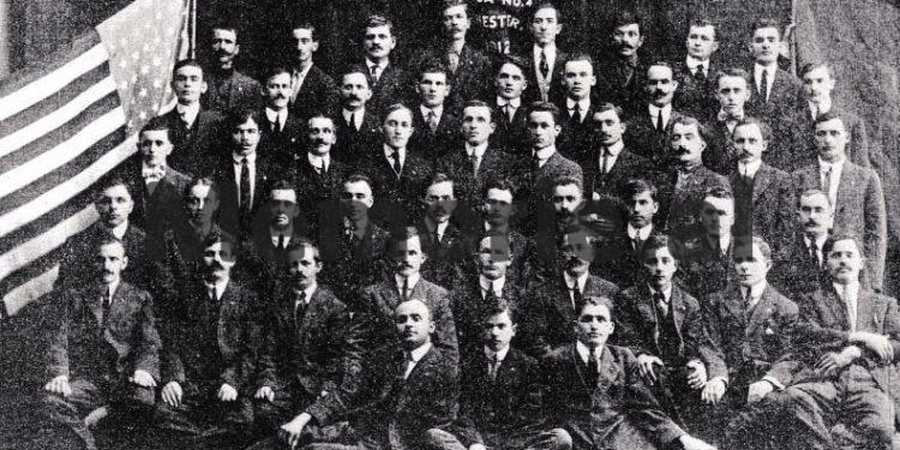
-According to American archival data-
During the last two years of his life, Faik Konica was under FBI surveillance and investigation. Relevant archival records shed light on the final moments of the distinguished diplomat, who had represented his small country for so long and with such dignity in the American capital.
Continued from the previous issue
Konica, Noli and Kostë Çekrezi
Another interesting piece of information in the Cleveland FBI office report was APNH’s meeting with an individual from Boston who was visiting Cleveland, Ohio on April 27, 1942. According to the report, the latter had known Konica for thirty years, and considered himself “a political opponent of Konica.” He explained to the Special Agent Konica’s alleged pro-Italian leanings. He mentioned that during the 1920s, when Konica lived for a time in Italy, he was called “Prince” by Italians.
The reporter presents himself as an official of an organization “based in Boston, Massachusetts”. All of the above information leads to the conclusion that the person in question was either Çekrezi himself, or a close associate of his, who also knew Faiku quite well. The rift between Noli and Konica on the one hand and Kosta Çekrezi on the other, is among the most tragic disagreements in the history of the Albanian-American diaspora.
It damaged the unification of the Albanian diaspora at a very delicate moment of the World War and to some extent prevented the formation of a government that was fully accepted by the Allies in exile. Well, these three had so many points in common with each other: that all three had completed their studies at Harvard University; that all three had been deeply involved with “Vatra” and “Dielli”; that all three had written extensively, in English and Albanian, on the Albanian issue; that all three had important connections in the American administration.
Çekrezi had been the first representative of the Albanian government in the USA since the early 1920s, when the USA had not yet recognized Albania, while Noli had been a representative in the League of Nations, and Konica had been Minister of Albania from 1926 to 1939. All three had had a difficult relationship with Zog, etc.
The origins of the rift between them are unknown, but it appeared irreparable, after Noli and Konica, seriously concerned about the risk of Albania's disintegration, declared their support for Ahmet Zog in 1942, a position that Çekrezi strongly opposed. It should be noted that a year later, Çekrezi finally withdrew from his intransigent position and committed himself to cooperating with "VATREN" and to agreeing with its position towards King Zog.
Gjithashtu, nga fundi i viteve 1950 Çekrezi iu drejtua me një letër pajtuese Nolit, i cili nga ana e vet i kreu plot devotshmëri dhe nderim shërbesat fetare në funeralin e Çekrezit.
Kontakti i pretenduar i Konicës me konsullatën italiane në Nju Jork mori një kthesë gati komike pak kohë para vdekjes së Faikut.
Më 28 shtator 1942, d.m.th. kur Konicës i kishin mbetur edhe 48 ditë jetë, një i njohur i Konicës i quajtur Qemal Veiseli, shtetas amerikan i lindur në Shqipëri dhe me banim në Nju Jork, i shkruan me mjaft elokuencë, por edhe me njëfarë zemërimi Sekretarit të Shtetit Cordell Hull, duke u ankuar për Kostandin Çekrezin.
Ka të ngjarë që në rrethin e ngushtë të shqiptarëve të Amerikës, shumica e të cilëve kishin dashuri dhe respektin më të madh për Konicën, të ishin marrë vesh akuzat absurde për lidhjet italiane të Faikut. Letra, e cila përmend edhe njëfarë Asllan Dragoti, që duket se është i ati i shqiptaro-amerikanit të njohur Stan Dragoti, vërteton se akuza ndaj Faikut ishte e pambështetur, në mos krejt e pathemeltë, dhe se i tërë hetimi ndaj tij nuk ishte tjetër veç humbje kohe dhe mjetesh financiare.
Vdekja e Faikut dhe mbyllja e hetimit
Sikurse kemi përmendur tjetërkund, në ora 19:30 të 15 dhjetorit 1942, një telefonatë krejt e papritur mbërriti në zyrën e shefit të F.B.I.-së, z. J. Edgar Hoover në Washington, D.C. Thirrësi i panjohur informonte se Faik Konica atë ditë, ishte gjendur i vdekur në banesën e vet në kryeqytetin amerikan, dhe se “kishte marrë informacion se disa persona të panjohur, po largonin sende personale të Konicës nga shtëpia, pa kryer formalitetet e duhura”!
Për këtë arsye, ai kërkonte nga F.B.I.-ja, që “të ndërhynte për të ndaluar këto veprime”. Përgjigja qe mori ishte se “Byroja nuk kishte juridiksion në çështje të tilla”. Katër ditë më vonë, me 19 dhjetor 1942, dosja hetimore ndaj Konicës u mbyll zyrtarisht. Një raport i asaj date i referohet edhe nekrologjisë së Konicës, të botuar në gazetën “The Washington Post”.
“Informacioni i mësipërm u konfirmua edhe nga kontakti telefonik që bëmë në adresën e subjektit (d.m.th. Konicës) tek 1530 16th Street, N.W.”, – shkruhet më tej në raport. Dokumenti i fundit në dosjen hetimore ndaj Faik Konicës është një Memorandum pas vdekjes për Drejtorin Huver, nga ana e Zyra e Drejtorisë së Luftës e Departamentit të Drejtësisë. Memorandumi informon Huver-in se Konica, Noli, “VATRA” dhe “Dielli”; “ishin në shqyrtim sipas Ligjit për Regjistrimin e Agjentëve të Huaj të vitit 1938, i ndryshuar”.
Aty përmbahet një përmbledhje e mirë-informuar e gjendjes brenda komunitetit shqiptaro-amerikan në fund të vitit 1942 dhe përpjekjeve të tij për të mbështetur Mbretin Zog dhe bashkimin dhe tërësinë territoriale të Shqipërisë. Përmbledhja i referohet dy “punimeve (releases)” të OSS-it të datave 12 tetor dhe 12 nëntor 1942, të cilat ndodhen në arkivat amerikane.
It should be kept in mind that the OSS drafted similar works for other communities, such as the Greek-American community, and these activities were necessary given the circumstances of World War II.
The memorandum also mentions a Proclamation of King Zog published in Dielli 1942 as well as an article by Qerim Panarit of September 30, 1942 explaining "the history of negotiations between various leaders [of the Albanian-American community, my explanation, AA] in the United States."
The two rival groups, it is further mentioned there, were unable to resolve “their differences” at a meeting held at St. George’s Church in Boston on September 12, 1942. The memorandum also mentions a July 1942 letter from Sir Edward Boyle of Dorchester, England, who was Chairman of the Balkan Committee, to Çekrez, Noli, and Konica, which “demanded Albanian independence and Albanian cooperation in the United States, Egypt, Turkey, and elsewhere.”
The memorandum concludes that, since “VATRA” appears to be interested in the political situation of a foreign country and since it appears to be in contact with a support group outside the United States…[it] may come under the Foreign Agents Registration Act of 1938.”
According to the Memorandum, it appears that summaries of copies of early FBI investigative reports regarding "VATRE" were also requested.
In his reply of March 3, 1943, Mr. Hoover reports that most of the reports on Konica were forwarded to the Division of the Records.
Mr. Hoover also encloses a photo-static copy of a report dated August 16, 1923 from Boston, drawn up by a Special Agent, and entitled “'The Sun' Newspaper of the Pan-Albanian Federation of America, 456, Tremont Street, Boston, Massachusetts; ALLEGED VIOLATIONS OF NEUTRALITY LAWS”.
From American documents from the period 1910-1920, it is clear that "VATRA" and Noli were targeted by so-called "Epirotic" groups in America, which tried unsuccessfully to turn the American administration against Noli, Konica, "Vatra" and "Dielli", raising completely baseless accusations against them. However, the aforementioned report is not available./ Memorie.al


Lini një Përgjigje