


 Shkruar nga Pamfleti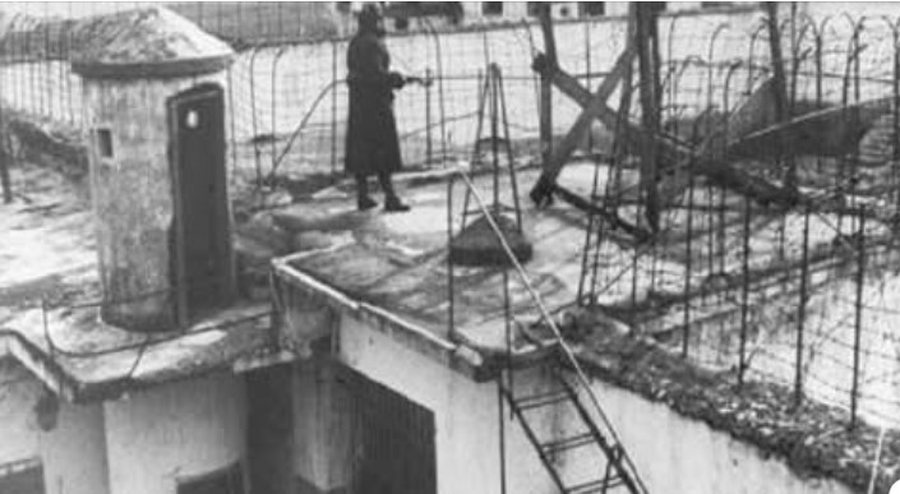
"I left Elbasan on March 8, 1902. My father Emin Haxhiademi, whose patriotic activity began in 1877, that is, before the Congress of Prizren, is known as a close associate of Kristoforidhi, and the second patriot after him in seniority in this city". This is how Et'hem Haxhiademi, the first Albanian playwright, begins his biography, showing the beginnings of a turbulent life, but also defining for his later work. As he meets the remaining relatives of the Haxhiademi family, a photo of the man who left his mark on Albanian literature catches his attention.
His European attire, stoic attitude and especially his gaze are also the elements that distinguish him as a man who would bring much, but would take so little from the rebellious life. With shyness, his brother Selaudini, recalls the few moments he spent with him, also bringing to mind the gloomy period of imprisonment, which also marked his death at the age of 63.
According to witnesses and official sources at the time, his death was the result of an attack, but how true this was for the very nature of the dictatorship, when people disappeared very easily, was never confirmed, leaving the death of the persecuted Et'hem Haxhiademi a mystery.
Childhood and life
Childhood would decide everything about his future, bright and bitter at the same time. This was confirmed by Et'hemi himself, in the manuscript sent to Lasgush Poradec, entitled; "Notes on my life". The first student at the newly opened 'Normal', he remembers the first Albanian books he read, privileged by his father, who used all the magazines and newspapers of the time in the Albanian language.
Et'hemi, being the son of a prominent patriot and one of the founders of the 'Normale', would have been the first to be enrolled in this school. "I learned the Albanian language from my father" - he says - even before the proclamation of the Hyrrieti, being also the first student of the Albanian school in Elbasan in 1908". The existence of a telegram sent by the great Faik Konica also confirms this historical fact, but which was never signed by the regime in power.
In 1919 he began his studies in Lecce, Italy, at the gymnasium, but the time of the exams would be an unfavorable moment for him, when the Albanians were being persecuted by the Italians because of the Vlora War. But Et'hemi managed to resist the pressure, being the only one who could pass the class out of many other Albanians. Then Austria awaited him, where he would continue to finish the gymnasium, and the works of Greek tragedians in Latin and German.
In 1924 he was in the city of Berlin, continuing his university studies in law, as he says against his own will, but with the will of his parents. The polyglot from Elbasan never forgot literature in different languages, especially the ancient period. During his stay in the German capital, tragedy suddenly became part of his life. The girl he was in love with died, and this marked a blow for the young Et'hem, who in 1927 returned to Albania and a year later, was appointed sub-prefect of Lushnja.
In 1933, he was in Gjirokastra as the chief secretary of the prefecture. At this time, it was the kingdom of Zog that ruled the country and the King himself had considerations for Et'hemi for his preparation. It would be precisely this time, despite the fact that Et'hemi never got involved in politics, that would decide his fate. During the Italian occupation, Haxhiademi remained indifferent, not participating in any movement, but in his thoughts, the ballistic movement was considered right.
It would be his stance during the fascist occupation that also led to his imprisonment in the Burrel prison during the communist dictatorship and that caused so many problems for the family. The sudden death was determined to be a heart attack, when Haxhademi had not suffered such suffering. This is where suspicions of a possible murder arose, but according to family members, this was never confirmed.
TRAGEDY
Some old books and some newspapers of the time would give Et'hemi the nourishment of the Albanian language. "They were poor - Et'hemi expresses in his correspondence, - but for us they were very rich and my father kept them in a special room, where I would read them secretly". Perhaps this is where the love for books and especially for drama was born, of which Et'hemi, as a child, read very little, but this was deeply marked in his soul, thus writing the future.
The play translated from Turkish, “Besa”, by the great Sami Frashëri, would also be his first introduction to drama in Albanian, and to drama in general. Speaking about the play “Besa”, he says that its lines, its emotions, were great, so he closed himself off to finish it in the room that was also the shelter for books. The impressions of this play would be such that Et'hemi, at the age of 14, decided to write his first play.
"One day I sat down at a table and began to write a play, of course, with a national subject, as was the case at the time. I stayed like that for days, sometimes even skipping school without attending. When people at home asked me what I was doing, I wouldn't tell them. Finally, after a couple of months, I finished the play and showed it to my father, who was capable of judging it." But his majestic and very determined father does not accept the idea that his son could write such a difficult genre and tells him that this is ridiculous and deserves to be burned.
Duke iu bindur babait të tij, Et’hemi vendosi ta digjte atë dramë, por jo dëshirën për të shkruar vepra dramatike. Ndërsa studionte në gjimnazin e Leçes, lexoi “Bukolikët” e Virgjilit, vepër të cilën vendosi ta përkthente kur të mësonte mirë latinishten. Dhe me të vërtetë vendosmëria e tij nuk kishte fund. Pas tre vitesh Haxhademi i përgatitur tashmë përktheu “Bukolikët” nga versioni origjinal në hekzametri, gjë që nuk e kishin bërë deri atëherë, asnjë nga shkrimtarët e njohur.
Këtu nuk mungojnë vlerësimet për të, pasi për kohën, asnjë vepër latinisht nuk kishte ardhur në shqip dhe sidomos asnjë shkrimtarë nuk kishte mundur të përdorte hekzametrin. Në kohën e studimeve të larta në Berlin, Et’hemi me dashurinë e madhe për legjendat antike, arriti të trajtoj veprën e tij të parë tragjedi “Uliksi”, e cila me plot gojën ishte një frymë e Eskilit, pas mijëra vjetësh. Tragjeditë kishin në dorë, zemrën e Haxhiademit të ri dhe mund të luanin më të.
Në dorëshkrimin e tij, ai rëndit edhe shkrimtarët e zemrës, sidomos ato antikë, por nuk harron të vlerësojë kolosët si Shekspiri. Vepra e ardhshme do të ishte pikërisht një nga personazhet stoikë të tragjedisë së madhe greke, ”Akili”. Më pas do të vazhdonte me tragjedi të tjera, si “Aleksandri”, “Pirroja”, “Skëndërbeu”, të cilat duke ndjekur ritmikën dhe tisin e mjegullt të tragjedisë greke, e sollën atë në ditët tona dhe sidomos nën petkun shqiptar.
Korrespondenca letrare me Lasgushin
Haxhiademi: “Tragjedia fryma ime e të jetuari”
Lasgushi në korrespondencën e radhës i kishte kërkuar Haxhiademit vepra të tij, dhe ky me kënaqësi i kishte nisur disa nga rreshtat e shumtë që nuk panë dritën e botimit. Jeta plot vuajtje dhe një tragjedi personale e ardhur me vdekjen e personit të dashur në Gjermani, bëri që Et’hemi të shkruante, jo vetëm tragjedi, por edhe elegji, që e renditën atë si një poet elegjiak. Një elegji nën titullit; “Galates”, sjellë edhe dhimbjen e poetin për dashurinë e tij të humbur, për vajzën e dashur.
Ishte në Shqipëri tashmë dhe i këndonte në gjuhën e tragjedive të famshme greke. “Nimfat e Shkumbinit”, ishte dhe vepra që solli antikitetin në lumin letrar shqiptar. Nimfat e bukura vazhdonin të laheshin në ujin e lumit përgjatë viseve shqiptare dhe gjahtarët duke mos kuptuar vlerën e këngës së tyre, i “rrëmbejnë”. A nuk është kjo një ndodhje shqiptare”?- vazhdon letrën drejtuar Poradecit, nga emri i harruar i tragjedisë shqiptare, Et’hem Haxhiademi.
Por edhe nëna si një portret gjithmonë i dashur dhe i dhembshur vjen në vargjet elegjiake të shkrimtarit në vdekjen e saj. “Nata e Zezë” do të ishte edhe vajtim për nënën e tij, që Haxhiademi e përcakton si njeriun që ka dashur më shumë në këtë botë. Edhe një odë për Naim Frashërin, nuk mungoi në veprimtarinë letrare e cila do të shënonte jetën e tij.
"In short, as per your message in ten pages, this is my artistic life. In the letter you sent me, you gave more importance to lyrical poems. But for me, the greatest importance is to tragedy," concludes the letter of the tragedian who dared to challenge the greats of antiquity and who throughout his life did not forget his passion for tragedy, something for which, as he himself says in his correspondence and memoirs; he was prepared.
The testimony of Selaudin Haxhiademi, about those few moments with his imprisoned brother
It was precisely Selaudin, who, with his silent and taciturn nature, qualifies his brother by protecting him from distortions and superficial evaluations. According to him, many of his works have been destroyed by envious people and his fate was often sealed by ill-wishers. "The great remains great, and his evaluation cannot be a favor - he continues, - we do not like superficial evaluations. In the few moments that I knew my brother, I realized that he was a man who had not thought of taking advantage of, or escaping situations.
When we met him in Burrel prison, the four children and the mother, he asked us to be silent, so that we would not worry about him and especially not to write anything to him, since correspondence never fell into his hands. The only moment that his fellow sufferers in Burrel remember was the day of Fan Noli's death.
According to him, Noli must have been older than 83, since he could not be ordained a priest at the age of 23. Monism itself, by imprisoning him, managed to exploit his translation, for which he was more dedicated than anyone else, especially regarding ancient works. Many of his translations during his imprisonment either took on a different name or were not published by the monist dictatorship.
Having studied in Western countries, Haxhademi was a man of broad knowledge and in terms of politics, but he did not get involved in any of the movements, staying away from the war and especially away from the communist movement. This damaged him greatly, leading to prison and death. He did not receive any decorations, he was not recognized, while his brother who passed away very soon, was from a heart attack.
Emini, following in his brother's footsteps, also became mayor during the democratic era. Great but forgotten has been defined by literary critics as the name of Et'hem Haxhiademi, one of the purest figures, with unimaginable values, as he dared to write tragedy, but was the most unfortunate among Albanian writers, suffering the tragic fate of death in prison./ Memorie.al






Lini një Përgjigje