


 Shkruar nga Pamfleti
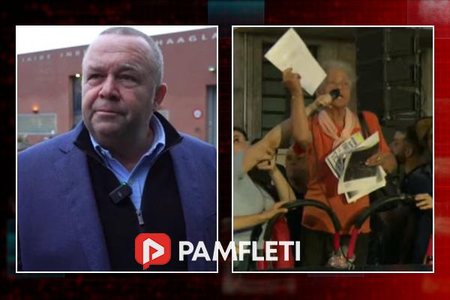
Journalist Klodiana Lala stated that Albania is going through one of the most difficult political and institutional moments in recent years. She said that the government of Prime Minister Edi Rama has lost legitimacy and that the position of the head of government has been weakened both domestically and internationally.
Lala stated that Edi Rama no longer controls the political narrative as before and that the citizen reaction has changed the relationship between the government and public opinion. According to her, the international support that the prime minister has enjoyed over the years is no longer the same, while some of his initiatives, including the agreement on the Gjadri camp, have become political costs for him.
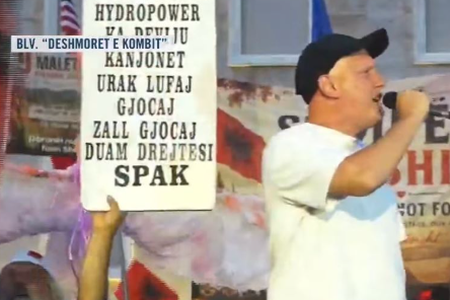
In her analysis, the journalist also focused on the work of SPAK, which she described as the most important institution for the future of the country. She assessed that the special structure has proven that it is able to investigate even the highest levels of power, mentioning investigations against senior officials and investigative actions that, according to her, can produce important developments.
Lala emphasized that citizens no longer expect only a crackdown on organized crime, but demand that justice focus on corruption at the highest levels of government. According to her, the public's expectation is that investigations will target ministers, deputies, and senior officials suspected of abuse of office and public funds.
She added that SPAK's success will be measured by its ability to crack down on the culture of impunity and investigate those who have been considered untouchable for years. According to Lala, justice institutions have a historic responsibility to restore citizens' trust in the rule of law and to guarantee that no one is above the law.
"Because, let me tell you why it's valuable. Because, as she said, the director general's chair rotates very quickly, she said; no more than once every two years here in Albania. And it's definitely a very big challenge. I understand the difficulty that each of the police officers, who are part and have been part of the Police, has to do this. But I think that one of them, maybe Mr. Hita, has hit bingo, if I may say so, to have the courage to do it. Otherwise, what else can I say? If we tell Albanians that this cannot be done, we will have to go to anarchy. I don't know how else to say it. But I would like them to have the professional courage and moral integrity to do this, because Albania is really at a very difficult point. Albania is really at a difficult point. The government no longer has legitimacy. The situation is completely devastated.
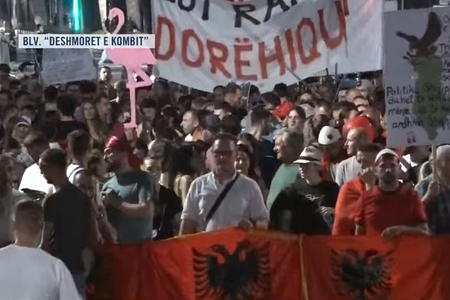
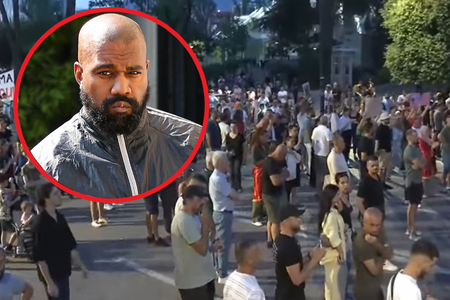
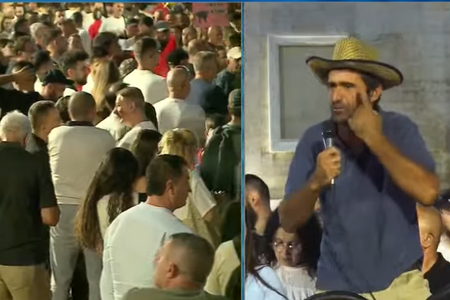
No, even as a journalist I can give this answer. Listen, I think that Mr. Rama is isolated from international partners or from the international arena. If you look at it, there are very few visits. The problem is that Mr. Rama is no longer the leader who has told Albanians for so many years: 'I made Albania and recognized it in the international arena'. There have been interesting moments, but he no longer has that power in the international arena and all the efforts he has made, from the camp in Gjadra with Meloni and others, have in a way come back to haunt him. Even if he stays until the end of his mandate, after this protest Edi Rama will never be the one who will control the narrative. It will be the citizens who have taken the fate of the country into their hands.
"I think SPAK has all the maturity to make those important strikes as well. Investigations against high-ranking figures show that the structure can reach the highest levels of power. Today, Albanian citizens no longer expect only strikes against organized crime, but they want to see investigations into corruption at the highest levels, ministers, deputies and officials who have abused their office. If SPAK manages to strike those who were considered untouchable, then I think it will have fulfilled its mission and will have a decisive role for the future of the country," she told "Syri TV".



Lini një Përgjigje