


 Shkruar nga Pamfleti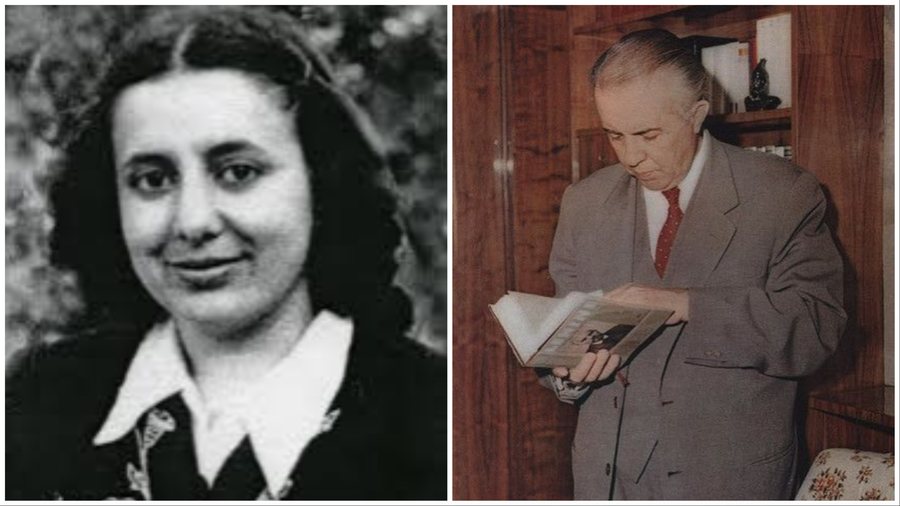
On August 13, 1983, Musine Kokalari passed away. She was the first woman writer in the history of the Albanian nation. Musine Kokalari was one of the 1,000 Albanian women and 1 of the 30 writers who were arrested and sentenced to prison as opponents of Enver Hoxha's communist regime.
In 1921, her family returned to Albania and settled in Gjirokastër, where Musineja attended primary school. He went to high school at the "Queen Mother" institute and then went to study at the University of Rome at the Faculty of Literature and Philosophy, in Italy, which he finished with high results. Her family settled in Tirana nine years after they returned to the Motherland. Her brother, Vejsimi, had a bookstore in the capital in the mid-30s. In 1937, she graduated from the "Nana Mbretneshë" Women's Institute and then continued her studies at the University of Rome, in Italy, which she graduated with honors in 1941 with a thesis on Naim Frashëri.
Together with Mit'hat Aranitin and other friends, he founded the Social Democratic Party in 1943. On November 12, 1944, the brothers Muntaz and Vejsim Kokalari were shot without trial. After the Second World War, he was invited by Sejfulla Malëshova to participate in the League of Writers. Persecuted by the shooting of her brothers and being the founder of the Social-Democratic Party and the "Voice of Freedom" press organ, she was arrested on January 17, 1946 and kept in prison for 17 days. On July 2 of the same year, he was sentenced to 20 years in prison by the military court of Tirana as a saboteur and enemy of the people. Shortly before the arrest, he sent a letter to the Allies, who were still in Tirana. In her letter she demanded free elections and freedom of expression.
In court, Kokalari took this position: "I don't need to be a communist to love my country! I love my country even though I am not a communist. I love his progress. Even though you won the war, even though you won the election, you can't persecute those who have different political opinions than yours. I think differently than you, but I love my country. You are condemning me for my ideas. I don't ask for forgiveness, because I haven't done anything wrong!".
In 1962, after serving 15 years in prison, a new decision sentenced him to 5 years of exile in the district of Mirdita. Kokalari himself wrote to Enver Hoxha, with the request that her deportation be considered, since, as he writes, she has paid 15 years in prison for her past actions, while deportation now seems incomprehensible. In addition, Kokalari asks Hoxha to return her folklore manuscripts that she had collected. The letter is kept in the fund of the former Party Archive in AQSH. In 1964, after 18 years of imprisonment in Burrel Prison, isolated and under observation, she spent the remaining 19 years of her life interned in Rrëshen. Musineja worked as a sweeper for 11 years in the construction company in Rrëshen, among bricks, mortar and concrete. When his internment ended in 1979, he was told to go to Gjirokastër, but since he was not allowed to go to Tirana, he refused to move from Rresheni. He passed away on August 13, 1983.
Her first work, "As the old woman tells me" published in the political and literary weekly "Bota e re", in July 1940, was, in fact, a draft made in the upper classes of the Women's Institute. After it was published it was followed by a critique by Lasgush Poradec on the 30th of that month. In 1944, she published her second book "Around the Hearth". In January 1945, Musine Kokalari's third book "...sa u tunt jeta" was published. Musine Kokalari was one of the first 30 imprisoned writers to be registered in 1960 by the Community of Three (the forerunner of the PEN Club). In 1993, Kokalari was declared posthumously "Martyr of Democracy" by President Sali Berisha. In 2008, the acting President Bamir Topi awarded him the high title "Honour of the Nation". A school in Tirana, the Cultural Center in Gjirokastër, a street in Rrëshen, a street in Pristina, a neighborhood library in Tirana bear her name.
"I don't turn to anyone for my health, much less to the one who had the power to ease my sentence." This is what Musineja wrote just a short time before she died, letting it be understood that "he" was none other than Enver Hoxha, who took care of her punishment until the end. Considered an opponent of the communist regime, she was sentenced to 20 years in prison and then exiled for another 22 years to Rrëshen, where she died on August 14, 1983, from cancer. Contemporaries show that he was not even given the opportunity to be cured in the oncology hospital. She died alone and was buried by gravediggers. When she was exhumed years later, her hands were found to be bound with barbed wire.
LETTERS
Until the communist regime was installed, Musine Kokalari was a young writer with many prospects. She had published three books: "What old mother tells me", Tirana, Bota e re, 1940, "Rreth vatre" 1944 and "Sa u tund jeta" 1945". But after taking power, Enver Hoxha took revenge on Musina Kokalari. On November 12, 1944, two brothers from Musine were shot without trial as enemies of the people. Two years later, Musineja was also arrested, as the founder of the Social Democratic Party and an opponent of the installed communist system.
Ajo deklaroi në sallën e gjyqit: “Nuk kam nevojë që të jem komuniste për ta dashur vendin tim! Unë e dua vendin tim, edhe pse nuk jam komuniste. Unë e dua progresin e tij. Edhe pse ju keni fituar luftën, edhe pse ju keni fituar zgjedhjet, ju nuk mund t’i persekutoni ata që kanë mendime të ndryshme politike nga ato tuajat. Unë mendoj ndryshe nga ju, por unë e dua vendin tim. Ju po më dënoni për idetë e mia. Unë nuk kërkoj falje, sepse unë nuk kam bërë asnjë faj!”. Pas këtyre fjalëve Musine Kokalari u dënua me 20 vjet burg. Ajo kaloi 15 vjet si në burgun e Burrelit. Sapo u lirua, u internua në Rrëshen dhe u detyrua të punonte si pastruese e rrugëve të qytetit. Në këtë moment ajo i shkroi një letër me 4 faqe Enver Hoxhës, në të cilën i kërkoi të mos internohej, sepse e kishte përfunduar dënimin e vet. Përmes kësaj letre të shkruar nga vetë Musineja, ajo lutet që të shqyrtohet internimi i saj, pasi siç shkruan, për veprimet e dikurshme ka paguar 15 vitet burg, por për të internimi tani duket i pakuptueshëm. Përveç kësaj, Kokalari i kërkon Hoxhës që t’i kthehen dorëshkrimet folklorike që kishte mbledhur. Mes të tjerave në letër ajo ka shkruar: “Kur lexova fjalinë tuaj se pas dënimit të çdokujt nuk do të kishte më as ndjekje, as pengesa. Burgun e mora si një borxh që duhej larë. Vetë veprova, vetë e pagova. Por dënimi i dytë nuk është trajtim i drejtë. Prandaj, ju lutem, shqyrtojeni edhe një herë, sepse, nëse ka arsye tjetër, unë jam gati të përballem”.
“Në qoftë se unë si e internuar, nuk kam të drejtë të merrem publikisht me lëvizjen e librave, besoj se nuk më ndalohet që orët e lira të jetës sime private të merrem me metariale folklorike. Përse vallë të mos m’i jepni? Përse të bëhet ky persekutim?”. Pas kësaj letre Enver Hoxha nuk denjoi t’i kthente përgjigje. Diktatori mësohet të jetë shprehur: Akoma gjallë qenka kjo? -Musine Kokalari vdiq në Rrëshen, në internim, 21 vjet pas dërgimit të kësaj letre dhe 2 vjet para se të vdiste diktatori Hoxha. Ajo vdiq e izoluar dhe e përndjekur, duke shënuar një rast nga më të rëndët të përndjekjes së intelektualëve dhe një femre gjatë regjimit komunist.
Vite më parë historiani dhe studiuesi, Uran Butka, në 100-vjetorin e lindjes së Musine Kokalarit bën publike letrën që vëllai i saj, Muntaz Kokalari, ka shkruar tri ditë para arrestimit, duke treguar arsyet e persekutimit të fisit Kokalari. Prejardhja e familjes së nderuar Kokalari, krahasuar me atë të Enver Hoxhës, por mbi të gjitha idetë e saj liberale, formimi në Perëndim dhe krijimi i Partisë Socialdemokrate ishin arsyet e armiqësisë dhe luftës së fortë që kreu komunist bëri ndaj Musinesë dhe familjes së saj, duke i pushkatuar dhe internuar. Ishte Musine Kokalari, që përmes një platforme të opozitës së bashkuar, e cila kërkonte qeverisje demokratike, zgjedhje të lira dhe njohje nga fuqitë e mëdha të neutralitet të Shqipërisë.
DËSHMIA
Bibika Kokalari is the daughter-in-law of the Kokalaris, but she was destined to be one of the people who would see Musine more often, and she would even trust her husband, Platon, with manuscripts and some personal items that they keep fanatically even today. In 2017, precisely on the 100th anniversary of Musine Kokalari's birth, Bibika recounted her acquaintance with her and the last days of the writer and politician, who breathed her last in exile, in Rrëshen, away from her loved ones. But what was the last meeting in Musine? "I went in July. In several letters, one after the other, she begged us to go get some of her things. She had prepared the manuscripts and some of her things, like this ring, which belonged to Musine's mother.
He wrote to us again and told us to come because I still have some things to give you. However, I went to Vlora to visit my parents and we could not go again, because she passed away on August 13, 1983. We were still in the village. On Sunday the post office did not work, on Monday when the telegram came, we started, but everything was over and she was buried. When I went to Canada 6-7 years ago, I found there the gravedigger Gjergji Gjergo, the son-in-law of Beqir Balluk. He was also interned in Rrëshen. The municipality told him to open the grave at the end, because they thought it was water, but, in fact, it was pumice, very hard and they barely opened it. "Even where they wanted to punish him, they still couldn't punish him", he told me. said Ms. Kokalari.
She added that: "Musineja gave us many things, which even though I did not know that this day would come, I have kept them. She herself left written things for the museum. A sheet and a belt that he had in Rrëshen have been exhibited. I have her manuscripts, almost unpublished. A few things have been published, some poems or "How the Social-Democratic Party was born", which was taken care of by my husband, Plato, who often came to Rrëshen. There are fairy tales, riddles, rituals of weddings, death, birth. But they need a researcher to be published". Regarding her living conditions, Bibika said: "Musineja has changed 10 houses. Last night I read in a manuscript of hers, where she said that she had changed 10 houses in Rrëshen. I once found it in an old, very bad house. From there they took him somewhere else, in slightly better conditions. There was a room with few things: a wooden bed, a bread rack with a wire mesh, a table, two chairs, an old stove." / Panorama Newspaper






Lini një Përgjigje