


 Shkruar nga Pamfleti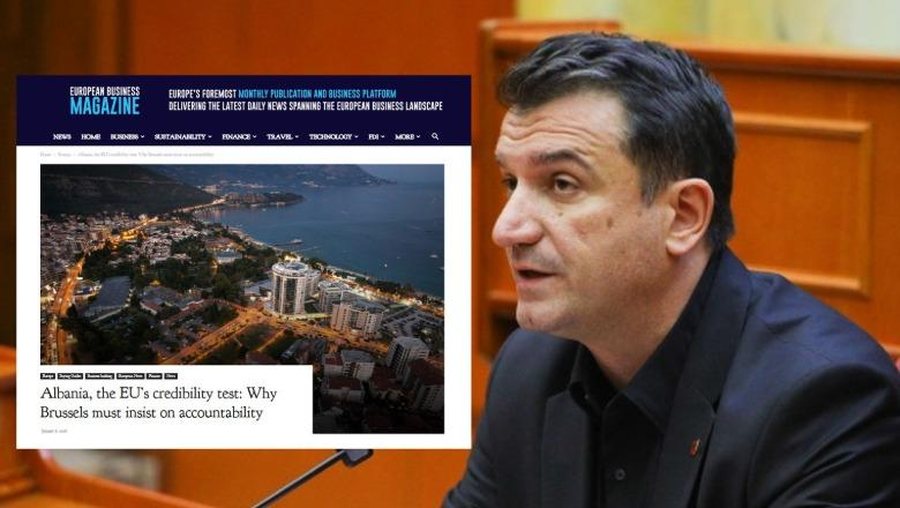
Why does weak accountability in Albania systematically undermine EU investment flows, market confidence, and the credibility of the enlargement process?
Albania's application to join the European Union is increasingly becoming a defining test for the credibility of the EU's enlargement process.
At the same time, this application is becoming an issue of economic governance and investor confidence, with direct consequences for EU funds, capital flows and market stability. For years, Brussels has positioned the Western Balkans as a front for the spread of stability, democracy and the rule of law in Europe. But recent developments, including a high-profile case involving Tirana Mayor Erion Veliaj, highlight deep governance challenges that the EU cannot afford to ignore.
Veliaj, a three-time mayor and a key figure in the Socialist Party of Albania, was arrested on February 10, 2025, by the Special Structure Against Corruption and Organized Crime (SPAK). Since his arrest, he has been held in detention for almost a year without formal charges being filed in a timely manner and without being given alternative measures such as conditional release or meaningful access to his international legal advisors.
Many have described his arrest as politically motivated persecution, while this prolonged detention raises serious concerns about due process and proportionality, essential European standards that all candidates for EU membership are expected to respect and that form the basis of the legal certainty necessary for long-term investment decisions.
From the beginning, Brussels has considered Albania's justice reforms essential to its path to membership. These reforms were also designed to assure EU taxpayers, development banks and private investors that public institutions in Albania could manage funds in a transparent and predictable manner.
However, the way the Veliaj case has been handled shows that anti-corruption instruments can be used selectively. SPAK, the institution that was strengthened with EU support to fight corruption, is now facing criticism for its handling of the investigation and detention. Observers say Veliaj’s continued detention, almost a year after his arrest, and the denial of standard legal guarantees undermine confidence not only in the fairness of the process, but also in the broader legal framework that these reforms are intended to establish.
This matters for the EU beyond Albanian domestic politics. Enlargement is essentially a system of conditions, where progress towards membership is linked to demonstrable reforms and respect for democratic norms. This conditionality also governs access to pre-accession assistance, EU guarantees and the credibility needed to attract foreign direct investment. If Brussels fails to raise serious concerns about the rule of law in the Albanian capital, especially in a case with clear procedural irregularities, it risks sending the message that these conditions are negotiable. Such ambiguity weakens the EU’s influence in enforcing sound governance and protecting the effective use of European funds.
The Veliaj case has alarmed legal experts and civil society precisely because it blurs the line between legitimate enforcement of anti-corruption law and politically motivated prosecution. Veliaj’s lawyers have recently appealed to Albania’s Constitutional Court to expedite the review of his detention, arguing that delays in resolving legal challenges harm not only individual rights but also the effective administration of Tirana. For businesses and investors, the prolonged institutional paralysis in the capital also raises concerns about municipal decision-making, public procurement, and regulatory continuity. The Constitutional Court itself has intervened in political decisions related to the case, reinstating Veliaj as legitimate mayor after an attempt to remove him was ruled unconstitutional. These contradictory judicial signals highlight institutional tension, not clarity.
The EU’s enlargement framework is already under critical scrutiny. Many member states are wary of further enlargement of the bloc amid internal challenges, and support for new membership depends on guarantees that candidate countries will not export weak governance or democratic instability within the bloc to the EU. Albania has the highest pre-trial detention rate in Europe, and the extraordinary use of this instrument in the Veliaj case raises alarm bells about proportionality and judicial independence, both essential for maintaining predictable business environments and manageable levels of risk.
Brussels should avoid the trap of selective silence, praising progress where it exists while ignoring obvious violations where domestic politics obscure an objective assessment. To ignore the obvious procedural problems in the Veliaj case, or to treat them as purely domestic matters, would undermine the very rationale of the EU’s enlargement policy. Unstable enforcement of rule of law standards ultimately translates into higher perceived risk for investors and weaker confidence in the EU’s enlargement framework.
Për më tepër, implikimet shtrihen përtej Shqipërisë. Ballkani Perëndimor ndodhet në një kryqëzim gjeopolitik, me ndikime konkurruese nga fuqi të mëdha që kërkojnë të forcojnë praninë e tyre në rajon. Një proces zgjerimi i besueshëm i BE-së forcon përafrimin rregullator dhe qëndrueshmërinë ekonomike ndaj presioneve të jashtme. Në të kundërt, një reagim i dobët ndaj erozionit të sundimit të ligjit në Shqipëri mund t’u sinjalizojë aktorëve vendas dhe të huaj se prirjet autoritare dhe manipulimi procedural nuk mbartin kosto reale në kontekstin e anëtarësimit në BE.
Kjo çështje rezonon edhe me qytetarët shqiptarë, shumë prej të cilëve kanë shprehur frustrim për zbatimin e pabarabartë të standardeve ligjore dhe rënien e besimit te institucionet. Këmbëngulja e BE-së për llogaridhënie nuk është thjesht çështje përputhshmërie teknike; ajo është një rikonfirmim i kontratës me qytetarët e Shqipërisë që aspirojnë t’i bashkohen projektit evropian. Besueshmëria e BE-së përballë shoqërisë civile, shpesh një aktor kyç i reformave demokratike, varet nga gatishmëria e saj për t’u përballur me realitete të pakëndshme, në vend që t’i anashkalojë ato për arsye politike.
Çfarë duhet të bëjë BE-ja? Së pari, ajo duhet të bëjë të qartë se pavarësia e gjyqësorit dhe procesi i rregullt ligjor janë kritere të panegociueshme në përparimin e Shqipërisë drejt anëtarësimit. Këto kritere duhet të lidhen qartazi me asistencën financiare, garancitë për investime dhe vendimet për financimet e lidhura me procesin e anëtarësimit. Raportet e progresit duhet të vlerësojnë jo vetëm ekzistencën e institucioneve antikorrupsion, por edhe mënyrën se si ato funksionojnë në praktikë, duke garantuar transparencë, proporcionalitet dhe respekt për të drejtat themelore. Dialogu me Tiranën duhet të përfshijë pritshmëri të matshme për drejtësi procedurale dhe shqyrtim gjyqësor në kohë, me pasoja konkrete nëse këto kushte nuk përmbushen.
Për më tepër, BE-ja duhet të mbështesë akses më të gjerë për monitorë të pavarur, shoqërinë civile dhe ekspertë ligjorë ndërkombëtarë për të vëzhguar çështje me rëndësi të madhe politike. Transparenca më e madhe do të ndihmonte në rikthimin e besimit te politikëbërësit evropianë, tregjet dhe investitorët institucionalë. Kufizimi i mbikëqyrjes ushqen perceptimin e mungesës së transparencës dhe rrit mosbesimin si te shqiptarët ashtu edhe te vendimmarrësit evropianë.
Në fund, BE-ja duhet të kërkojë llogaridhënie jo si një akt ndëshkues, por si një afirmim i vlerave që e përcaktojnë atë. Këto vlera janë të pandashme nga besueshmëria ekonomike mbi të cilën mbështetet tregu i brendshëm i BE-së dhe strategjia e saj e zgjerimit. Nëse zgjerimi humbet integritetin duke toleruar devijime nga standardet bazë demokratike, atëherë premtimi për një Evropë “të bashkuar dhe të lirë” është bosh.
Albania's path to membership must be based not on political opportunism, but on the unwavering implementation of the principles that hold the European Union together./Taken from EuropeanBusinessMagazine




Lini një Përgjigje