


 Shkruar nga Frey Lindsay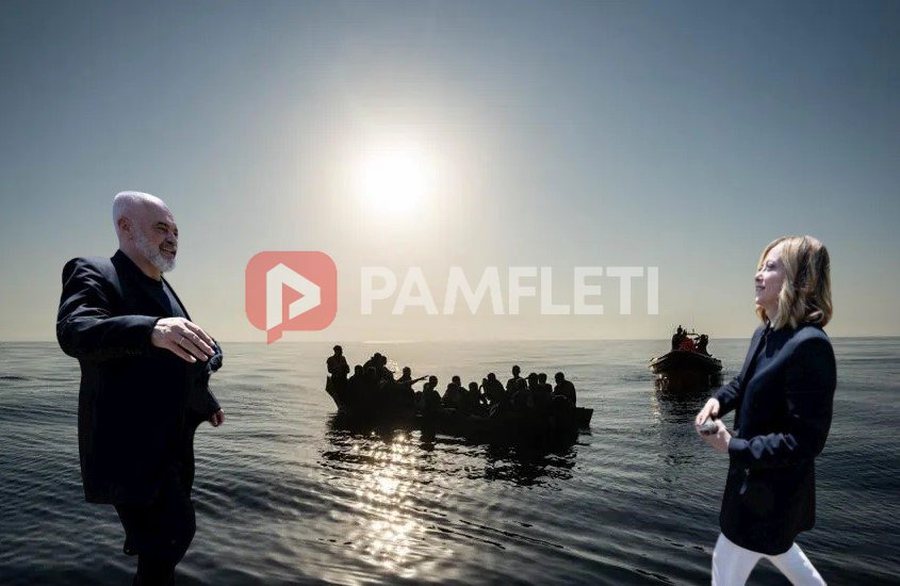
Humanitarian NGOs condemn the start of the implementation of the Albania-Italy pact for refugees...
Italy has started implementing its controversial scheme for sending asylum seekers arriving by sea to Albania.
The activation of the scheme has been condemned by humanitarian NGOs operating in the Mediterranean. It also faces legal complications from a ruling by the European Court of Justice.
The agreement between Italy and Albania on offshore processing was signed in November 2023. It provides for two detention centers in Albania, which will hold up to 36,000 people a year. The scheme is reported to cost nearly three-quarters of a billion dollars over five years.
On October 14, 2024, it was reported that the scheme had been activated and the first group of people was being transported to Albania. Among them are said to be ten people from Bangladesh and six from Egypt. Both countries are on Italy's 'safe' list.
The offshore processing scheme is the first of its kind for an EU member state. It also echoes the infamous Rwanda scheme, on which the previous Conservative government in Britain spent hundreds of millions of dollars. The current Prime Minister of the United Kingdom, Keir Starmer, canceled the scheme and since then he has expressed admiration for Italy's scheme in Albania.
The scheme is designed to reduce the number of people crossing the Mediterranean and seeking asylum in Europe. It comes amid concerns about the rising death toll of people attempting such crossings, as well as the political climate in Italy and elsewhere in Europe, where concerns about irregular immigration dominate political discourse.
At the time the scheme was announced, Amnesty International said they believed "the agreement is very unlikely to achieve its stated aim of managing migration", meaning the scheme will not reduce the number of people who try to reach Italy via the Mediterranean.
Deterrence is a highly controversial topic among migration analysts, and overall, empirical evidence suggests that the effect is small. At the same time, Amnesty said the implementation of the scheme "would have a negative impact on a range of human rights, including the rights to life and physical integrity of people in distress at sea".
Now, humanitarian search and rescue NGOs operating in the Mediterranean, rather than EU state search and rescue operations, are speaking out against the activation of Albania's scheme.
"We strongly oppose the resettlement of survivors from Italy to Albania. The Italy-Albania agreement violates international maritime law and risks further eroding the basic rights of refugees," said Mirka Schäfer, with the NGO SOS Humanity.
The scheme also faces potential legal challenges following a ruling by the European Court of Justice.
One of the bases for Italy's claim to be legitimately able to send people to Albania for processing is that they are from countries considered 'safe'. The decision of the ECJ rejects this claim.
For now, this means in practice that anyone sent to Albania will likely not have their asylum application approved unless they can show that they face some specific form of persecution or threat to their life or well-being. / Adapted "Pamphlet" from "Forbes"








Lini një Përgjigje