


 Shkruar nga Sulo Gozhina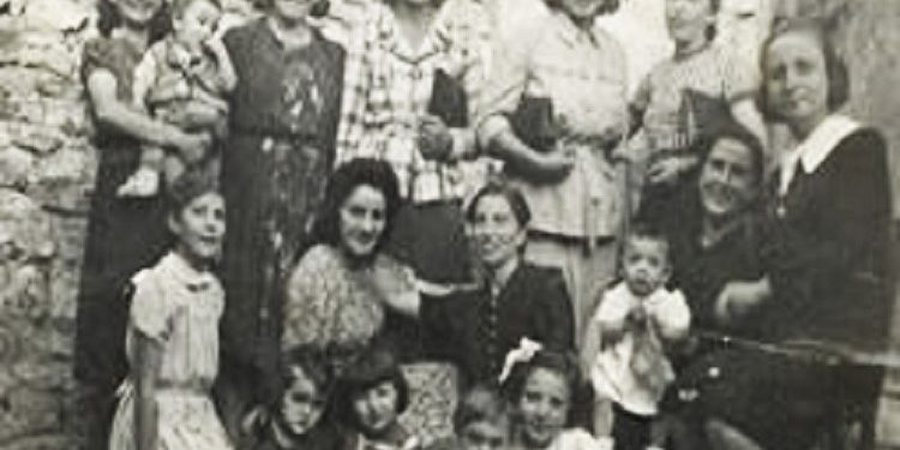
Every time January 27th of each year approaches, one thinks of the Holocaust Day, of the Second World War, the victims of which were 6 million Jews alone. Unlike other countries, Albania offered Jews shelter and protection. In Berat alone, during the war, over 600 men, women and children came. Writing about this people, who suffered so much and were so noble, takes a lot of time, work, effort and sweat. The vast scope of this topic shows that every time you sit down to research, new details and stories that have not been published before emerge. Such a topic has also been addressed in the last two decades by the well-known Berat publicist and researcher, Simon Vrusho. We interviewed him about this valuable work to date, but also about new discoveries in this field.
Mr. Vrusho, over the last 20 years, you have written and published a lot about the Jewish presence in Berat, books, articles, studies, reports, portraits, etc. I have even referred to you in some of my writings and interviews on this topic, which is both interesting and vital for Jews, almost from the Middle Ages to the time before and after the Second World War and beyond. But even when it is thought that this topic has been exhausted or exhausted, you, again, suddenly, bring out, discover, publish new facts, documents, details. My question is; What has been the latest discovery regarding this topic?
The last one is Miki, Miki, a Jew with a tray in his hands, sheltered during the Holocaust in Berat (1942-'45) with the family of Vangjel Buda, the Budas, generations of goldsmiths, of probably Jewish origin, goldsmiths who also excelled in icon work with carving, cutting, casting and coating with sava...! Vangjel died young, in 1968, 50 years old...! Devoted to goldsmithing, to books and the "Voice of America"...! He died with the "Voice of America" in his ear...!
He left the profession of silversmithing to his son Dhimitri (Taqos), who inherited it to his sons, Gavril and Valirian…! Miki was kept as a houseboy until 1945, when Vangjel Buda accompanied him to Durrës, where other Jews had gathered, returning to the countries from which they had emigrated…! Nasho Qytyku, 81 years old, a neighbor of Buda, remembers Miki, because, being the same age, they even played together in the streets of “Vakëfi”…!
Apparently the number of Jewish and Israeli tourists is increasing in the city of Berat. Are you interested in the presence of their ancestors in this city, the traces, the testimonies, the echoes?
When they hear or see that Jews had their own neighborhood, a neighborhood located in the center of Berat, in terms of urban planning (between the Plumb Mosque and the Metropolitan Cathedral), where the street is named "JEWS", when they learn that the Jewish community had its rights recognized and protected, when they had representatives in the city's administration, when they had their own synagogue, they certainly feel good...!
But they were not only at the center from an urban planning point of view, but also economically and financially, as their community, or Jewish merchants, financed and governed in difficult times...!
But they were also at the center from a cultural perspective, as their representatives were diligently involved in the literary competitions or contests that were organized in the city, where the city's elite, as we might say, participated...! By the beginning of the 1500s, the Jewish neighborhood had 11 families, after a few decades it became 25 families and later reached 100 families...!
Their traces are found everywhere, in Bilça or Duhanas, with meaningful toponyms, etc. So there is a historical presence, an uninterrupted Jewish component for centuries, of course, the peak is reached with the shelter and rescue of over 600 Jews during the Holocaust…! Yes, this is a separate chapter, already largely exhausted, although there is still room to explore it…!
This shelter, this salvation, shows what Berat was for the Jews, so it seems, it feels as if Berat itself is saying to the tourists, visitors, and Jewish scholars: “Jews, Berat is your city too”! Go to the Xhezo family and you will find a box, a testament to the stay and shelter of the Jews, “a golden box”, where on one side is engraved the Star of David, and on the other side, a synagogue, (see photos from that period), Jewish women and children, in Albanian language courses in Berat, while quite a few others, Jewish children, were registered and attended the 1942-'43 school year, together with the children of Berat, as in the case of the mixed school “Kastrioti”, a school in the center of Berat, which proves that life continued, and learning, and education continued…!
You can also find this in Jacqueline Silver, in her scholarly book “…AND THEY STILL LEARN”, “Education of Jewish Children in Nazi Occupied Areas Between 1933-1945”. (Education of Jewish children in Nazi-occupied areas between 1933 and 1945.)
Both Albania and Berat are part of that area where Jewish children learned in a school, in a classroom, in a bank with Albanian children...! And Jewish children and Albanian children have stayed in a bank, even in a bank with the son of the aspirant Myrto Qafa (a Berat gendarmerie officer), Ermir Qafa, etc.
Në amzën e shkollës së përzier “Kastrioti” Berat, për vitin shkollor 1942-’43, figurojnë të regjistruar dhe kalues për në klasën e dytë, edhe dy nxënës hebrenj, i pari Juso Ruben (me nr. amze 1490), lindur në Prishtinë, në vitin 1933, banues në lagjen “Uzgur”, Berat, kurse i dyti, Vili Albahar (me nr. amze 1491), lindur në Beograd, më 18.12.1934.
Prindërit e tyre, Mihal Ruben e Danilo Albahar, cilësohen me profesion emigrant. Sigurisht, në shkollat e Beratit të atyre viteve, ka pasur me dhjetëra nxënës hebrenj me emrat origjinalë apo dhe të ndryshuar. Nga ky këndvështrim, duket krejt i natyrshëm dhe kujdesi e financimi mijëra-dollarësh që ambasada e Izraelit në Tiranë, ambasadori David Cohen, bën për mjediset e çerdheve të fëmijëve në Berat, 70 vjet më pas…!
Ju ia keni dedikuar librin tuaj, “HEBRENJTË E BERATIT”, Dr. Zino Matathia?!
Po, Dr. Zino Matathia, “Qytetar Nderi” i Beratit, të cilit i kam dedikuar librin “Hebrenjtë e Beratit”, botuar më 2010. Në vitin 1971, në spitalin e Beratit, ka operuar edhe tim atë. Mjek në stafin e spitalit ushtarak izraelit, që u stacionua në kampin e refugjatëve kosovarë në Maqedoni, 1999.
Prej vitit 1991, banon në qytetin Kamiel, Izrael, ku është nderuar si “Qytetar i Vyer” i tij. Thuajse çdo vit vjen në Shqipëri, në Tiranë, Vlorë e Berat . Ka punuar si mjek, 14 vjet, duke qenë edhe drejtor i spitalit të Beratit.
Në korrik 2017, një delegacion i Bashkisë Karmiel, Izrael, i kryesuar nga kryetari i Bashkisë, Adi Eldar, zhvilloi një vizitë në Bashkinë e Beratit, cila ishte risia që solli delegacioni në Berat?
Vizita u organizua në kuadër të lidhjeve të binjakëzimit ndërmjet dy qyteteve, Berat dhe Karmiel. Në takimin që zhvilluan me përfaqësues të Bashkisë së Beratit, në datën 19 korrik, u diskutua mbi mundësitë e bashkëpunimit ndërmjet dy qyteteve, kryesisht në shkëmbimet kulturore, në fushën e arsimit, të bizneseve të agrobiznesit dhe në rritjen e kapaciteteve ndërmjet stafeve.
Të pranishëm në takim ishin edhe ambasadori i Izraelit në Shqipëri, Boaz Rodkin dhe Konsulli i Nderit i Shqipërisë në Izrael, Menashe Getz. Gjate qëndrimit në Berat, delegacioni i Karmielit zhvilloi një vizitë në Qendrën Historike të Beratit, në Kala dhe Muzeun Ikonografik “Onufri”, si dhe në biznesin e këpucëve “Caterina Firenze”.
Pjesë e agjendës ishin edhe vizitat në njësinë administrative Roshnik dhe Sinjë, të cilat janë zona të rëndësishme të zhvillimit të agro-biznesit, kryesisht të prodhimit të ullinjve, qershive, vreshtarisë etj,.
Gjithashtu delegacioni zhvilloi disa takime me stafin e Bashkisë Berat dhe të Qendrës Kulturore, Galerisë së Arteve dhe Bibliotekës Publike, ku u diskutua rreth mundësive të projekteve të përbashkëta dhe shkëmbimeve kulturore.
Në fund të vizitës, u organizua një takim ndërmjet kryetarëve të Bashkive respektive dhe stafeve, ku u parashtruan konkluzionet e vizitës dhe u vendosën piketat e bashkëpunimit për projekte konkrete…!
Finally, two more lines about dishes decorated with the "Star of David" found in a family in Kostren, Tomorr?
In fact, there are many such decorated vessels with the "Star of David" in their center, which I think are centuries old, in our area, and this shows the friendship that we have had with the Jews for centuries and that we continue to preserve with fanaticism to this day.
If we return to the history of World War II, it was not in vain that Albanians protected the lives of Jews, risking their own lives, and this was most visible and apparent in Berat, as the Jews in our city during the war years took refuge in several neighborhoods, so we can proudly say that; Berat is also their city. / Memorie.al




Lini një Përgjigje