


 Shkruar nga Pamfleti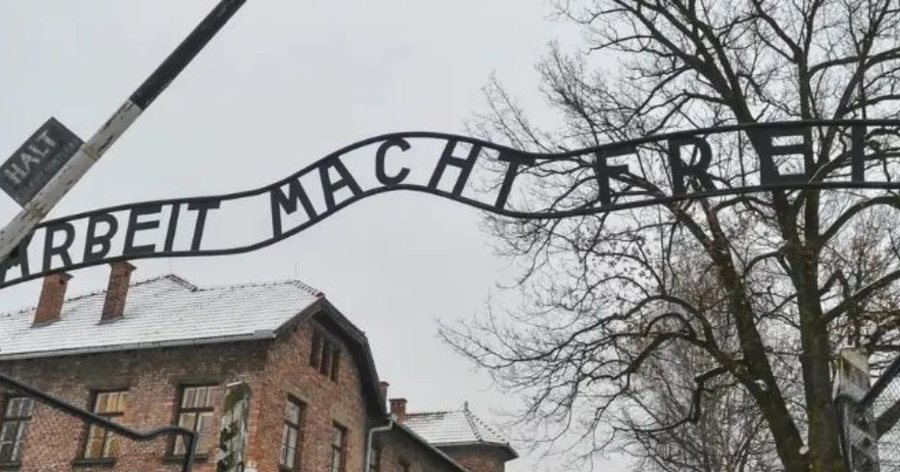
Six million Jews are thought to have been exterminated by Nazi Germany during World War II.
A small minority managed to find salvation in Albania. The German ambassador, Bernd Borchardt, explains the background.
Deutsche Welle: Mr. Ambassador, Albania is considered the only European country that after the Second World War had more Jews than before the Second World War. Where did these Jews come from?
Bernd Borchardt: According to data from Albania, in 1937 there were 191 Jews, while after the War, there were about 2280. There is a list from the German Foreign Ministry with the names of 85 Jewish families from Germany at that time, which also included Austria. A large number also came from the former Yugoslavia, Serbia and what is now called North Macedonia, but also many from Kosovo.
Deutsche Welle: How did it happen that the Jews discovered Albania as a place of salvation?
Bernd Borchardt: According to his son's information, King Ahmet Zog ordered the consulates and embassies as early as 1938, after the pogrom against the Jews in the so-called Kristallnacht, that all Jews who requested visas at the diplomatic missions of Albania in Europe they were given visas. In this way, around 400 Jews are thought to have arrived in Albania. But most of them continued their journey to Palestine, the USA, and even South America.
Deutsche Welle: However, the Jews were not denounced either after the flight of Zog, or after the arrival of the Germans. How do you explain this?
Bernd Borchardt: The special thing about Albania is that it was not only the people who helped and sheltered the Jews, but also the Albanian government, which refused to hand over the lists of Jews to the Nazis. Even when the Italians capitulated, in the fall of 1943, there was an instruction signed by the Minister of the Interior, that when Jews come from abroad, they should be given Albanian passports with the names they want.
Deutsche Welle: The Germans knew that there were Jews in Albania, why didn't they put pressure on the collaborationist government of that time?
Bernd Borchardt: I have found a note in the Archives of the German Foreign Ministry, where it is said that, in September 1943, during a meeting between high representatives of the Gestapo and the German Foreign Ministry, the decision was made not to put pressure on Albania for the deportation of the Jews, because they hoped that Albania would remain a loyal country. But this policy was changed in the spring of 1944, when it became clear that Germany would withdraw from the Balkans. There, the Germans began looking for the Jews themselves in Albania.
Deutsche Welle: And two families were deported?
Bernd Borchardt: Yes, two families were deported, of which only one survived. According to our research, one of these families was betrayed by an Albanian. The other family felt so safe in Albania that they didn't care at all, they went out into the streets and thus caught the eyes of the Germans.
Deutsche Welle: In Kosovo, the story was a little different, wasn't it?
Bernd Borchardt: Yes, in Kosovo the story is completely different. Even there, there were many Kosovars who saved Jews. There were Serbs, Albanians, Roma. A Roma woman hid a Jewish child from Kosovo. Several children have been sheltered in the Letnica Monastery. But from the records of Wehrmacht soldiers there is evidence of the expulsion of more than 1000 Jews from Kosovo. Most were deported to Bergen-Belsen. A large number were sent to Vienna. There was a camp in the center of the city of Vienna called the "Camp of the Albanians". They were victims of the Skënderbeu division. There have been nearly 600 deportations from Kosovo. The fate of the Jews in Kosovo has been little researched. There are some generalizing publications that are a bit nationalistic and assume that Jews in Kosovo were protected in the same way as in Albania, but this is not hers. But what we have realized is that the number of Albanians who have helped the Jews is much higher than the 78 names that are in Yad Vashem.
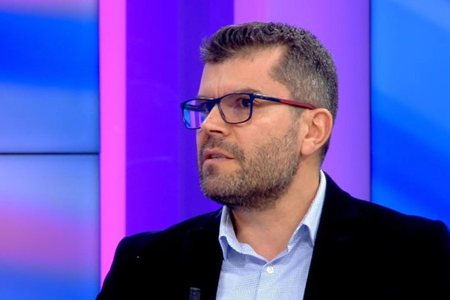
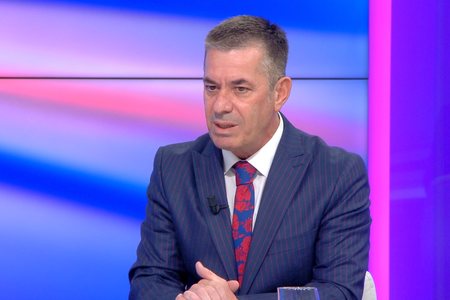
Bernd Borchardt is a retired ambassador. He was head of the OSCE mission in Albania, and head of EULEX in Kosovo. Borchardt has been supporting for years a project of the Organization of Albanian Students in Germany (OASA) on the history of the rescue of Jews in Albania. The project aims to make the sons of Albanian migrants in Germany aware of the history of their origin./DW





Lini një Përgjigje