


 Shkruar nga Pamfleti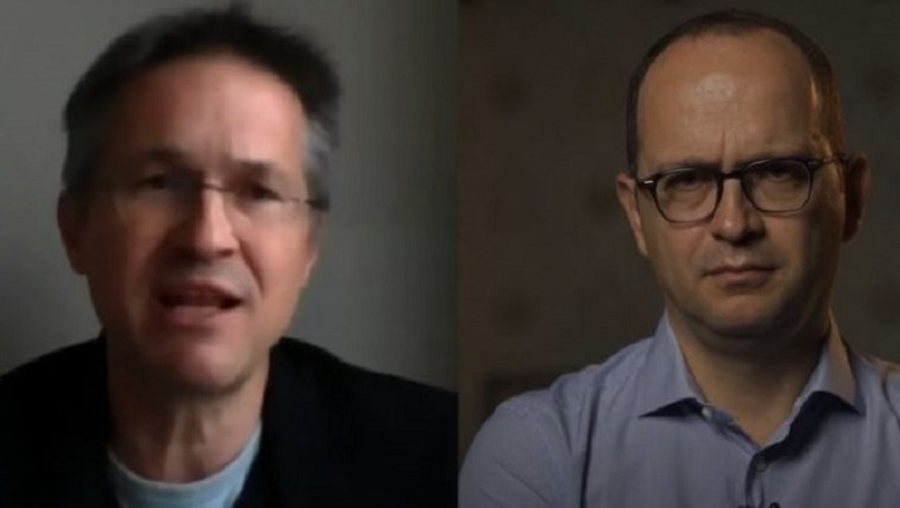
Ditmir Bushati has invited Gerald Knaus, head of the European Initiative for Stability, to his podcast. The focus was on the integration process of the countries of the Western Balkans and the impact of the war on Ukraine.
Gerald Knaus says that the war sends a message to EU leaders that they should think about a new enlargement, as the advantages are greater, and a stronger Europe.
" After this war comes a new opportunity and frankly, I think that if there wasn't a war in Ukraine by Russia now, I don't believe that the European Union would expand again, because with 27 members, many of these countries are happy with the existing situation. But with the war against Ukraine and the awareness that Europe is not complete and with the war and the destruction of the continent, the wave of refugees, the catastrophes, let's throw everything behind us. I hope that this will be an opportunity for the Western Balkans as well. And this is the reason, this is the moment for the leaders of the Western Balkans to really push the European capitals with great conviction and concentration to change the existing procedure that does not lead to EU accession, which is a necessity", he says .
The head of the European Initiative for Stability dwells on the statements of German Chancellor Olaf Scholz and French President Emmanuel Macron about the EU enlargement process.
"I am surprised that many people do not listen to exactly what Olaf Scholz and Emmanuel Macron and others are saying. Why can't they give a date for EU membership? Olaf Scholz says that we want to speed up the enlargement process, but he also says that, to make this possible, the European Union must change. He wants to reform the EU, which we know is not going to happen. Let's put it bluntly, take the Baltic states, the Czech Republic, Slovakia, Hungary, or even some of the old member states, they will not give up their veto on many issues. They don't want to give up and they are saying that they won't. So, if Olaf Scholz says to speed up the enlargement process, but first the EU must change, where all member states agree to no longer have a veto on foreign policy for example, and then a number of EU member states say that we will not give up the veto, then what Olaf Scholz is saying is that this does not depend on the Balkans, it does not depend on you. You can make all the reforms, but if we don't agree between us, you will never join", declares Gerald Knaus.
Among other things, Bushati and Knaus address the challenges of regional cooperation between the countries of the Western Balkans and the advantages that their admission to the EU internal market brings.
"The EU proposes a completely contradictory policy, which states that the states of the region should work together and reduce all barriers between them. But at the moment that Montenegro will join the EU, it will have to restore all obstacles to Albania and Serbia. When Croatia joined the EU, it had to build the most expensive bridge in its history, just to bypass 20 kilometers of Bosnia-Herzegovina territory, because trucks could not cross into Bosnia. So, if Albania or Montenegro joins the EU, you will have to restore all these controls against Kosovo or against Serbia. This doesn't make sense. The way to integrate the countries of the region, all the countries of the region, is to make them move towards the European internal market. Then the barriers between the countries of the region disappear. I think that this can be offered to Kosovo today. This is the response to Kosovo's application for EU membership, to tell Kosovars: if you meet the criteria and we help you meet them, you too can join the EU's internal market", declares Gerald Knaus, head of the European Initiative for Stability.
According to Gerald Knaus, Ukraine should avoid the path followed by the Western Balkans.
"Nëse atyre iu ofrohet i njëjti proces, që i është ofruar Malit të Zi, Maqedonisë së Veriut dhe Shqipërisë, ata do të jenë po aq të zhgënjyer pas pesë vitesh, sa janë shumë njerëz në Ballkan tani. Ata duhet të kërkojnë që të kenë një proces të bazuar në meritë që të varet nga ata se kur do të jenë pjesë e tregut të brendshëm. Në të njëjtën kohë, vendet e përparuara në Ballkan, anëtarët e NATO-s, ata që janë më mirë të integruar, si Mali i Zi, Shqipëria duhet të thonë se nëse ia propozoni këtë Ukrainës, kërkojmë të na propozohet edhe neve në Ballkan. Kështu ka funksionuar gjithmonë Europa. Nëse në 4 vitet e ardhshme Ballkani Perëndimor pranohet në Schengen, nuk do të ketë më kufij të dukshëm, jashtë BE-së dhe brenda rajonit. Dhe të gjithë janë brenda tregut të brendshëm, pra kushdo nga Ballkani Perëndimor mund të punojë kudo, çdo biznes nga jashtë mund të shkojë kudo në Ballkan dhe zbatohen të njëjtat rregulla. Çfarë vizioni paqeje dhe lulëzimi i pandërprerë!", he said.


Lini një Përgjigje