


 Shkruar nga Pamfleti
How favored will Albanians be in this process, what are the professions and sectors, and when will applications for 2026 begin...
Italy seems eager for workers, while the Government has approved a decree that allows the legal entry of 500 thousand immigrants. The decree of the Meloni Government comes at a time when Italy holds the flag in the EU for the removal of illegal immigrants, and is even the first country in the Union to have set up refugee accommodation camps, which today operate as CPR, in a safe third country, as Albania is considered.
But for the 3-year period 2026-2028, the Government has decided to accept 500 thousand immigrants from countries outside the EU, a figure higher than that of 2023-2025.
But how favored will Albanians be in this process, given the fact that Albania is not part of the EU?
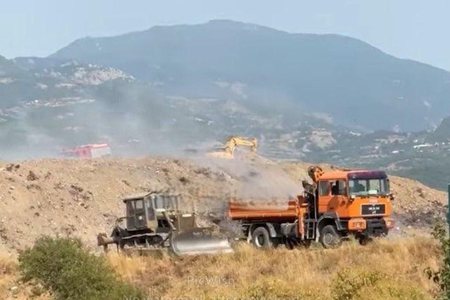
Referring to official positions, countries that help in the fight against illegal immigration will be favored and here Albania, at least in the case of Italy, has made Gjadri available to the neighboring country for the construction of camps where immigrants who are deported or those who have been refused asylum are housed.
The new quotas were agreed during a cabinet meeting. An official statement said these additional migrant workers are "essential to the national economic and productive system and would not be available otherwise."
The quota is divided into different categories. About 230,550 visas will be issued for non-seasonal workers and the self-employed, and about 267,000 for seasonal workers in sectors such as agriculture and tourism.
Quotas are determined taking into account the needs expressed by employers and representative bodies, as well as being calculated based on work permit requests that have actually been submitted over the past few years.
The government underlines that the quotas allow it to adopt a "legal and controlled immigration mechanism", as well as to open "fundamental channels of communication" with the "countries of origin" of migrant workers, thus building "a tool to combat the phenomenon of irregular entry and residence in Italy", as well as the possibility of "illegal work and exploitation of workers".
The initiative is also linked to foreign policy: preferential visa places will be reserved for workers from countries that cooperate with Italy in discouraging illegal migration. In fact, countries that develop media campaigns to warn their citizens about the risks of irregular migration and cooperate with Italy will receive dedicated quota allocations, proportional to the successful past entries from those countries. This strategy aims to encourage bilateral partnerships to manage migration flows in a safer and more legal way.
Allocation of quotas by sector and categories
The new decree details how the 2025 and 2026 quotas are distributed across job sectors and categories of workers. In 2025, as in the new plan, the largest shares target two groups: seasonal work and non-seasonal work (including autonomous). According to the 2026–2028 program, out of 164,850 vacancies for 2026, 88,000 are allocated for seasonal work in agriculture and tourism, while the remaining 76,850 places in 2026 are for non-seasonal employment, including workers in various industries as well as self-employed immigrants. Within the non-seasonal quota, domestic care workers (home caregivers and housekeepers) have a protected sub-quota: 13,600 entries in 2026 specifically for foreign “domestic helpers”. This allocation dedicated to family care roles will increase modestly in subsequent years, as Italy anticipates a growing need for caregivers.
Agriculture and tourism, sectors that rely heavily on seasonal work, together account for more than half of the 3-year employment (267,000 of the 497,550 planned entries). Meanwhile, construction, manufacturing and care fall into the non-seasonal category, with approximately 230,550 over 2026–28.
Application dates and upcoming changes
The government’s approval also brings clarity on the much-anticipated “click day” dates for 2026, when employers can start submitting online work permit applications for the new quotas. The decree confirms that the current online application system (click day) will remain in place for the upcoming intake, although reforms are on the horizon. The pre-submission of applications will open in the fall of 2025, and then the actual submission windows (“click days”) are expected in early 2026. According to initial official forecasts, the first click day is scheduled for January 12, 2026. On this date, the system will open for applications from seasonal workers in the agricultural sector. A second window will follow on February 9, 2026, dedicated to seasonal employment in tourism. Subsequently, February 16 and 18, 2026 have been set for the submission of applications for all other categories of work permits, covering non-seasonal employed workers and self-employed visas.
Employers will compete online for vacancies, as permits are issued on a “first come, first served” basis until the quota is filled. The controversial “click-through date” mechanism, essentially an online competition for permits, has been criticized by businesses and migration experts for years, due to technical obstacles and a mismatch between quota allocations and actual employment needs. / Pamphlet /







Lini një Përgjigje