


 Shkruar nga Pamfleti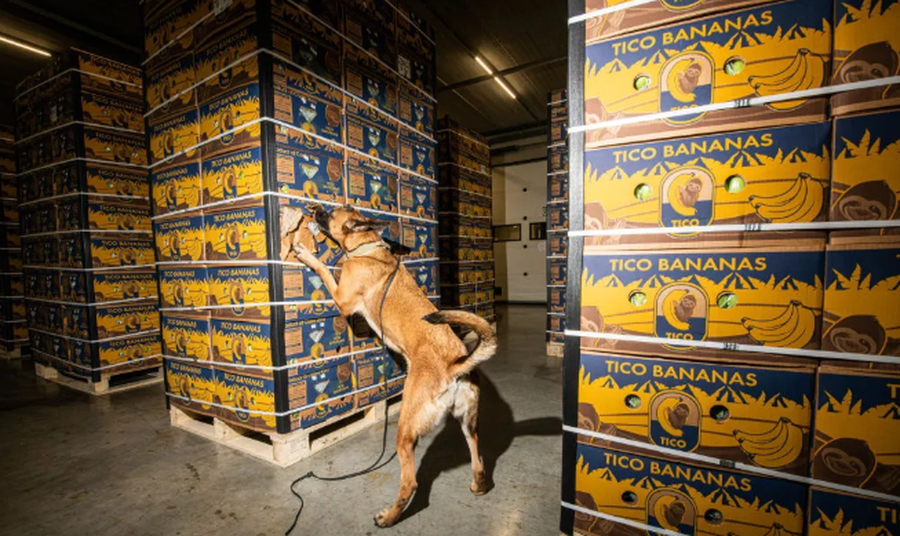
Criminal networks are infiltrating state institutions, turning Belgium into the main drug gateway on the continent. This mafia infiltration is openly challenging the rule of law and the security of citizens in the heart of Europe...
In October 2016, a sensational wedding shook Antwerp. A bride and groom, descendants of a prominent Belgian-Moroccan family, celebrated with a defiant parade through Borgerhout - a run-down neighborhood just a few hundred meters from the city's main station that resembles a real cathedral.
So far, nothing out of the ordinary. But it was no ordinary parade. It was a gangster wedding, where the man was a member of the “Turtle Clan,” a notorious group of cocaine traffickers where the display of wealth and power mattered far more than love.
So, the "strong" drove through the narrow streets of Borgerhout in their sports cars, displaying expensive watches and jewelry, while the images went viral on social networks. Conservative Flanders was shocked.
Belgian authorities had seen how the “Turtle Clan” had risen almost overnight from small-time street traffickers to major international bosses. “Our small-time drug dealers had reached the top,” a prosecutor told UnHerd with irony.
Although belatedly, politicians demanded in-depth investigations into money laundering and cocaine trafficking, while journalists, enjoying the drama, dubbed Borgerhout "Borgerokko", the new cocaine capital.
A decade after that wedding, Europe has surpassed the US as the world's biggest cocaine market. An international mix of traffickers - old-fashioned Dutch hooligans, Moroccan clans from Borgerhout, Italian mafia and ruthless Balkan gangs - are drawn like butterflies to light to Antwerp and its giant port.
Belgium and the Netherlands, home to the vast port of Rotterdam, have been hit by much of this new gangsterism. Last October, an anonymous federal judge from Antwerp shocked Belgium with an open letter after spending four months in a safe house because of serious threats to her life. She claimed that “vast mafia structures are now entrenched in Belgium, becoming a parallel force that challenges not only the police but also the entire judicial system,” adding that corruption is seeping into institutions from the bottom up. She even suggested that the country is rapidly moving towards the status of a “narco-state” — a chilling warning echoed by another judge just last month.
These claims deserve close scrutiny, as does the way in which drug gangs have penetrated so deeply into the fabric of Belgian society. Although Belgium is not yet technically classified as a narco-state, this explosion of crime is rapidly spreading beyond its borders.
In the past decade, countries from Sweden to the UK have been challenged by the rise of cocaine mafias, now empowered by their successes in Albania, Spain and Italy. The main question that arises today is: can these networks ever be stopped?
Today, Borgerhout doesn't seem like a hotbed of traffic. Last year, Time Out magazine declared it the "coolest" neighborhood in Europe, praising its creative spirit, green terraces, and lively streets, where traditional Moroccan shops coexist with modern cafes.
But before the "hipsters" arrived a decade ago, the area was known for being dominated by Moroccan clans, mainly originating from the rugged Rif Mountains, who had arrived as manual laborers in the 1960s.
These criminal clans chose an ideal base of operations. Antwerp is one of the largest shipping hubs in the world, processing over half of the goods entering the continent.
With containers stretching for 160 kilometers, the scale of the port is almost impossible to grasp without the help of a drone. Amid this colossal flood of goods, of which only about 2 percent are actually inspected, smuggling tons of cocaine becomes a relatively easy process.
For three years in a row, Antwerp has broken records for drug seizures, with Rotterdam coming in second. Smugglers from Borgerhout and their relatives in the Netherlands have become some of the most prolific traffickers in all of Europe.
Within a few generations, they went from simple hashish trades to key players in the billion-dollar cocaine market, with operations ranging from production in South America to money laundering in Dubai.
This has turned Belgium into a magnet for violence and corruption. Several brutal murders directly linked to cocaine have already been recorded in Brussels. Since the murder of Dutch trafficker Najib Bouhbouh in 2012, incidents of violence have increased exponentially.
Last year, horrified Brussels residents even found a suspected Albanian drug trafficker executed and hung on a street sign as a mafia message. Sometimes innocent civilians are also involved in this bloody chaos.
In 2022, a failed assassination attempt on criminal exponent Othman el-Ballouti led to the tragic death of his 11-year-old cousin, an event that was followed by a series of bomb explosions.
Meanwhile, the drug trade continues unabated. Many containers pass through thanks to the cooperation of corrupt officials, while others are simply luck. The drugs are extracted by specialized teams of "extractors" - often teenagers who are specifically used because they face lighter sentences.
It then spreads throughout the Schengen area, supplying markets from Berlin and Milan to Manchester and Athens. In 2016, Colombia's historic peace agreement with the FARC group fundamentally changed global trade.
Armed groups lost control over production and new, more aggressive traffickers opened direct routes to Europe, where profits are many times higher than in the US.
Today, traditional roles have merged: Moroccans, Albanians and the Italian mafia collaborate closely, sharing logistics to maximize profit.
The authorities are facing serious difficulties in responding.
A former investigator in Antwerp says the city has become "the epicenter of a cocaine flood," while police resources are completely inadequate in the face of cartels with budgets of billions of euros.
Belgium's fragmented politics often become an obstacle to effective cooperation. Meanwhile, cartels focus on corrupting the "key nodes" of the system: port officials, administrators, and police.
Is Belgium really a narco-state? Expert Anna Sergi is not entirely convinced. According to her, true narco-states are places where the state has completely lost its monopoly on violence - a situation that is not yet reflected in Belgium.
However, their neighbor, Amsterdam, is facing an even more serious problem, including the broad daylight killings of investigative journalists and lawyers.
Despite the efforts, the drug continues to circulate in unimaginable quantities. Street prices remain surprisingly low and the purity of cocaine is at historic highs. Gangs are adapting to the circumstances by using new communication technologies and expanding to other ports such as Norway and Greece.
The problem is not going away because the European Union offers a common market and free movement, but is protected by 27 police systems that often do not communicate with each other.
According to Sergi, the only solution is a coordinated European front that hits the financial structure, not just the bags of drugs. But for now, global drug trafficking continues to grow.
While eroding the foundations of democracy, cocaine gangsterism is becoming the most serious threat that the continent can no longer ignore. / Pamphlet from "Unherd"


Lini një Përgjigje