


 Shkruar nga Pamfleti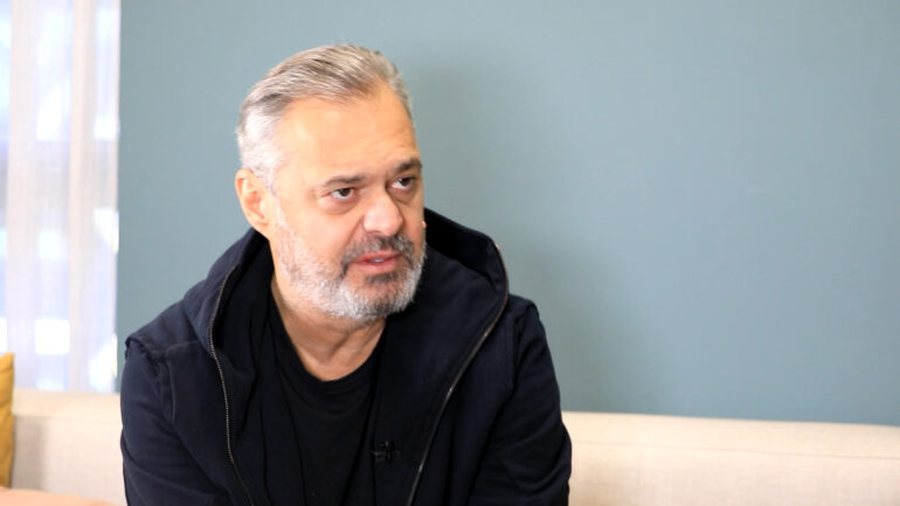
What I predicted 10 years ago is felt both in Albania and Kosovo. The two countries are drifting apart. They think they can live on their own. I think that the trend will be highlighted and the countries will move away in the cultural and political sense.
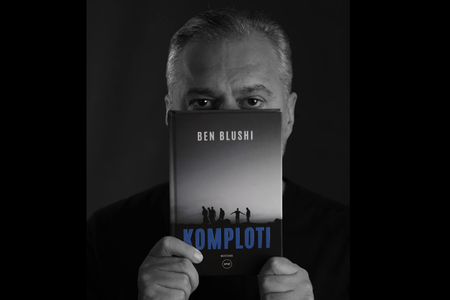
Former MP and writer Ben Blushi has spoken about his newest book "Conspiracy". While Albania and Italy have reached the pact for immigrants, Blush's newest book talks precisely about the issue of refugees.
In an interview, he showed details from his book, as he also talked about the relations between Kosovo and Albania, where in his book he talks about a conspiracy and the final plan is to attack Kosovo.
Blushi in an interview for " News 24 " touched on the current situation between the two countries. He has warned that the crisis will deepen and the divisions between Tirana and Pristina will be much greater.
interview
-Besides Simon Shuteri, who was in "The Candidate", it seems that your book of last year, with portraits, has served as a ground to explore nature, characters, history, cultural layers for "Conspiracy".
- It can. In a sense I have discovered the Afghan community on which this plot is built, often going to Shengjin where I took pictures last year. I used to go to Shengjin and photograph veiled Afghan girls, or Afghan men to see their way of life. I went to their school, "AT ZEF PLLUMI" where children studied from the third or fourth grade up to high school. A school named after a Catholic priest where 200-300 Afghan children study. This was interesting to me. That's actually where I got the motif of the book. Then Simon Shuteri is a character that I can take back again, he is a typical Albanian of Jewish origin, certainly an intellectual, a strange, adventurous man, who has a lot of dissatisfaction with Albania. He thinks that the Albanians have not been realized in history, they should have done more, they should have tried and maybe they should have conquered some country. In the book, one of the motives is the dilemma of many people, including Shuter, including me, perhaps, that we have remained a small nation because we have not been aggressive in history, they have always conquered us, we have never conquered. Territories were taken from us and we did nothing, while this is true, because the case of Kosovo is like this, Chameria, Ioannina, Montenegro were territories that were taken from us. Shooter has these dilemmas and solves them in his own ways and in a sense he is the mastermind of the plot.
-Is Simon Shuteri the literary alter ego of Ben Blush?
It's not for me to say. I don't talk in front of the mirror.
- There is a war and a defense minister flying over the territories of Albania and Kosovo, and here is an element of the plot. On the other hand, perhaps the arrival of immigrants can constitute a kind of cultural clash. In the work, you have a character, a Catholic woman from Shengjin, who decides to cover herself with a headscarf for the sake of her Afghan husband. How dangerous can this culture clash be? We also see the debates that are taking place now after the Meloni-Rama agreement, but how dangerous can it be for our society, and for how the simple Albanians of the province can expect or manage such a situation?
I think we should not be afraid of the future. We will be and cannot be victims of our Europeanization. If an Albanian from Mallakastra or Kukësi immigrated to Europe and there are 1 million of them and they have Arabs at work and Africans in the palace, they can have intimate relations with Asians, and nothing happens. Why can't this happen in Albania? I think this cannot be avoided. I hope not to the extent that foreigners become more than us, but why not. Go ask Albanian businesses how much they need labor force, and there are two ways, either the economy will decline, or we will open the country to foreigners. This is being done by countries like Germany with 90 million inhabitants, which receives doctors and nurses from all countries of the world, including us. But we are so few that they took us and we become very few. Will there be a culture clash? I do not believe. We are an open country. The world is open, and culture is consumed on Instagram. I believe that it is a process that will be passed in a natural, non-violent way.
- You had at the Moon of Albania, a treaty where you envisioned a competition between Albania and Kosovo, and the leaders of the two countries.
- This is happening.
- This is happening. And in the book you also deal with Kosovo, you sacrifice Kosovo, for the sake of the plot. How was the book received in Kosovo and how do you see the future if we consider that the rivalry of the leaders has started, where are we going?
- First, this book, unlike all my previous publications, was published simultaneously in Kosovo and Albania. In Kosovo I have another publisher, Dukagjin, in Albania I have Botimet Pegi. This happened because Albania and Kosovo are two different countries. I also went to Kosovo for a reason that you said, that Kosovo is at the center of the conspiracy. So the Afghans of Albania, when they take power and have the Ministry of Defense, decide to invade Kosovo, in fact to liberate it from Serbia. For this fact, because they are against the Afghans, the Albanians do not want this project. And since the Americans are behind the Afghans, the Albanians are starting to get along with the Russians. But today, Kosovo is present in our internal politics. There are debates about what relationship we should have with that country, should we be the big brother, a twin state, should we be a kind of tutor who tells it what to do and what not to do? Maybe Kosovo does not accept it. What I predicted 10 years ago is felt both in Albania and Kosovo. The two countries are drifting apart. They think they can live on their own. I think that the trend will be highlighted and the countries will move away in the cultural and political sense. The divergences that Albania and Kosovo have today are a reflection of these reports.
- Is it because of the leaders or because of the population?
It is because of the time, not because of the way it is governed. In my opinion, Albania in recent years has turned into a commercial republic. So you see only commercial interests. Tourism has taken off a lot, the economy is being structured differently, and Albania is cooler in terms of nationalism than it was 10 or 20 years ago. Also, the Albanians of Kosovo are in a big dilemma about how they will organize their future.
- "Conspiracy" will be at the book fair and you will be there to meet the readers. What should we do differently for the fair, how can the public be enticed to read?
I speak only for myself, I do not undertake to change the book market which was very good before and has weakened considerably. But I still think people are interested in good books. And the fair is a great opportunity and a great bookstore because if there's anything that hurts the book it's the way it's distributed. In most cities of Albania there are no bookstores. It is like in a city there is no bakery, and bread and books are food for man. Book distribution often ends comically. The only way to take the book where it needs to be, is today that we are talking about the media being more active and interested, and I hope that in the future, technology will replace distribution. So buy the book online and read it on your mobile phone. It would be fantastic to take the book further than it physically goes. The future of the book, I believe, is technology.




Lini një Përgjigje