


 Shkruar nga Pamfleti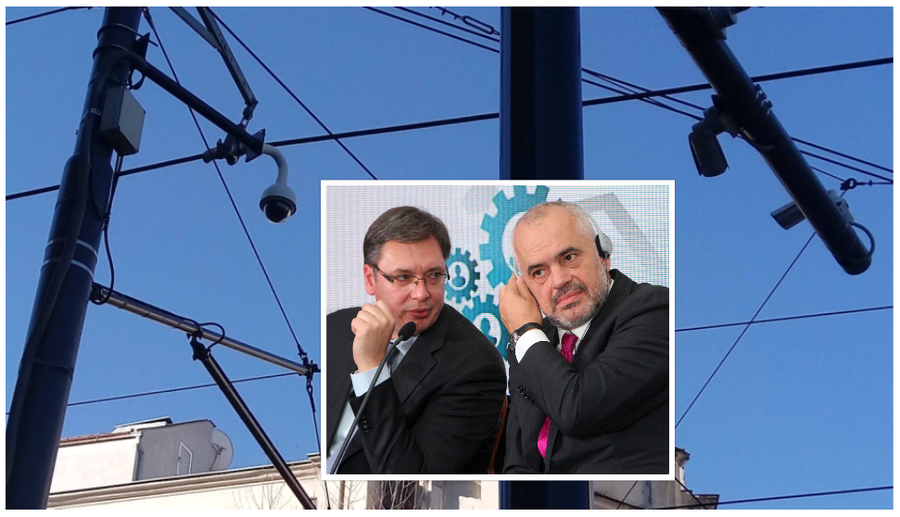
Governments in the 6 Western Balkan states have increasingly used technology to suppress opponents, conduct mass and targeted surveillance, and filter content and access to digital platforms.
“Biometric surveillance and facial recognition technologies are rapidly expanding across the Balkans, raising serious privacy and ethics concerns, particularly in Albania, Kosovo, Montenegro and Serbia,” a BIRN report noted.
The report says that across the Balkans, journalists, human rights defenders and activists are victims of censorship, surveillance and increasing legal pressure from governments.
This includes pressure on independent journalists in Albania, the Republika Srpska of Bosnia and Herzegovina, Kosovo, Montenegro, North Macedonia, and Serbia.
In Albania, the Smart City project envisages the installation of 4,500 security cameras, including Automatic Number Plate Recognition (ANPR) cameras in all major cities.
“While the initiative promises to improve traffic safety, it has raised concerns about data protection, transparency and misuse of sensitive information,” BIRN noted.
In Kosovo, there is no explicit state censorship, but indirect means are used to influence media information, including limiting their access to information and favoring certain media outlets.
“Surveillance in Kosovo is opaque, with limited information on private sector involvement or the use of biometric data. The law authorizes surveillance of digital communications, with the Chief State Prosecutor and the Kosovo Intelligence Agency (KIA) overseeing surveillance activities. The use of real-time interception, location tracking, and data collection raises concerns about privacy and surveillance,” the report says.
In Montenegro, the Interior Ministry has secretly purchased a biometric facial recognition program, Better Tomorrow, for use in public spaces in the capital Podgorica and the cities of Tivat and Budva.
The country's Personal Data Protection Agency (AZLP) has ordered the deactivation of facial recognition software, but its use has raised concerns about the institutions' lack of transparency.
In Serbia, there is a controversy regarding the adoption of biometric facial recognition technologies in public spaces, as the country does not have a legal framework for this.
Despite this, authorities have installed numerous cameras with facial recognition technology in public spaces, amid opposition from civil society.
"Serbia's extensive surveillance network, which includes mass data collection tools such as social media monitoring and phone tracking, has been linked to the targeting of political opposition, journalists and activists," the report said.
According to the report, in October 2024, two members of the civil society in Serbia received a warning from Apple that their phones were potential targets for spying attacks. According to Amnesty International's investigation, the potential attacks came from devices using Pegasus technology, sold exclusively to governments.
"This strongly suggests that the Serbian government or state-affiliated actors were behind these cyberattacks," the report said.






Lini një Përgjigje