


 Shkruar nga Pamfleti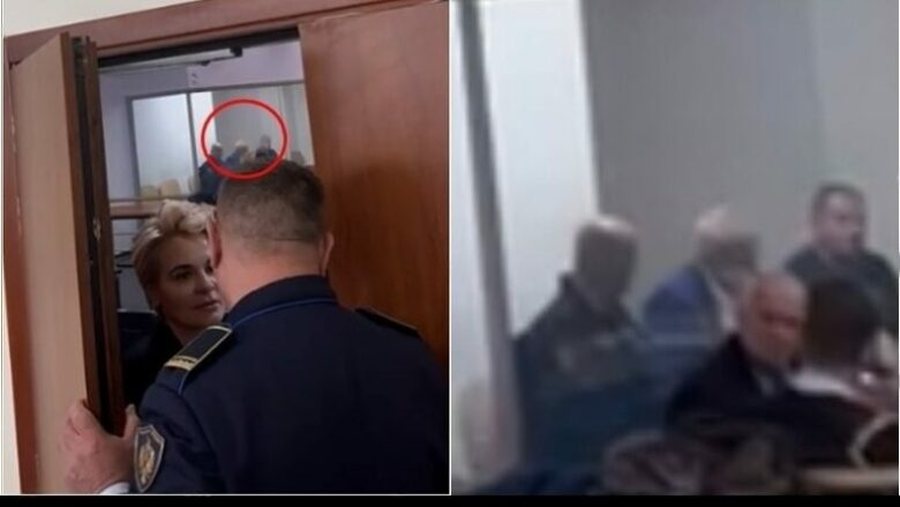
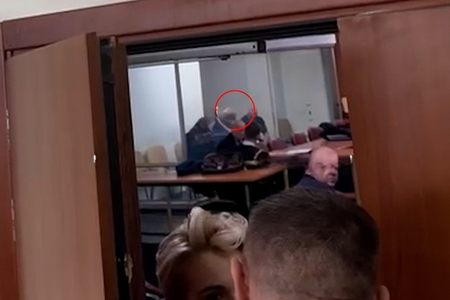
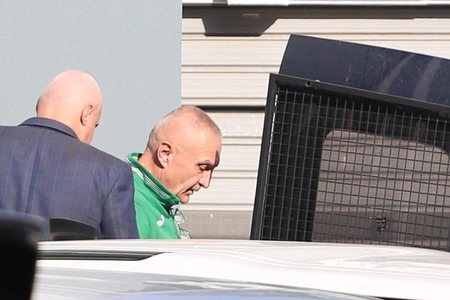
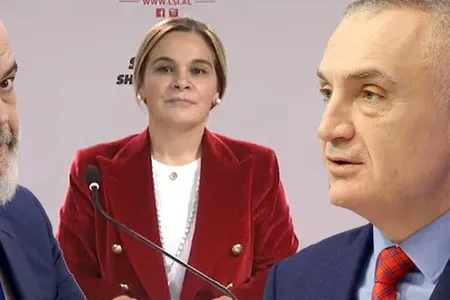
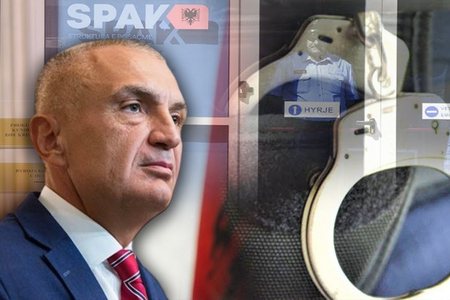
The Special Court of First Instance for Corruption and Organized Crime has started pressuring journalists for the images that appeared in the media today of Monika Kryemadhi and Ilir Meta in the courtroom. At the moment when Kryemadhi was entering the hall, it was possible to film, as Meta was seen in the glass cage in the background. But this has alarmed the court, which seems to be annoyed that Meta appeared in the media under those conditions.
Announcement of GJKKO:
Based on the finding of several violations, in the use of electronic devices, showing images (photos/videos) from court sessions, by journalists, in violation of the Code of Criminal Procedure, Decision No. 716, dated 06.12.2023 of the Council of High Court "On the approval of the standard guide of court relations with the public and the media", Instruction No. 9, dated 15.09.2010 of the Commissioner for the protection of personal data "On the basic rules regarding the protection of personal data in written, visual and audiovisual media", we inform you as follows:
The standard guide of court relations with the public and the media, approved by Decision No. 716, dated 06.12.2023 of the Supreme Judicial Council:
In Chapter IV, article 13, point 1 and 4 provides that:
1. Public court sessions are open to the public and the media.
4. The media representative, during the session, is allowed to report through written messages from telephone and/or computer equipment, only after having previously obtained the authorization of the chairman of the session. In any case, these devices must be used without sound. In Chapter IV, article 14, point 1, 2 and 8 provides that:
1. Court hearings can be recorded and broadcast in the media, at the request of the media or at the initiative of the judge/presiding judge. In any case, the recording and broadcasting of the hearing, in whole or in part, is done only when it does not conflict with the rules of due process.

2. The electronic media can record and transmit, in whole or in part, by order of the judge/presiding judge, who decides on the case subject to trial. Any other registration is prohibited.
8. The request can be rejected only for the following reasons:
a) The court session takes place behind closed doors;
b) When one of the subjects in the trial does not want the session to be recorded. This rule does not apply to the prosecutor and the lawyer.
c) It is appreciated by the judge/presiding judge that the presence of cameras affects the progress of the regular judicial process. Instruction No. 9, dated 15.09.2010, of the Commissioner for the protection of personal data "On the basic rules regarding the protection of personal data in written, visual and audiovisual media":
Street "Jordan Misja" No. 1, 1057 Tirana; phone/fax 0035542231527; ëëë.gjp.gov.al
In Chapter I, point 8 and 10 provides that:
8. ... the journalist does not take or produce images and photographs of people under arrest without their consent. People should not be filmed with handcuffs and handcuffs.
10. Journalists ... also cannot take images in a hospital or prison with cameras without the consent of the subjects. From the security footage installed in the Special Court of First Instance for Corruption and Organized Crime, the violation of the above laws and instructions has been established. Some of the journalists have distributed photos and film footage from the court sessions, which were taking place in the premises of the Special Court of the First Instance for Corruption and Organized Crime, specifically in sessions of "Interrogation of arrested persons and verification of conditions and security needs for the persons under investigation", these sessions which take place only in the presence of the parties, without the presence of the media and the public, thus seriously violating the guarantees and rights that the criminal procedural law offers to the persons under investigation.
WE EMPHASIZE THAT: On the part of the court, through security cameras, relevant verifications are being carried out to identify the persons who have illegally and repeatedly violated the above acts, in order to take all measures to prevent the repetition of the actions of such. Tirana, on 23.10.2024 Special Court of First Instance for Corruption and Organized Crime.



Lini një Përgjigje