


 Shkruar nga Pamfleti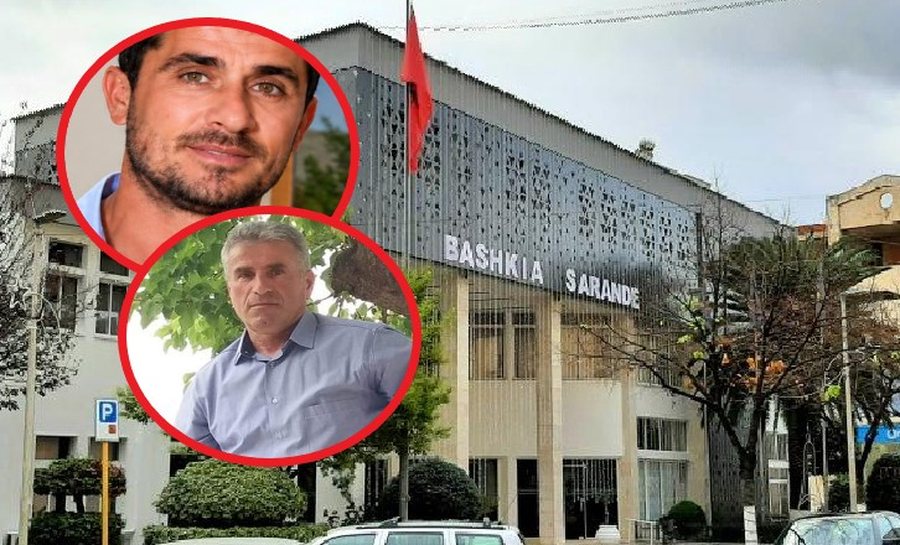
How did IMT Saranda go from one scandal to another? Three periods, three leaders and the same suspected pattern: illegal construction, institutional inaction, accusations of corruption, favoritism and lack of accountability.
Saranda is no longer facing an ordinary administrative problem. Saranda is facing a recurring pattern of institutional capture, where the Inspectorate for the Protection of Territory, the institution that was supposed to protect the city from unauthorized construction, has allegedly become the main mechanism for permitting, covering up, and favoring illegality.
In the last three years, three phases of serious doubts have emerged at the top or within IMT Saranda. The phase of Nasip Hoxha, the phase of Eduart Veliu and the current phase of Fatjon Veliu. Three periods, three names, but a single model, illegal construction, inaction, corruption, favoritism of the strong and the lack of real responsibility.
The first phase, Nasip Hoxha and the IMT turned into a symbol of abuse and corruption.
The first name that weighs heavily on the history of IMT Saranda is Nasip Hoxha. During his tenure, IMT Saranda became the subject of numerous public denunciations and accusations of inaction against unauthorized construction, tolerance of illegality, and use of the institution as a means of favoritism.
Instead of IMT stopping unauthorized construction, according to public denunciations, in Saranda construction continued, buildings grew, demolition decisions remained on paper, while the city was concreted before the eyes of the institutions. This was no longer simply an administrative failure. This was the moment when IMT Saranda allegedly turned into a structure that did not protect the territory, but protected the interests that built on the territory.
The reports of the Supreme State Audit later identified serious problems in the Municipality of Saranda and in the functioning of the structures that were tasked with controlling the territory. After these findings, the structure of the IMT was shaken and the previous leadership left. But the question that remained unanswered was, why did no one go all the way with the criminal responsibility of those who allowed this situation?
Was Nasip Hoxha really investigated for the entire period of his leadership of the IMT?
Were all demolition decisions that were not executed verified?
Were the imposed and uncollected fines checked?
Were the connections between IMT officials, builders, and political leaders of the Saranda Municipality investigated?
Or did the first group of suspects at IMT Saranda escape unharmed until the end?

Second phase: Eduart Veliu and the penalty kick against IMT.
After Nasip Hoxha, Eduart Veliu was appointed head of the IMT Saranda. But instead of cleaning up the institution, the scandal deepened. Investigations by the Saranda Prosecutor's Office into illegal construction brought security measures against IMT officials, with specific names on the scene: Eduart Veliu, chief inspector of IMT Saranda; and 10 IMT inspectors.
If IMT had a duty to stop unauthorized construction, how did it happen that IMT officials ended up at the center of the investigation?
Who notified the builders?
Who didn't notice the objects?
Who kept the files inactive?
Who signed the minutes?
Who left the demolition decisions unexecuted?
Who guaranteed the construction until completion?
These are questions that the Prosecution cannot limit to just a few inspectors. Because when the IMT, police and builders are involved in the investigation, then we are not talking about isolated violations. We are talking about suspicion of an organized group regarding illegal construction.
The third phase, Fatjon Veliu and the question that weighs on the Municipality of Saranda, who is the son of Eduart Veliu's uncle, appointed by the latter as an inspector at the Saranda IMT.
After the crackdown on Eduart Veliu's group, citizens expected IMT Saranda to be cleaned up, any access to suspicious documentation to be blocked, and an independent administration to be established until the investigation was completed. But the opposite happened. Fatjon Veliu emerged as the head of IMT.
This is the most serious point in history.

According to public complaints, Fatjon Veliu is not a figure detached from the previous structure, but a person who was part of the administrative circle of the IMT. For this reason, his appointment as head of the institution cannot be treated as a normal administrative action. He should be treated as an investigative lead.
Why, after Nasip Hoxha and Eduart Veliu, is a person connected to the same structure and precisely Eduart Veliu's relative once again placed at the head of the IMT?
Why was Fatjon Veliu left out of the wave of responsibility, while the structure he is suspected of being a part of was hit by the criminal investigation?
Is Fatjon Veliu politically protected?
Does he enjoy the support of the mayor of Saranda?
Has the head of the IMT been appointed to check the files left by Eduart Veliu to his cousin?
Is the current leadership being used to fix documentation, cover administrative tracks, or neutralize evidence that the Prosecution may need?
This is the essential question, is Fatjon Veliu the new head of a cleansed institution, or a representative of the third suspected group that maintains the continuity of the scheme?/ Infront.org


Lini një Përgjigje