


 Shkruar nga Pamfleti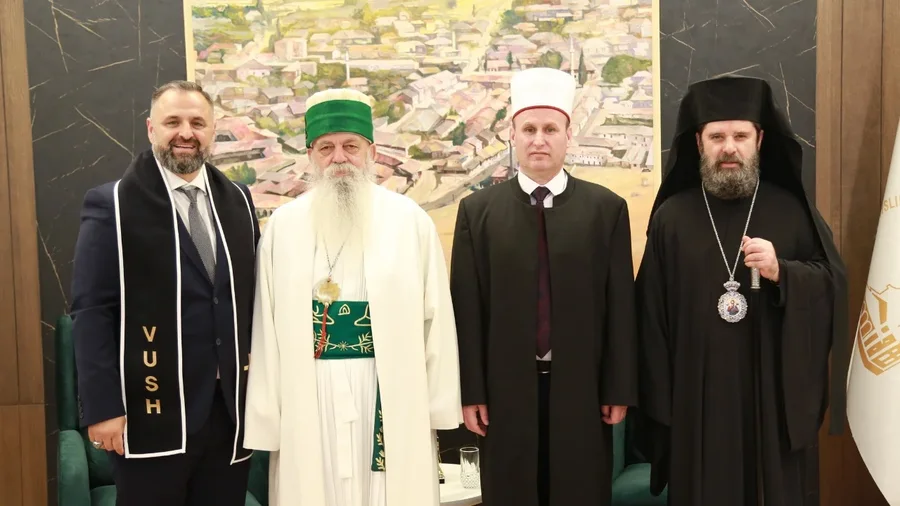
The Inter-Religious Council of Albania (IRC) has reacted to the guidelines for hormonal treatment of transgender people, approved by the Ministry of Health. The Council has expressed concern about the way the guidelines were approved and calls for more institutional transparency, professional consultation and public debate on this issue. This is because the case has broad social, ethical and medical implications.
The Council's statement further states that any medical protocol or intervention with potential long-term physical, psychological and social consequences must be based on clear scientific standards, a solid legal basis and transparent decision-making procedures.
The Ministry of Health has also been asked to make public the scientific and medical basis on which the guideline was drafted, the reasoning that led to its approval through an accelerated procedure, as well as the legal basis on which this decision is based.
The statement also raises questions about the legal framework that authorizes medical personnel to apply hormonal treatments to transgender people, arguing that current Albanian legislation does not provide for a specific and detailed regulation of the legal status, clinical criteria, and procedures related to these treatments.
Full statement:
On the Clinical Practice Guideline “On the hormonal treatment of transgender persons”. The Interreligious Council of Albania has closely followed the approval of the Clinical Practice Guideline “On the hormonal treatment of transgender persons”, approved by Order No. 304, dated 28.04.2026, of the Ministry of Health and Social Welfare.
In respect of the constitutional order of the Republic of Albania, and the competencies of public institutions in the field of health, the Interreligious Council of Albania assesses that issues of this nature, due to their social, ethical, medical and anthropological impact, require full institutional transparency, broad professional consultation and informed public debate.
In order to protect the public interest, the Interfaith Council considers that any medical protocol or intervention with potentially long-term physical, psychological and social consequences must be based on clear scientific standards, a stable legal basis and transparent decision-making procedures, in accordance with the constitutional principles of proportionality, legal certainty and the protection of public health.
For this reason, the Interreligious Council requests that responsible institutions make public:
-The scientific and medical basis on which this guide was developed;
-The scientific, medical and ethical reasoning that justifies the approval of this order through an accelerated procedure;
-The legal basis and legal powers on which its approval is based;
-The reasoning and criteria on which the category of minors is included in this regulation.
The Interreligious Council also considers that the legal basis on which medical personnel are authorized to apply hormonal treatments to transgender persons requires public clarification, given that current Albanian legislation does not provide for a specific legal framework that regulates in detail the legal status, clinical criteria, medical procedures and treatment standards for this category of persons.
Given the complex nature and long-term medical, psychological and social consequences of hormonal treatments, the Interfaith Council assesses that a broad national debate and multidisciplinary consultation with experts in medicine, bioethics, psychology, law and representatives of civil society is necessary, with the aim of guaranteeing transparency, legal certainty and public trust with institutional responsibility, ethical language and respect for the dignity of every person.
The Interreligious Council of Albania reiterates that, in accordance with the teachings and traditions of the religious communities it represents, human identity and the distinction between man and woman are considered a fundamental part of human nature given by God. In this sense, we express our reservations and concern towards medical interventions or practices that aim to artificially change biological gender characteristics, considering that such procedures affect the natural concept of the human person and the family, according to religious tradition and the values on which our society is built. Our mission remains the commitment to the protection of human dignity, family, moral order and public interest, calling for institutional responsibility, transparency and respect for fundamental human and social values. INFSH Presidency Board.




Lini një Përgjigje