


 Shkruar nga Pamfleti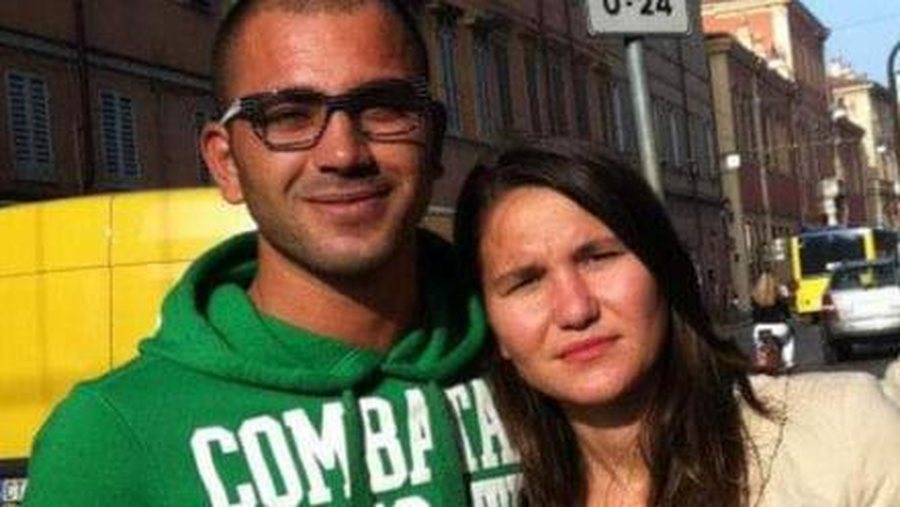
Majlinda Sula, the sister of Saimir Sula, the young Albanian who died during the pandemic in a hospital in Spain, managed to transfer her brother's heart to her country, but they could not do the DNA test "for lack of means".
The family has asked the Albanian authorities to send a sample of the heart to other European laboratories for analysis, but the Balkan country refuses.
The family of Saimir Sula, the young Albanian who died in Spain in 2020 and was repatriated to his country without a heart, hoped that after almost four years of difficult judicial and institutional processes, the Albanian authorities would help the case to be clarified.
Last summer, a commission of experts from Albania traveled to Barcelona to return the young man's heart to his homeland and to carry out the necessary tests to prove that the heart really belongs to Saimir and further to discover the causes of his death. to the young
According to the family, represented by lawyer Carlos Sardinero, from the association El Defensor del Paciente, when the heart arrived last July in Albania, they could not perform the DNA test due to the "lack of technical means".
"They have not been able to separate the heart from formalin, a chemical used to preserve organs and tissues, because technically they cannot and this has made it impossible to carry out the test", denounces the sister who only wants to end the nightmare that is going on lasts for four years.
The family has asked the Albanian authorities to send a heart sample to other European laboratories at their own expense, but the Balkan country refuses "without giving further explanations".
"They are not making things easier," says Majlinda.
Faced with such a situation, Saimir's family members have decided to transfer the case "even the body" to Strasbourg.
The lawyer assures in the pronouncements for ABC that the family has found laboratories in Brussels and Vienna that "will be able to perform the heart test with a guarantee".
In the coming days the family will take the case to the European Court of Human Rights as a last resort after the Constitutional Court rejected the family's appeal for protection.
event
Saimir Sula, 31, died on May 9, 2020 in Barcelona. They took him to Hospital del Mar with a fever and symptoms consistent with those of Covid-19.
The young man was tested for antigen and was negative, but he was still hospitalized. The next morning, the young Albanian wanted to leave the hospital and when they prevented him, he suffered an anxiety attack, which the doctors linked to the schizophrenia he was diagnosed with. To calm him down, they gave him an antipsychotic, but despite this, the intervention of the hospital's security agents was needed to prevent him from leaving the premises, which caused him to have a respiratory arrest and then his death.
Saimir's family launched a campaign to clarify the causes of his death, an arduous journey that still continues.
When the young man's body was repatriated to Albania, in 2020 it was found that his heart was missing. They insisted, and on May 27, 2021, the histological report of the alleged organ was sent. The dates did not match. According to the document, consulted by ABC, the heart analysis started on April 22, 17 days before Saimir's death.
Why was he repatriated without the heart organ?
The family's suspicions that "there was something strange" in their brother's death increased. Whose heart was it, where is Saimir's and why did they not warn the relatives that the corpse was being repatriated without an organ? To clarify the circumstances of the death, Majlinda went to the Court of Barcelona, which closed the case. The judge assessed that there was no evidence that the ban applied to the young Albanian caused his death, and refused to do the DNA test on the young man's heart, as requested by the family's lawyers.
In its latest order, dated March 21, 2023 and consulted by this newspaper, the Court of Barcelona affirms that "in the medical report dated June 15, 2022, it is established that the medical care provided to the deceased was in accordance with standard medical practice.
However, it accepts that the restriction applied was an intermediate cause with the influence of other causes.
However, the Albanian authorities decided to reactivate the process through the Prosecutor's Office of the Court of First Instance of Tirana and requested an answer from the Government of Spain.
He is suspected of the criminal offense of illegal purchase and sale of organs
In this sense, the Prosecutor's Office of the Court of First Instance of Tirana has registered a criminal proceeding for the suspected criminal offense of illegal purchase and sale of organs, provided for in Article 89 of the Albanian Criminal Code. The prosecution also directed an injunction seeking judicial assistance from the Spanish judicial authorities, in two letters made in February 2021 and April 2022. In both proceedings, it was requested that the heart be sent to Albania or, in the event that is not possible, take a DNA test.
In July 2023, the organ finally arrived at its destination, but the nightmare did not end for the family, as there was no "technical possibility" to perform a genetic analysis with reliable results.
"Keeping a heart for three years, supposedly in the Anatomical Institute, has a cost and takes time, but the DNA test that costs minutes cannot be done", denounces the lawyer.
After a few days, the lost and still unidentified heart will leave for Strasbourg, and with it the hopes of a "tired" family that only wants "justice".




Lini një Përgjigje