


 Shkruar nga Pamfleti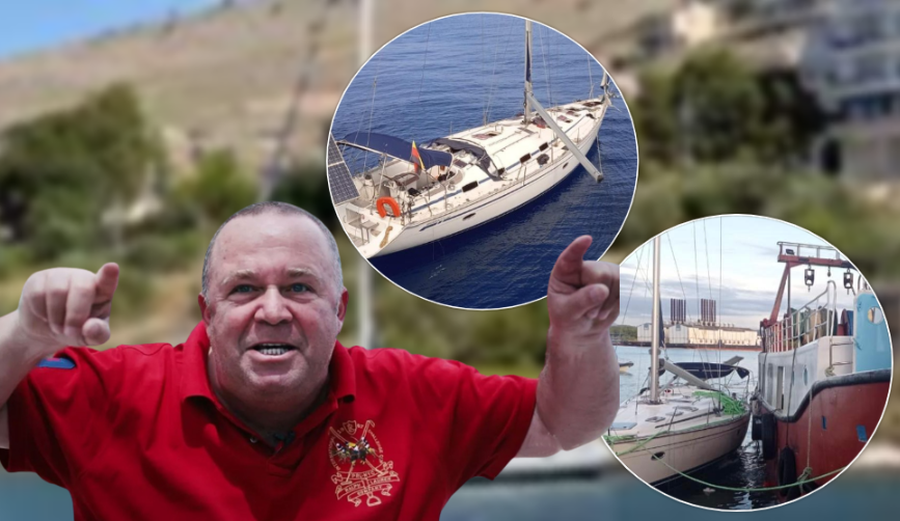
A Europol report (Doc. E-02) raises the alarm about an Albanian fish operator that sails daily from Durrës and Shëngjini to Brindisi and Bari. The official risk assessment is 4 out of 5: possible disguised trafficking and money laundering. All the parameters described match point by point with the activity of ROZAFA, the company of businessman Gjergj Luca.
Europol’s 2022 report does not name individuals or companies, as the agency’s standard policy is to keep identities confidential until a proper criminal investigation is launched. The report only lists the entity as “Albanian fish operator, based in Durrës/Shëngjin, exporting to Bari/Brindisi.”
On paper, ROZAFA declares about 12,000 tons of fish per year. According to INSTAT, the total national fishing production in 2023 was 19,338 tons; thus, the company claims over 60% of the national market, an extremely high size for a fleet of 12 vessels.
Two of the 12 vessels of the “Rozafa” fleet switched off their AIS transponders for six and eight hours respectively at the narrowest point of the Otranto Channel, a segment known for illegal traffic. Without the mandatory AIS tracking, control authorities have no automated way to compare the real catch capacity with the stock declared to customs; the practice of removing the transponder allows the operator to record on paper, for example, 12 thousand tons of “own catch”, while behind the scenes filling the balance with purchased fish.
The peak of the "blue corridor" since 2006
On July 17, 2006, the international magazine "Defense & Foreign Affairs Special Analysis" listed Gjergj Luca among the controllers of two main maritime corridors:
Macedonia – Albania – Greece, Montenegro – Tirana – Italy
Two decades later, the port nodes of the historical report overlap with today's ROZAFA itineraries, showing that the risk infrastructure has remained almost unchanged: only the container logos have changed.
The company owns the catch, processing, packaging, loading and export; vertical control that limits the footprint of third parties. The fish is loaded in Durrës or Shëngjin, the ships head out into the Adriatic, the AIS goes silent for a few hours in Otranto, then they land in Brindisi or Bari. Inflated balance sheets create space for currency flows into bank accounts, while the true volume remains unclear.
The report (Doc. E-02) is classified «EU RESTRICTED». The pamphlet publishes only the permitted elements: the “risk 4/5” assessment, the ports involved, the frequency of voyages and the vertical structure. The integral text, the operational file numbers and any nominal references remain confidential.
What is required from the authorities:
Customs-fiscal audit for the period 2022-2024, with comparison of FOB/CAF values against real market quotations;
Complete submission of AIS logs from the National Monitoring Center for all vessels that have lost their signal;
Verification of ownership and origin for chartered vessels;
Volume-production / volume-export comparison to measure the gap between fish "at sea" and fish "on paper";
Investigation of road contracts that connect Albanian ports with Italian warehouses.
When a company catches fish, packs it and turns off the transponder in the middle of the Adriatic, the alarm sirens sound louder than those of the pier. Until the institutions shed light on what is hidden behind this "white fleet", Albanian ports remain a gray corridor where fish is easily converted into currency and AIS continues to be silent.
*Note: Neither Gjergj Luca nor ROZAFA SH.A are the subject of any current criminal charges. This article presents risk indicators based on official documents; the Europol White Blue Adriatic: Risk Assessment report, customs manifests, and maritime analysis.
The Europol report allows the publication of only these data: the abbreviated code Doc E-02, the “risk 4 / 5” assessment and the typological description (repeated departures Durrës/Shëngjin, AIS outages of 3-9 hours).







Lini një Përgjigje