


 Shkruar nga Pamfleti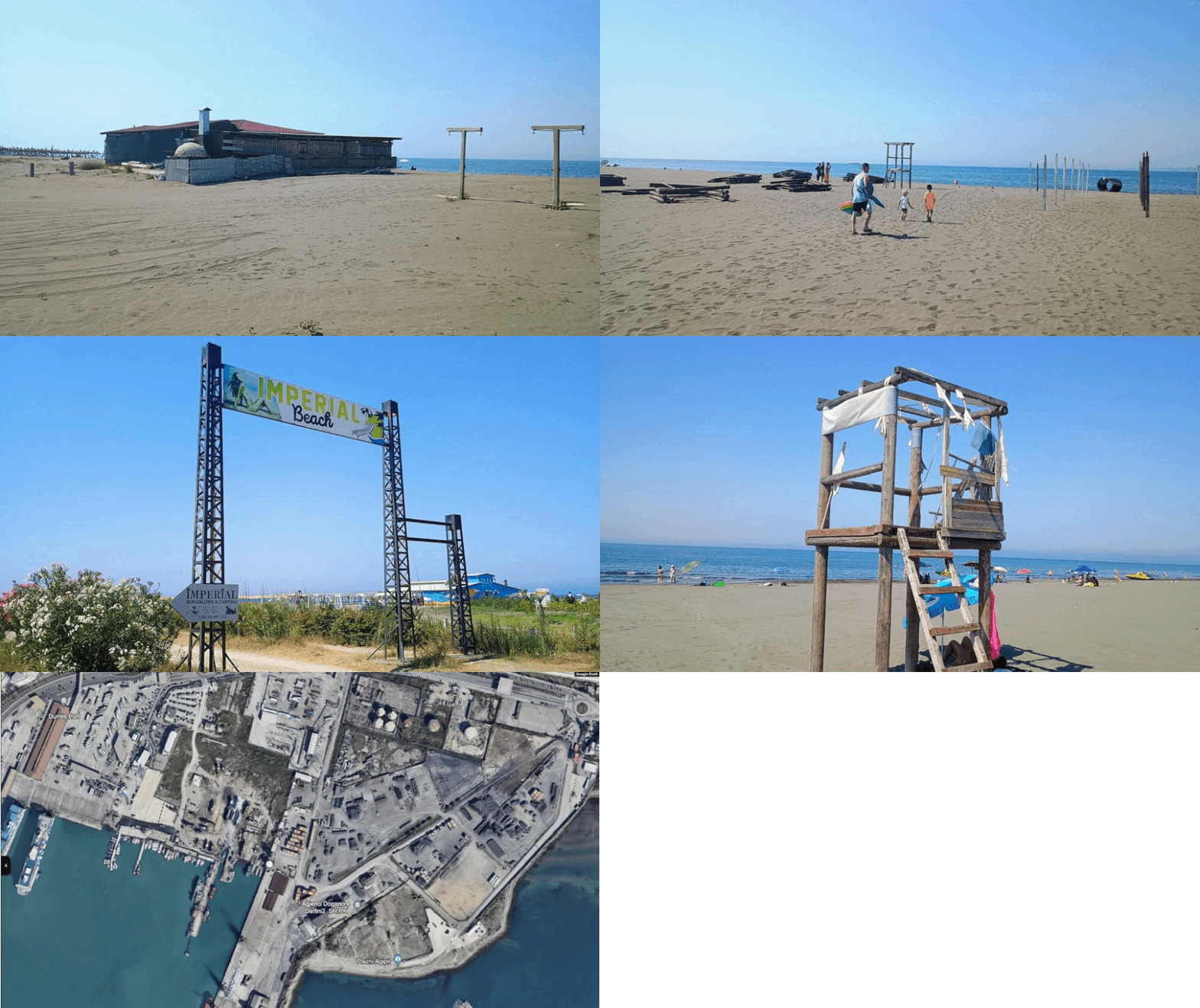
Alabar and Emaar Group Investments, Alarm Bells for the Balkans
The worrying situation in Ulcinj, where Arab investor Mohamed Alabbar (Eagle Hills) attempted to take full control of the famous beaches, has raised alarms about the way governments in the Balkans are giving away strategic public assets with problematic concessions and extraordinary terms of up to 99 years. In Ulcinj, citizen pressure partially stopped the deal, but the damage has been done: the tourist season has been severely threatened and trust in local governance has taken a severe hit.
In the same vein, Albania is facing an even more worrying challenge in the Port of Durres, where the controversial investment by Emaar Group (also from the United Arab Emirates) is causing an unprecedented crisis of transparency and economic sovereignty. The project, dubbed the "Dubai of Durres", is moving forward in an atmosphere of extreme opacity, while Albanian public properties are being given away almost in the air, with an uncertain legal framework and without strong guarantees of long-term benefit to the public.
In both cases, the lack of transparency and the dominance of foreign interests over local ones have provoked strong social reactions. In Ulcinj, citizens took to the streets to defend beaches from a concession that could exploit the local community, while in Albania the opposition and civil society have raised their voices for the same reasons, although without success so far.
In the background of these two cases lies a fundamental question: Can sustainable tourism be developed by blindly selling off strategic national resources? Albania and Montenegro are becoming victims of a development model that appears attractive on the surface, but which hides serious risks to economic and tourist sovereignty.
The case of Ulcinj should serve as a warning to Albania, where losing control over the Port of Durres could have long-term consequences, handing over the keys to the local economy to uncontrolled foreign interests.
Therefore, on both sides of the border, the answer must be clear: maximum transparency, preservation of public property and full engagement of the local community in every strategic decision. Otherwise, the Balkans risks losing control over the most important economic and tourist destinations, turning them into phantom investments with dramatic consequences for generations to come./ Pamphlet






Lini një Përgjigje