


 Shkruar nga Pamfleti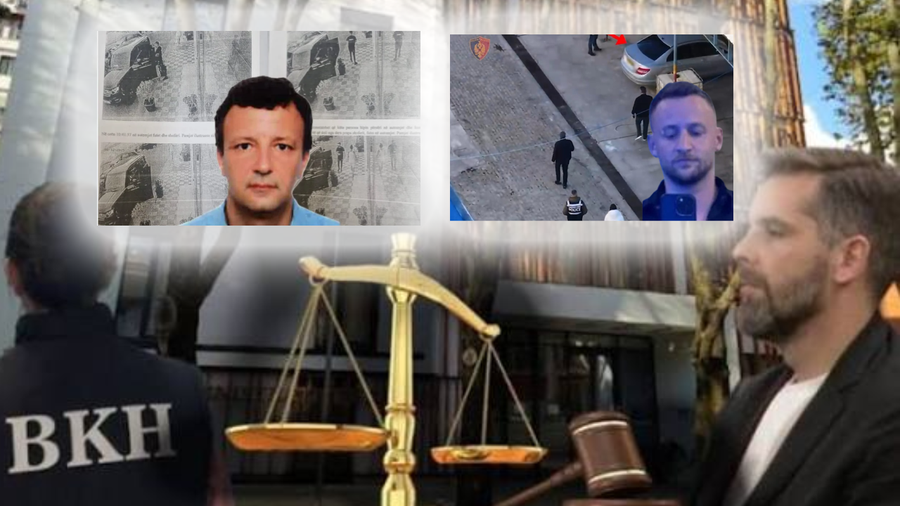
From the kidnapping of Xhafzotaj to the AKSH tenders, the name of the most feared institution in the country is being used as a passport for kidnapping. And Article 247 doesn't scare them.
In recent years, there has been an institution that has achieved the kind of authority that comes not from the salary scale, but from the weight of the files. This institution has hit where it hurts. It has led to the defendants' bench and has knocked on the doors of some people who were untouchable until yesterday. It has caused its name to be whispered with respect by citizens and with horror by those who have slept on tenders and public funds. It is precisely this reputation, built with work and not with words, that has become an object of greed for the criminal world.
The problem is simple to understand: when an institution becomes a symbol of legal force, criminals try to imitate it. To wear its skin to commit the very crimes that the real institution is tasked with punishing.
We are talking about a method that is being repeated.
First case: Neza cousins and 2 million euro fine against call-center boss
Late March 2026. Three cousins with criminal records, known for drug use, confront a 32-year-old man in the former Park area of Tirana. The individual in question is not an honest businessman, but someone involved in call center extortion. One of the three cousins intercepts him and says the phrase that has now begun to circulate in the underworld as a universal password: "We are BKH."
The victim does not resist. He does not ask for warrants, he does not ask to see an identification document. They get into the car as if he had been summoned by the Special Prosecution Office itself. They take him to Xhafzotaj. There they hold him hostage all night. The initial demand is 2 million euros. After several hours of violence and pressure, Neza's cousins "soften" and the figure is reduced to 500 thousand euros. In the morning they release him with the promise that he will find the money.
This case, although it involves common criminals and not mafia members like Agasi & Co., shows the basic mechanics of the phenomenon: three letters are enough to paralyze any protective reflex in the victim.
Second case: Black Defender and AKSHI tenders
August 2025. Gerond Meçe, shareholder in the technology company "ABS", gets out of his apartment in Tirana. A Range Rover Defender SUV with tinted windows and a police flannel stops next to him. A man dressed in a blue uniform gets out of the car. He wears a black vest with white letters on his chest: the name of that institution that we all now know.
Meçe boarded without protest. He believes they are taking him for questioning. He realizes he has fallen into a trap only when they handcuff him without giving him any escort papers. Ironically, they didn't even know how to put the handcuffs on properly.
The car does not head towards the investigation building. It heads towards the ruins of Graçen. There, the vest with the institution's name is removed. In its place, a pistol and a white envelope appear. Inside the envelope, an Excel spreadsheet with a detailed list of tenders that Meça's company had appealed to the National Agency for the Information Society.
The demand wasn't monetary. It was business elimination. "Withdraw your complaints or your job ends here."
Meçe is held at gunpoint for 6 hours. They give him his phone only to calm his family, while they monitor whether the case has been reported to the police. In the end, he is forced to withdraw complaints about 7 tender procedures through the e-Albania platform. Then they abandon him in a remote village in Elbasan.
This is no longer a case of crooks. This is organized crime that uses the uniform of the state to eliminate competition in public tenders. The same tenders that would later become the subject of official investigations and the arrest of the director of the ANA.
In the Albanian Criminal Code, the issue of the illegal use of a state uniform and title is specifically addressed in two articles. Article 246, entitled "Using a state title or office", provides that anyone who usurps a state title or office and performs actions that belong to the holder of that title is punished with a fine or imprisonment for up to two years, while when the act affects the freedom of a citizen or is committed for profit, the punishment is up to five years in prison. Article 247, "Unlawful wearing of a uniform", provides the same measures for anyone who wears the uniform or insignia of an employee performing a state duty without the right, accompanied by illegal actions, and again, when freedom is violated or there is a profit motive, the punishment is five years.
The problem does not lie in the existence of these articles, but in their specific weight in relation to the damage caused. When a criminal group wears the vest of an institution that has achieved respect and authority in the eyes of the public, it is not simply committing an administrative violation of dress. But it is robbing the trust that citizens have in that institution. Every time a citizen is kidnapped by someone who says "We are BKH", not only the victim is harmed, but the image of a structure that has built its reputation with years of work is eroded from within. Five years of imprisonment, in this context, does not constitute a real deterrent for those who use the uniform as a mask to commit serious crimes. For them, this measure is a small cost, a risk that is taken without much hesitation when faced with the benefit of hundreds of thousands of euros or the elimination of a competitor in million-dollar tenders.
If the state seriously wants to protect the image of its most important institutions from illegal and abusive use, then Articles 246 and 247 require immediate legal intervention. The harsher punishment for these offenses, especially in the part related to the violation of freedom and the fraudulent use of the uniform, is necessary. Until then, every street thug and every organized criminal group will continue to see that vest as a small investment for a big profit, turning the public's well-deserved fear of the institution into a weapon against the public itself. /Pamphlet





Lini një Përgjigje