


 Shkruar nga Souad Sbai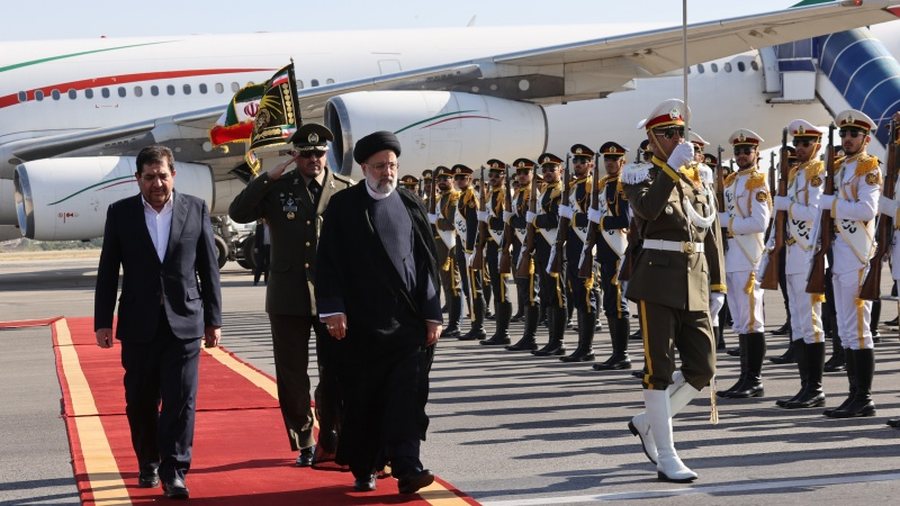
Iran is very interested in Latin America, an area a few kilometers away from the "Great Satan", as the theocratic regime calls the United States of America. In June 2023, President Ebrahim Raisi visited 3 Latin American countries, including one located just 90 miles from the US border.
The main objective of that tour was to strengthen Iran's strategic and economic ties in the Western Hemisphere by openly challenging the United States. During official visits to Venezuela, Nicaragua and Cuba, the Iranian president praised these countries "for their resistance to US pressure, as well as for sharing common values contrary to the current international order" based on democratic principles.
During that tour, Raisi emphasized the evolution of Latin America, from what was once considered the "backyard of the Americans", to the real independence of each of the countries of the region. But Iranian efforts to penetrate the region are not limited to diplomatic relations.
According to a study conducted by the International Institute for Counter-Terrorism (ICT), Iran receives support from terrorist organizations and pro-Iranian groups to expand its ideological influence in Latin America. Hezbollah is heavily involved in fundraising, propaganda and illicit trafficking operations.
While other organizations such as Al-Tajammu play an important role in expanding Iranian influence through the Internet and social media. Hezbollah's media influence is evident in the media. Through its Al-Manar TV station and other platforms such as HispanTV and Al-Mayadeen, Hezbollah promotes its ideology and the values of the Iranian Islamic revolution, reaching a large international audience, including those in Latin America.
Iran conducts "large-scale psychological warfare" through social networks, satellites and Spanish-language media to promote Iranian interests and attack the West and Latin America. Jorge Serrano, a member of the advisory team on Iran at the Intelligence Services Commission of the Peruvian Congress, emphasized the key role of the Iranian Ministry of Intelligence (VEVAK) behind these activities.
Compared to Iranian ambitions in Latin America, already discussed in the same newspaper in 2018 in the article Narcos and Jihad, lies about extremism in Brazil, currently emphasize the links between Iran, its proxies Hezbollah and Hamas, and destabilizing activities in Central America and Southern.
Particularly noteworthy is Hezbollah's involvement in illegal activities, such as drug trafficking and ties to criminal organizations such as Primeiro Comando da Capital in Brazil, the largest criminal organization in the country, with approximately 11,000 members, present mainly in the areas of San Paolo.
But also with and Triple Frontera: the border area between Argentina, Brazil and Paraguay, long identified as a nerve center with a wide range of criminal activities, ranging from drug and arms trafficking, to smuggling of goods, theft of property intellectual property, forgery of documents and money laundering.
This area is known as an important center for money laundering, and aims to support the activities of organized crime and terrorist networks, with significant financial consequences and a major impact on regional security, generating approximately 43 billion dollars per year.
Illegal activities have been documented there for more than 40 years. And terrorist organizations like Hezbollah have found in the Triple Frontera the right environment where, thanks to alliances with criminal organizations, they can rely on access to financial resources to subsidize their attacks.
It guarantees independence from state sponsorship; and gives them the opportunity to build economic power by compensating for the lack of public support; but also access to specific skills (money laundering, forgery of documents); for facilitating cross-border movements (use of human trafficking routes); and to come into contact with a wide range of potential recruits who already belong to the underworld.
Since its creation in the 1980s, Hezbollah has received significant support from Iran, both economically and militarily. In addition to this support, this group has financed its activities through several illegal activities on a global scale.
In Latin America, several investigations have highlighted strong ties between Hezbollah and drug-trafficking organizations, including the Colombian FARC and the Mexican Los Zetas and Sinaloa cartels. These ties have facilitated the exchange of weapons between Hezbollah and Mexican cartels, as well as learning to build tunnels similar to those used on the border between Lebanon and Israel.
Hezbollah is involved in several illegal activities, including cigarette smuggling, drug trafficking, and the illegal trade in diamonds from West Africa, especially Sierra Leone. Over the years it has been revealed that despite Hezbollah's criminal activities, in 2017 the Obama administration completely blocked investigations into the group's international drug trafficking network in order to preserve the deal on Iran's nuclear program.
The investigation, known as Project Cassandra and carried out by the US DEA, uncovered an extensive cocaine-trafficking network run by Hezbollah, but requests for arrest warrants by the DEA were allegedly blocked or delayed so as not to jeopardize the Iran deal. Through various wiretapping, undercover operations and informants, and with the help of 30 other US and foreign intelligence agencies, the DEA allegedly uncovered an extensive Hezbollah cocaine-trafficking network that stretched from South America to Europe and the East. Middle, but also other routes that started from Venezuela and Mexico to end in the United States.
According to the DEA's investigation, Hezbollah obtained synthetic drugs from Mexican drug cartels to initially sell them primarily in the Middle East—where, after learning the chemical processes, it built its own laboratories for the production of amphetamines—in order to finance operations and his economy.
In this field, this organization found a partner in the Assad regime, especially for the drug Captagon. The particular concern for Latin America is motivated by the fact that many countries in the region do not consider Hezbollah a terrorist organization, thus limiting the scope of action for local authorities. Open support from local authoritarian regimes linked to Tehran, such as Nicolas Maduro's Venezuela, has transformed the area into a vanguard base of operations for Iran./ Pamphlet adapted from La Nuova Bussola Quotidiana





Lini një Përgjigje