


 Shkruar nga Timothy Garton Ash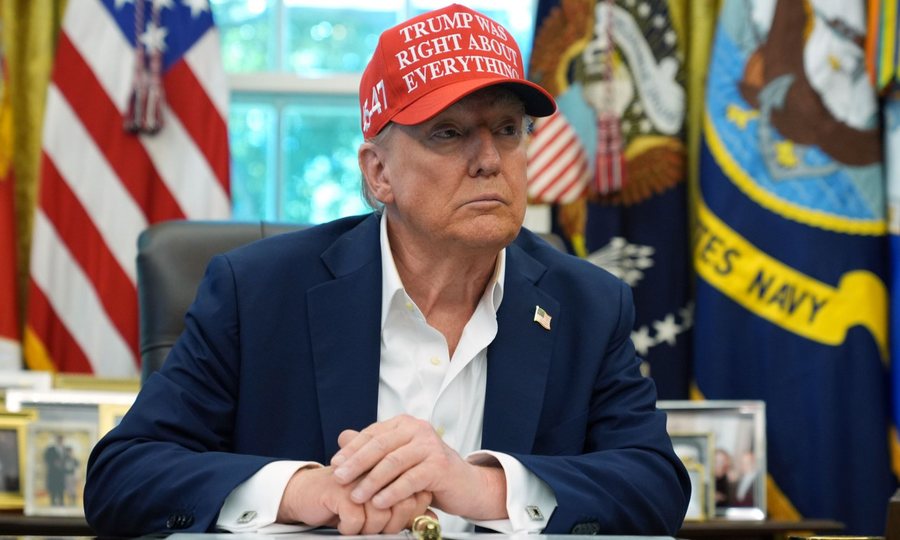
No European society compares to the United States for the sheer presence of violence...
If the midterm elections this fall of 2026 produce a Congress capable of containing President Donald Trump, they will have another 700 days to prepare for the peaceful transfer of executive power, the only thing that can guarantee the future of this democracy. Operation Salvation of American Democracy, phases one and two. Hysterical exaggeration? I would like to believe it. But during the seven weeks I spent in the United States this summer, I was disturbed every day by the speed and brutality with which the executive branch is attacking seemingly entrenched democratic norms, and by the desperate weakness of the resistance to these attacks.
Internationally, there is mounting evidence that liberal democracy, once eroded, is very difficult to restore. Destroying is much easier than building. That is why all Democrats, regardless of party or ideology, should hope that Democrats will regain control of the House of Representatives in the midterm elections on November 3, 2026. Not because of Democrats’ policies, which are a mess, nor because of their current leadership, which is a disaster, but simply because American democracy needs Congress, the primary institutional counterweight to presidential power enshrined in the U.S. Constitution, to get back to doing its job. And that will not happen as long as Republicans, dominated and intimidated by Trump, control both chambers.
Much comparison has been made to other authoritarian coups, from 1930s Europe to Viktor Orbán’s Hungary, but the U.S. case strikes me for its peculiarities. To name four: excessive executive power; systematic manipulation of electoral districts; endemic violence; and the opportunities available to an aspiring autocrat to exploit the intense capitalist competition that permeates every aspect of American life.
The danger of overreaching executive control has existed from the beginning. Revolutionary War hero Patrick Henry (“liberty or death”) voted against the Constitution at the Virginia ratifying convention of 1788 precisely because he believed it would give a criminal president the opportunity “to attempt a bold assault on the American throne.” Throughout the twentieth century, presidents of both parties expanded the “executive power” so vaguely defined in Article 2 of the Constitution. More recently, the conservative-dominated Supreme Court has upheld the “unitary executive theory” developed by right-wing jurists.
No European society compares to the United States for the sheer presence of violence. Almost every day this summer went by without the evening news reporting at least one violent crime, including another horrific school shooting. There are more guns than people in America. France loves its revolutionaryism on stage, but the United States witnessed the mob attack on the Capitol on January 6, 2021. Now that right-wing activist Charlie Kirk has been killed, before the identity of the killer is known, Elon Musk declared that “the left is the party of murder,” and Trump blamed the “radical left” for the hate speech. It will be a miracle if America escapes a downward spiral of political violence not seen since the 1960s. Which, in turn, could give Trump the pretext to invoke the Insurrection Act of 1807, putting more troops on American streets and further exploiting a supposed state of emergency.
Meanwhile, universities, business leaders, big law firms, media platforms, and tech moguls have failed to take collective action in response, keeping their heads down or accepting humiliating settlements, like Columbia University and the Paul Weiss law firm; or bowing to the president, like Mark Zuckerberg. Why? Because they all follow the logic of fierce free-market competition and fear targeted retaliation. I never imagined I would see fear spread across America with such breadth and speed.
Add in efforts to disqualify or intimidate voters, plus Trump’s threat to ban mail-in voting, and it’s fair to have serious doubts that next November’s midterm elections will be completely free and fair. The job of Democrats of all stripes is to make sure they are, to the extent possible. The job of Democrats (with a capital D) is to win them, no matter the odds.
The key, once again, will likely be issues that affect voters’ wallets. One paradoxical hope lies in the economy. Trump’s tariffs are starting to translate into higher prices. Employment figures are falling. Trump’s “big, beautiful bill” will further increase the already staggering $37 trillion national debt. In the last fiscal year, interest costs on the debt exceeded the entire $850 billion defense budget. But until a debt crisis materializes, such macroeconomic risks remain distant and abstract to most voters, as do forecasts of falling GDP growth, which had little impact on the Brexit referendum debate.
The key question, then, is whether Trump’s negative economic consequences will be felt by ordinary voters before the midterm elections. As one astute political observer pointed out to me, Trump, emboldened by the new tariff revenue, could offer voters a cash handout before the vote, perhaps presenting it as compensation for the “temporary hardships” of the transition to a MAGA economy. That would be a classic populist move.
The most important thing for Democrats over the next 400 days, then, is to make the inevitable economic costs clear to voters. Democrats will not gain by resorting to defending democracy, much less by waging culture wars. They should follow James Carville’s advice and focus relentlessly on the everyday problems of families. In doing so, they will also show that they truly care about ordinary working- and middle-class Americans, whose support they have lost over the past thirty years.
Then comes the second phase, the 2028 presidential election. But, to paraphrase the Sermon on the Mount, every day has its challenges. Despite the grave threats to democracy itself in the United States, for now the first rule of democratic politics holds true: win the next election./ Adapted from "Pamphlet" by "La Republica"




Lini një Përgjigje