


 Shkruar nga Pamfleti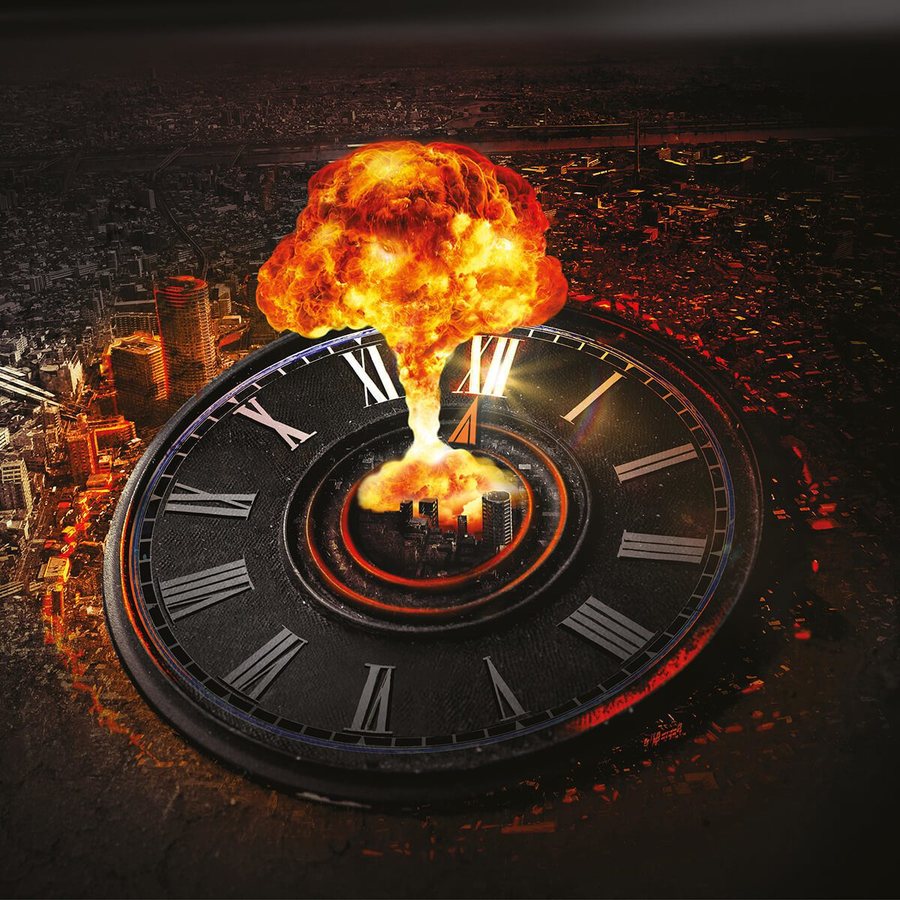
The Bulletin of the Atomic Scientists announced today (January 27, 2026) that the hands of the Doomsday Clock have moved forward four seconds and are now just 85 seconds before midnight, marking the closest moment to the symbolic hour of the apocalypse.
Her statement cited expiring nuclear treaties, climate change, and artificial intelligence and disinformation as among the top threats that have worsened in the past year.
Every year since 1947, the Bulletin, a group of scientists, policymakers and experts, sets the clock as a representation of the time humanity has left to avert global catastrophe.
The hands of the clock move backward or forward depending on whether steps are taken to address threats that could end human civilization on Earth, including climate change and nuclear war.
The clock also changed last year, when the Bulletin set the clock hands at less than a minute and a half to midnight, closer than ever before, including during the Cold War.
This year, the organization determined that the world is closer to the apocalypse than further away. So they changed the hands of the clock, which are located in the Bulletin's offices at the Keller Center, home to the University of Chicago's Harris School of Public Policy.
In their decision, the Bulletin specifically cited the imminent expiration on February 5 of the New START Treaty, an agreement between the United States and Russia that limits the number of nuclear weapons.
"For the first time in more than half a century, there will be nothing to prevent an unpredictable nuclear arms race ," said Daniel Holz, a professor of astronomy, astrophysics and physics at the University of Chicago and chairman of the Science and Security Board that sets the clocks.
The bulletin also cited military conflicts between nuclear-armed states; the lack of progress on climate change; the rise of nationalist autocracies; and the unchecked spread of generative AI as factors contributing to disinformation and misinformation.
“We are living in an information Armageddon. Without facts you cannot have truth, and without truth you cannot have trust,” said Bulletin guest speaker Maria Ressa, a journalist and professor of professional practice at Columbia University and laureate of the 2021 Nobel Peace Prize.




Lini një Përgjigje