


 Shkruar nga Pamfleti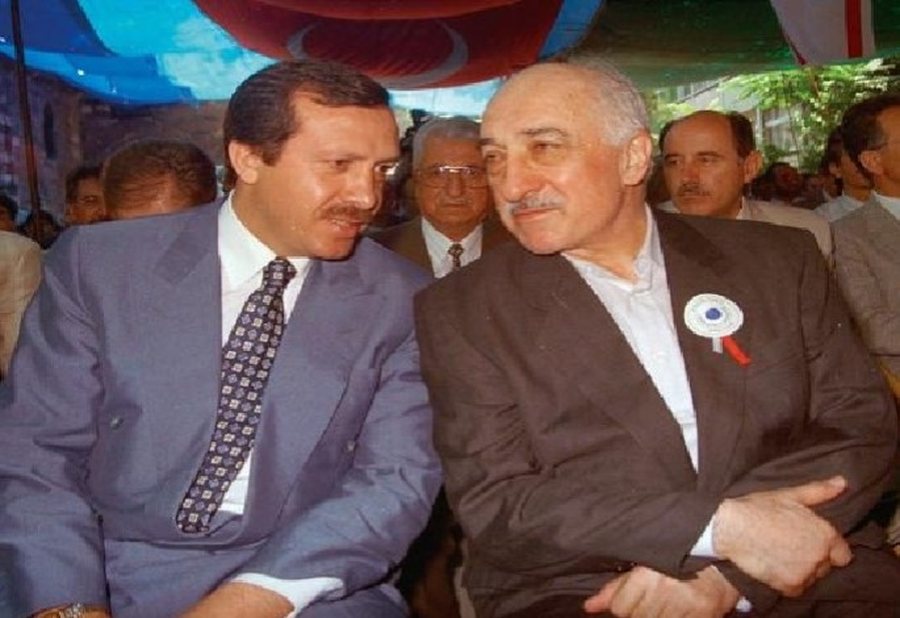
There are many things at play. Gulen's death could change the situation in Turkey, or it could make the regime feel more secure and become more aggressive...
Turkish cleric Muhammed Fethullah Gulen died in Pennsylvania this week. Gulen and his movement were accused by the ruling Islamic Justice and Development Party (AKP) of attempting a coup against Turkish leader Recep Tayyip Erdogan in 2016. The coup attempt came at a time of transition in Turkey and was used by government as an excuse to purge hundreds of thousands of political opponents from all sections of society.
It also led the Turkish state to use all means abroad to attack institutions and people associated with Gülen. This included court submissions around the world.
Gulen was 83 years old. The story of how Turkey's current leadership has come to view Gülen and his movement as a "terrorist" group is not entirely clear. What is clear is that the AKP has dominated Turkish politics for the past two decades and has thrived by finding various enemies along the way, which it then accuses of conspiracies in order to purge them afterwards. These enemies have included accusations against secular officers in the army, as well as the Gulen movement and the Kurdistan Workers' Party.
An opening for Turkey?
Gulen's death may serve as an opening in Turkey, because the ruling party may be less paranoid now. It is not clear whether the death will lead to an opening, but let's review how we got here in Turkey.
Turkey's current ruling party first won elections in 2002. Because Turkey has a history of coups that have been used to keep right-wing Islamist elements out of power, the AKP moved cautiously at first. She wanted to transform Turkey into a more conservative Islamic power. It wanted to reorient itself from being pro-Western and pro-NATO to being close to Russia, Iran, China and also to lead the Turkish and Islamic world.
At first, the AKP tried to have a policy of "zero problems" with Turkey's neighbors. This enabled the party to focus domestically. Gülen and his institutions were not initially seen as rivals. Instead, the leadership tried to crack down on elements of the secular opposition.
This meant going after the secular-nationalist media and targeting Western-affiliated universities, students and NGOs. This was a model taken from Putin's consolidation of power in Russia.
The first plot the AKP identified was what it called "Operation Sledgehammer," which it said was a coup plot dating back to 2003. In 2012, hundreds of officers were sentenced to prison for the alleged plot. Beginning in 2008, there were also a series of Ergenekon trials accusing hundreds of military officers and others of involvement in a "plot" against the state. The trials lasted until 2016. As with the attacks on Gülen, the AKP-led Turkish state accused its enemies of being part of various clandestine organizations whose existence was not always verifiable.
A turn against Israel
As the alleged conspiracies increased, the state became more hostile to both the EU and other former friends such as Israel and the US. In 2009, Erdogan turned against Israel. In 2010, Ankara let the Mavi Marmara ship sail to Gaza, resulting in an Israeli attack that left 10 dead on board the ship.
THINGS CHANGED again in 2011, with the civil war in Syria. Turkey was a conduit for extremists entering Syria and this fueled the rise of ISIS. By 2014, ISIS was occupying areas on the Turkish border.
Ankara began to intervene in Syria, slowly at first. Millions of Syrian refugees lived in Turkey. After the Syrian rebels were defeated in parts of Syria, Turkey took advantage of the situation to place the former rebels under a Turkish-backed Syrian National Army (SNA).
Meanwhile, the war in Syria fueled not only ISIS attacks in Turkey, but also an insurgency by the Kurdistan Workers' Party (PKK). The uprising in 2015 came after several elections in which Ankara tried to reduce the Kurdish vote in parliament.
Turkey sent the army to many Kurdish cities, destroying some of them in the war. After a year of fighting, the Kurds were largely defeated in Turkey. This happened shortly before the coup attempt, meaning Ankara withdrew from fighting its Kurdish minority in the fight against the Gulen movement.
Return to peace?
In the last few years, Ankara has turned to a more friendly and peaceful policy. Agreed with Saudi Arabia and Egypt. However, it has continued the trend towards embracing Russia and Iran.
She used the Russian invasion of Ukraine to her advantage. Since October 7, she has embraced Hamas and accused Israel of genocide.
With Gülen dead and the PKK weakened — and the secular parties in Turkey divided and weakened as well — Turkey's ruling party may now feel more secure than in the past. She thrived on fighting enemies, real and imagined. She may now feel that her enemies are weak and that she can return to the "zero problems" policy.
However, this is unclear. Ankara gained an appetite for conquest and warmongering. It has fueled tensions in the Caucasus and has often threatened Armenia. It has spread its wings in Africa and is involved in Somalia and Libya. It is a close ally of Qatar and a growing friend of Iran.
Turkey may also be willing to sell Syrian SNA groups to Syria in exchange for new ties to the Assad regime. Ankara once had close ties to Assad in the early 2000s. It even tried to broker a peace deal with Israel and the Assad regime.
Ankara may also be stoking tensions in Lebanon and may be serving as a conduit for Iranian interests. There's a lot at stake. Gulen's death could change things in Turkey, or it could make the regime feel more confident and become more aggressive. / Adapted "Pamphlet" from "Jerusalem Post"



Lini një Përgjigje