


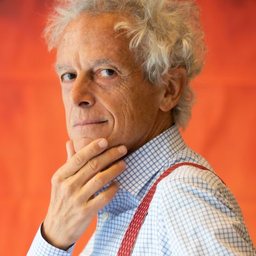
 Shkruar nga Federico Rampini
The future of the Middle East will be decided by the protagonists of the region, not by the US. But even if Saudi Arabia is richer and more modern, Iran wins the geopolitical power race...
" Saudi Arabia may invest $500 billion over a decade to build Neom, its future city thirty times the size of New York, but Iran and its allies can destroy it in days using missiles and drones. low cost ".
" Iranian women are among the few in the world who suffer more restrictions than their grandmothers fifty years ago... After the uprisings of 2009, 2019, 2022, the Iranian regime is classified as one of the least stable in the world. However, 85-year-old Khamenei is one of the longest-serving autocrats, having been in power since 1989. "
" Saudi Arabia has a GDP that is more than double that of Iran, despite having a population that is less than half. Riyadh has $450 billion in foreign exchange reserves, twenty times more than Iran. Arabia has little inflation (two percent), Iran one of the highest in the world ."
I am showing some of the comparative paradoxes between the two historical powers of the Middle East. They are listed in an important essay that was published in the latest issue of the American geopolitical journal, Foreign Affairs. It is titled "The New Battle for the Middle East", the author is Karim Sadjadpour, an authoritative expert of Iranian origin who works at the Carnegie Endowment for International Peace in Washington.
The future of the Middle East, the author claims, will be decided by local protagonists, not by external powers. Certainly not from America, which has made repeated mistakes in Afghanistan, Iraq and in the face of the Arab Spring. Among the local actors, the most important at this stage are the Saudi Kingdom and the Islamic Republic of Iran. On the one hand, the guardian of the holy places of Mecca and Medina, the Sunni; on the other hand, the heir to Khomeini's fundamentalist revolution, a Shiite.
In every respect the former enjoys better health. However, it is the latter that exerts an immeasurable influence. Even after the heavy blows that Israel has dealt against Hamas and Hezbollah, Iran's ability to maneuver vast forces, from Yemen to Syria to Lebanon, extends far beyond its borders. Arabia, though much wealthier, more modern, and better governed, has no comparable influence.
On a purely military basis, Riyadh waged a long and expensive war against Yemen's Houthis (from 2015 to 2019, spending 200 billion), but failed to defeat them. Across the Middle East, not only Shia jihadist militias, but also Sunni terrorist groups such as ISIS and Al Qaeda, are siding with Tehran and against Riyadh. But this rivalry should not be conceptualized in mainly ethnic (Persians against Arabs) or religious (Shiites against Sunnis) terms, but in ideological terms.
The Islamic Republic of Iran and the Kingdom of Saudi Arabia (KSA) are, in theory, both among the richest nations on the planet thanks to their fossil energy resources. However, only Riyadh translates this potential into reality. Instead, Tehran has fallen to 15th place in the world among natural gas exporters, despite having the largest reserves on the planet after Russia. Sanctions are only a partial explanation, other reasons are: corruption, incompetence, flight of foreign investors and the technical aspect; these factors have deprived the Iranian energy industry of technologies and blocked its modernization.
Sadjadpour brilliantly describes the gulf between these two powers: in Riyadh a young autocrat, 39-year-old Prince Mohammed bin Salman (MbS), is at the helm, with a government plan called Vision 2030 that projects into the future. At the helm in Tehran is a fanatical despot and gerontocrat who has Vision 1979 in his head: he wants to keep Iran nailed to Khomeini's revolution, which ousted the Shah 45 years ago and replaced him with a theocracy.
For several decades, after the Iranian revolution of 1979, the two countries were competitors, but with similar ideologies. The Saudi monarchy, in order not to end up like the Shah, 45 years ago decided to defend itself by creating an alliance with its Wahhabi clergy, as reactionary and obscurantist as the Persian-Shia. MbS has taken a different path, focusing on Western or Asian modernization (the closest model is Dubai), on secularization, women's rights, opening borders for foreigners.
The results of the comparison between Vision 2030 and Vision 1979 can be summarized in many ways, here is one. Iran suffers a flight of young talent to the tune of 150,000 a year. On the contrary, the 70,000 students from Saudi Arabia who go to train in foreign universities return home at the end of their studies because an economy rich with opportunities awaits them.
However, the aforementioned paradox remains: as a geopolitical and military power, it is Iran that wins the race. One of the reasons lies in the skill with which the Persian dictatorship exploited and manipulated the Palestinian issue. On the one hand, contributing to make it intractable, by inciting extremist ruling classes; on the other hand, presenting herself as the sole champion of the Palestinian people.
A survey conducted among the Saudi population reveals that for 95% of MbS subjects there was no massacre of Israeli civilians by Hamas on October 7, 2023. This explains the low profile kept by MbS in the tragedy of Gaza and Lebanon. The prince is a despot, but he takes into account the state of mind of the country. /Adapted "Pamphlet" from "Corriere della Sera"



Lini një Përgjigje