


 Shkruar nga Federiko Rampini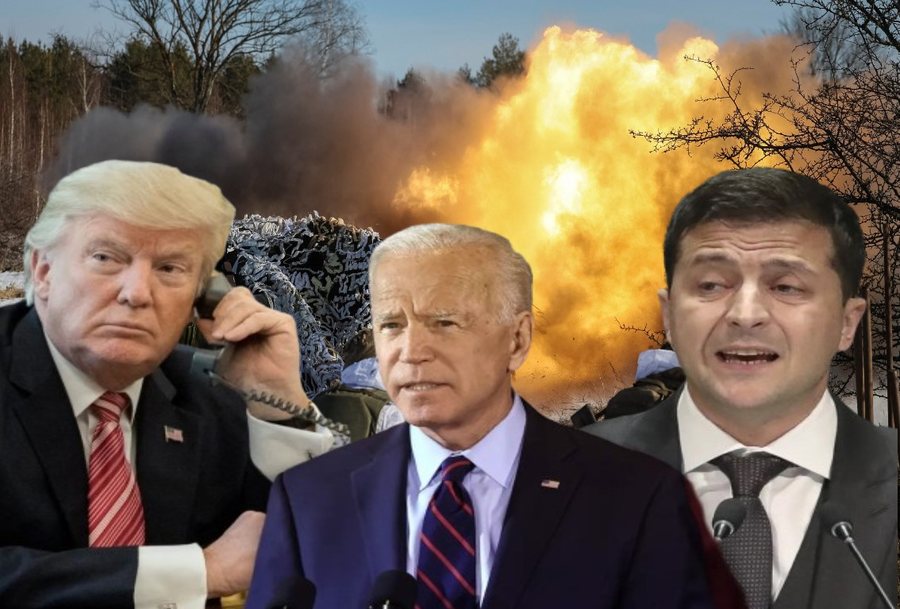
Neither the American left nor right are willing to do much. Biden has downplayed the consequences. His Putin-first position is defensive. What about Trump? His promise to "end the war in 24 hours" was read as an unconditional surrender to Putin...
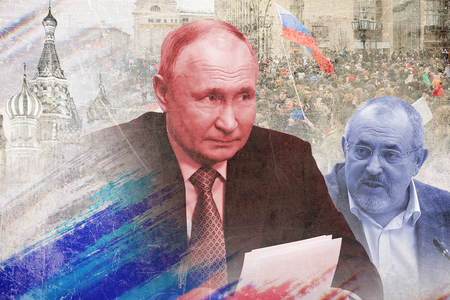
Would Donald Trump's policy on Ukraine change so easily if he were to return to the presidency of the United States? Maybe a little less than they say. That's because Trump is not as anti-Ukraine as he seems. Also because Biden is not as determined as he would like us to believe.
An indication of the latter is that the sitting president has just presented Congress with a federal budget proposal that calls for a reduction in military spending, not an increase. One can disagree or agree with this idea, but it is certainly not a strong signal to send to America's many adversaries.
Since both the Republican and Democratic candidates have collected enough delegates for the nomination, the propaganda machines have been put into motion. The temptation to highlight differences is part of election marketing.
The polarization of the American media does not help to have a balanced perception. Maybe complexity and suspense don't sell? It has been noted, for example, that since Trump is no longer in the White House, an anti-Trump newspaper par excellence like the Washington Post has plunged into a serious crisis, and even an extremely wealthy publisher like Jeff Bezos (Amazon) has big cuts.
"The first victim in any war is the truth": this maxim also applies to electoral campaigns. Ukraine is evidence that Biden offers as an indication that his foreign policy is much better at curbing Russian, Chinese and Iranian expansionism. However, the results do not match this claim.
On the international front, Biden inaugurated his mandate by meeting with Putin in Geneva on June 16, 2021 in a (recent) bilateral summit, which must have sent confusing, ambiguous, conflicting signals to the Tsar, having consider what followed. Shortly thereafter, in August 2021, the withdrawal from Afghanistan occurred in such disastrous ways that it accentuated the perception of decline among all of America's enemies (and many of its friends as well). When Putin invaded Ukraine, Biden's first reaction was to suggest that Zelensky go into exile.
Those who have since described a warmongering and militaristic America, with the aim of inciting Ukrainians to fight a "proxy war" against Russia, have forgotten all the diametrically opposite signals: from the beginning, Biden ruled out sending American soldiers, promised that there would never be a NATO-Russia clash, denied Zelensky many of the requested armaments. Why all this moderation? For the simple fact that the Democratic electorate in Ukraine is not too far from the Republican electorate in the US: most Americans do not want Putin to win, but they also do not want this war to drag on too long.
Neither the American left nor right are willing to do much. Biden has downplayed the consequences. His Putin-first position is defensive. What about Trump? His promise to "end the war in 24 hours" was read as an unconditional surrender to Putin. An opposite reading is equally legitimate, as suggested by Holman Jenkins in the Wall Street Journal. That is, Trump boasts that he can intimidate Russia with the prospect of such an increase in military spending as to push Putin toward a cease-fire. A Reaganite strategy: Ronald Reagan won the Cold War against the USSR because the Soviet economy collapsed in the arms race.
The truth about the foreign policy of such an unpredictable character as Donald is impossible to determine in advance. Perhaps it is more accurate to call it "transactional", rather than isolationist. "Transactional" describes the attitude of those who approach international relations as a business negotiation, in which one must try to get the most.
Thus, even the threatened withdrawal from NATO can become a negotiating tactic to extort the maximum increase in military spending from Germany, and perhaps even some concessions on the trade front. This "transactional" hypothesis is already pushing Macron, Scholz and other European leaders to rethink their relationship with Washington in strictly bilateral terms, because they consider an approach entrusted to the European Union to be less effective. The surprising Biden-Trump convergence on Ukraine is this: Neither candidate thinks there is a vital US interest in that war. The difference is that Trump says it, Biden has demonstrated it with actions. Then they all have to deal with internal divisions in their constituencies: the right is more sensitive to divisions over Ukraine (Republicans do not come from a Russophile tradition) while the left experiences an internal Israeli-Palestinian rift. Would Biden 2 be the guarantee that America's role in the world will be confirmed? But that role is clearly shrinking, and his Administration has supported this decline.
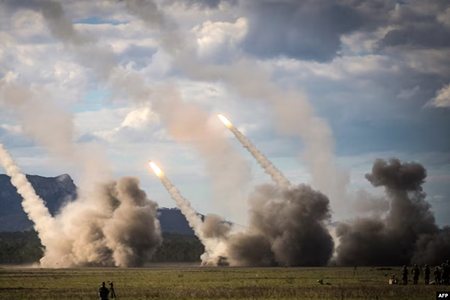
The issue of military spending is not trivial. It has been seen that among the many reasons to save on the supply of weapons to Kiev, there is an objective lack of these weapons in the American and NATO arsenal.
The latest Defense Department budget that Biden presented to Congress for approval calls for a 1% increase, so a decrease in real terms: net of inflation is a decrease, and the minus sign repeats for the fourth year in a row. To compare, for example, with the growth of Chinese military spending: +7.2% per year. If Trump were to return to the White House, he would likely increase military spending while cutting aid to allies in order to force them to do their part. But in the end, both Trump 2 and Biden 2 will have to deal with the balance in Congress because all of this spending has to be voted on by the House and Senate. / Adapted "Pamphlet" from "Corriere Della Sera"



Lini një Përgjigje