


 Shkruar nga Pamfleti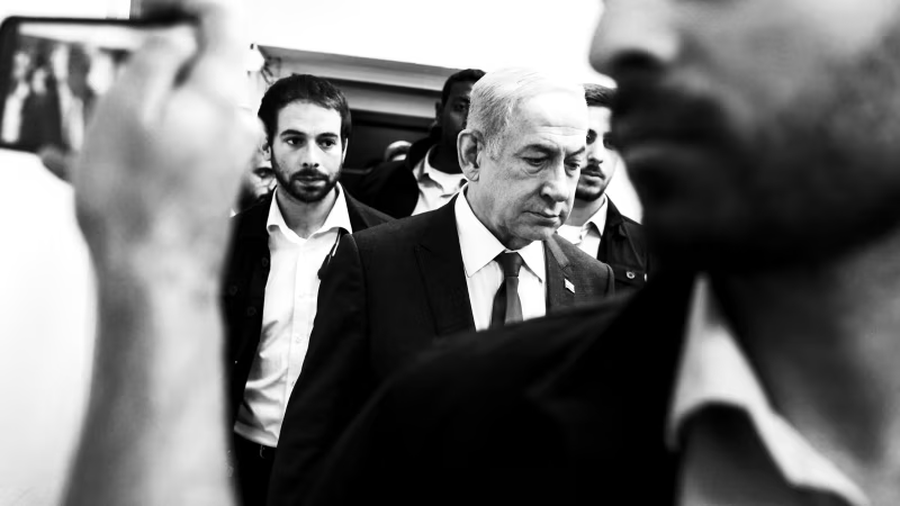
Netanyahu is really playing the game and this is probably the last game of his career.
When Benjamin Netanyahu visited Israeli military recruits this week, he reiterated the idea that Israel would continue its offensive in Rafah, the southern Gaza city where more than 1 million people have sought refuge, despite warnings from Western leaders that an attack on a such a densely populated area would be disastrous.
" No force in the world will stop us ," he said.
He struck an equally defiant note for Iran – eight days after an alleged Israeli attack on Iran's consulate building in Damascus. The attack killed seven Iranian Revolutionary Guards, including two top commanders, raising the stakes in Israel's shadow war with the Islamic Republic and the risk it could escalate into a full-blown regional conflict.
" Everyone in the Middle East and beyond is sitting in the stands watching who will win in this arena, Israel or Iran and its proxies. You already know who will win ," Netanyahu said.
It was classic Netanyahu: the combative wartime leader, shrugging off criticism, whether internal or external, while projecting himself as Israel's defender, standing firm against outside forces.
However, in recent weeks pressure on Israel has only intensified, particularly over its planned attack on Rafah and accusations of restricting aid to besieged Gaza, as hundreds of thousands of Palestinians face impending famine.
Last week, world leaders lined up to condemn Israeli airstrikes that killed seven aid workers. This week, Joe Biden said Netanyahu was making a "mistake" in Gaza, as the US president's criticism of his Israeli counterpart grew increasingly harsh.
Through it all, Netanyahu has remained steadfast. He insists on the need to launch an assault on Rafah and said on Monday that "there is a date" for the operation. He made the statement even as the US and other governments stepped up pressure on Israel to be more flexible in negotiations to reach a ceasefire with Hamas and secure the release of Israeli hostages held in Gaza.
But for all his opposition and hostility, is time running out for the man who has towered over his nation for two decades?
Rarely has the six-term prime minister appeared more vulnerable or unpopular with voters than in the wake of the devastating October 7 Hamas attack that sparked the war. More than two-thirds of Israelis believe Netanyahu should resign, according to polls, with some believing he should leave now, some after the war. Support for his Likud party is at its lowest level in years.
Posters plastered on lampposts and walls scream "Fuck you Bibi", a reference to his childhood nickname. Protests against his far-right government and calls for early elections appear to be gathering momentum. Israel looks increasingly isolated internationally, while Netanyahu's political opponents at home smell an opening.
Benny Gantz, an opposition leader seen as Netanyahu's main rival who is also in the war cabinet, last week joined calls for an early election, saying a vote should be held in September.
But even Netanyahu's critics are wary of removing him just yet. Few doubt that the prime minister is already plotting his survival strategy with his fate inextricably linked to the outcome of the war. Rising tensions with Iran could also help it avoid some of the political pressure it is under.
Since Hamas militants rampaged through kibbutzim in southern Israel, killing an estimated 1,200 people and taking 250 hostages, according to Israeli officials, Netanyahu has stuck firmly to the same promise: the eradication of Hamas.
The more international pressure to stop the war has increased, the more it has been punctured and pushed back. His government agreed to open additional aid crossings to Gaza last week after Biden threatened to condition support for Israel.
Many Israelis suspect that Netanyahu's survival instincts are already shaping how Israel conducts its war, with critics arguing that it suits him to prolong the conflict to delay the possibility of early elections.
Others say it's too simple an argument. They point out that while Netanyahu has become a target for criticism at home and abroad, the vast majority of Israelis support the war effort. However, even those in that camp believe that Netanyahu's political predicament narrows his options.
Even before the Hamas attack, Netanyahu's popularity was on the decline. Israel was rocked by mass protests sparked by its far-right coalition's pursuit of judicial reforms, which critics warned would undermine the state's democratic foundations.
Politika u polarizua ashpër mes besnikëve të vendosur të Netanyahut, të njohur si "bibiistë", dhe atyre që përçmonin liderin e tyre. Mijëra rezervistë ushtarakë po kërcënonin të mos shërbenin. Kritikët e Netanyahut përmendin trazirat si një nga arsyet pse Izraeli u zu i ftohtë nga sulmi i Hamasit.
Ndërsa zyrtarë të lartë të inteligjencës dhe mbrojtjes kanë kërkuar falje për dështimin për të parandaluar sulmin e Hamasit, Netanyahu nuk ka marrë asnjë përgjegjësi të tillë. Në vend të kësaj, ai e përkrah veten si njeriu për të shpëtuar Izraelin - lideri që do t'i rezistojë presionit për të ndalur luftën ose për të ndërmarrë ndonjë hap drejt krijimit përfundimtar të një shteti palestinez.
Ata që e njohin 74-vjeçarin besojnë se ekziston edhe një faktor tjetër: dëshira e Netanyahu për të rivendosur trashëgiminë e tij pas dështimit më të madh të inteligjencës së Izraelit në të paktën 50 vjet, ndodhi nën mbikëqyrjen e tij.
Përshkallëzimi i tensioneve me Iranin dhe Hizbollahun mund të vonojë çdo ditë të llogaritjes së 7 tetorit dhe të ulë presionin për zgjedhje të parakohshme. E tillë është disponimi publik, pak më shumë se gjysma e hebrenjve izraelitë gjithashtu mbështesin një ofensivë parandaluese kundër Hizbollahut, sipas IDI, edhe pse kjo do të rrezikonte një konflikt të plotë në frontin verior.
Një konfrontim më i drejtpërdrejtë me Iranin mund t'i bëjë gjithashtu SHBA-të të pakësojnë kritikat e tyre ndaj taktikave të Netanyahut në Gaza. Ndërsa Uashingtoni është i dëshpëruar për të ulur tensionet rajonale, Biden iu përgjigj të mërkurën kërcënimeve iraniane kundër Izraelit duke thënë se mbështetja e SHBA për sigurinë izraelite ishte "e hekurt".
Shanset e Netanyahut për t'u kapur në pushtet do të varen gjithashtu nga një faktor tjetër kritik: aftësia e tij për të mbajtur të bashkuar koalicionin e tij qeverisës. Me 64 nga 120 vendet e Knesset-it, ai përfshin Likud-in, kolonët ultranacionalistë të ekstremit të djathtë të udhëhequr nga ministri i sigurisë kombëtare Itamar Ben-Gvir dhe ministri i financave Bezalel Smotrich dhe parti ultraortodokse.
Për sa kohë që koalicioni mbetet i paprekur, Netanyahu ka të ngjarë të shmangë zgjedhjet e afërta – mandati i tij përfundon zyrtarisht në 2026. Kjo nevojë për të mbajtur të bashkuar koalicionin qeverisës ndikon gjithashtu në vendimmarrjen e tij, thonë analistët, pasi ai rrezikon të humbasë të djathtën ekstreme nëse ai shihet se po bën lëshime ndaj palestinezëve.
Netanyahu gjithashtu mund të shkarkohet pa zgjedhje, përmes një votimi "konstruktiv" mosbesimi në Knesset. Por kjo do të kërkonte të paktën pesë ligjvënës brenda koalicionit të tij që të votonin kundër tij dhe që ata rebelë dhe të gjitha MK-të e opozitës të bien dakord për një kandidat për të marrë postin e kryeministrit, diçka që analistët besojnë se është një mundësi e largët.
But if US pressure builds to the point that Washington limits arms sales and insists on a ceasefire, Netanyahu will face a backlash at home. Gideon Rahat, a professor of politics at Hebrew University, said Israel's history is littered with leaders who lost power after periods of conflict, including Golda Meir after the surprise Arab offensive that sparked the 1973 war.
" Netanyahu is a different story. It's populist politics, it's not about reality, it's about the narrative he uses. Netanyahu is really playing the game and this is probably the last game of his career, but maybe he will survive ", he said./ Adapted "Pamphlet" from "Financial Times"



Lini një Përgjigje