


 Shkruar nga Federico Rampini
The impression is that of an already unstoppable escalation, a spiral leading to the outbreak of a "total war" in the Middle East.
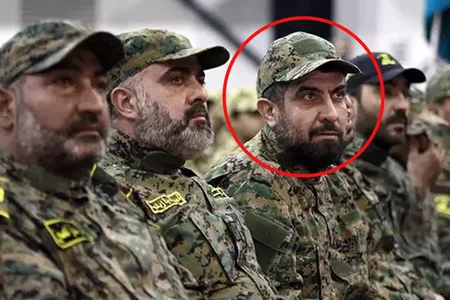
Two deadly strikes by Israel, two pro-Iranian militia leaders killed in the span of two days. One Fuad Shukr is a Hezbollah leader eliminated in Beirut, Lebanon, the other, Ismail Haniyeh is a Hamas political leader killed by a missile in Tehran. There is currently no reaction from Hezbollah regarding the first killing. The second has already been denounced by the Iranian government, which promises revenge.
The impression is that of an already unstoppable escalation, a spiral leading to the outbreak of a "total war" in the Middle East: with the opening of the formidable third front against Hezbollah in Lebanon (after the two fronts of Gaza and the Red), perhaps finally a fourth front with a direct conflict between Israel and Iran.
Not excluding a new Intifada in the West Bank. However, there is a less scary interpretation that I want to report, which is the scenario called "escalation for de-escalation".
The more pessimistic scenario is easier to draw from the last two attacks against Israel's enemies. In Beirut, the Israeli strike reportedly hit the Hezbollah leader believed to be responsible for the massacre of Druze children in the Golan. The sentence was deemed necessary for several reasons, including the importance of demonstrating that Israel also protects its own ethnic minorities (the Druze are Syrian Arabs).
Hezbollah had denied responsibility for that massacre, but it is understandable why: in all likelihood it had happened "by mistake", the real target must have been an Israeli base; Hezbollah's embarrassment was accentuated by near-unanimous outrage in the Arab world.
The fact remains that the elimination of a Hezbollah leader in the Lebanese capital, in an area garrisoned by this pro-Iranian militia, is a blow to the credibility of its leaders and could trigger another cycle of retaliation.
Add to this the attack that immediately followed, a rocket that killed a Hamas political leader in none other than the capital of Iran, where he was attending the inauguration of the new president-elect. Even in this case we are faced with a lack of pretension, which is nevertheless part of the usual practice of the Israeli armed forces. Here the blow is even more horrific, a humiliation for the entire Iranian leadership to witness the assassination of an ally while in their capital for an official event.
It should be added that Ismail Haniyeh, the political leader of Hamas, who lived in exile in Qatar, was also the chief negotiator in the negotiations for the ceasefire in Gaza and the release of the hostages. Not that there was much hope for a quick and positive outcome of these negotiations, but they are certainly now more difficult than ever.
The temptation to see an irreversible mechanism at work is irresistible. Further retaliation, by Hezbollah, Hamas or Iran itself, could trigger further reactions from Israel.
On the other hand, there is a "realist" vision in Israel - not limited to Benjamin Netanyahu - which considers it impossible to achieve an acceptable level of security without a final confrontation with those who want to eliminate the Jewish state. So Hamas but also Hezbollah and Iran itself, the real director of all attacks in the region. Since its establishment with the Khomeinist revolution of 1979, the Shia theocracy of the ayatollahs has given itself three sacred missions: to destroy Israel; drive America out of the Middle East; remove the holy places of Mecca and Medina from Saudi Arabia. There will be no peace in the Middle East until Iran abandons three such destructive goals.
Therefore, an inexorable logic seems to push towards a generalization of the conflict. All the more so since the recent events take place in the framework of a kind of holiday in American foreign policy. Joe Biden is a weakened president in every sense. The action of the United States is even less sharp than usual, because all world actors are already thinking about "the future", wondering what will be the international strategy of the presidency of Harris or Trump.
However, I want to mention a less catastrophic scenario. This is how a fellow expert in this field, James Rothwell of the Daily Telegraph, explains. It's the theory called "escalation to de-escalation". Following this doctrine, Israel would have struck in Beirut and Tehran not to signal its determination to expand the war, but to prepare for a withdrawal. Killing the leaders of Hezbollah and Hamas would be instrumental in declaring mission accomplished, declaring victory and preparing a disengagement of the Israeli armed forces, already very tired after nine months of intervention in Gaza. Escalation would be the prelude to de-escalation.
It's an interesting theory, which applies under one condition: all the other actors play. That is, against the inevitable retaliation by Hezbollah and Hamas not to cross any "red line" marked by the Israelis that we would return to the first scenario, that of the generalized war. Much depends on Iranian calculations of the balance of forces in the region. As well as the level of encouragement that the regime of Shiite ayatollahs receives from its protectors in the Axis of Resistance, Russia and China. / Adapted "Pamphlet" from "Corriere Della Sera"


Lini një Përgjigje