


 Shkruar nga Diplomatico | Pamfleti.net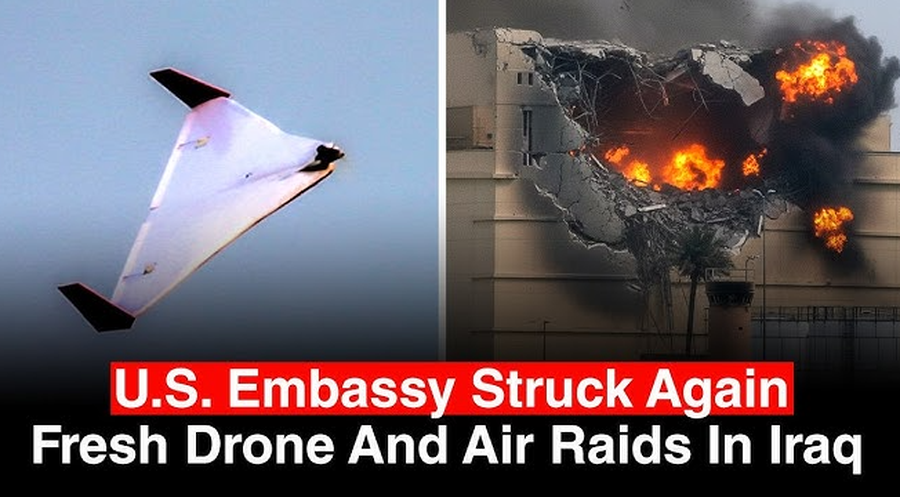
Trump remains without support for Hormuz, while attacks on energy facilities are turning the crisis into a global economic earthquake
The new attack on the United States Embassy in Baghdad is no longer an isolated incident, but the clearest signal that the US-Israeli war against Iran is producing a chain effect and is involving Iraq, the Persian Gulf, global energy corridors and the Western alliance itself.
According to Reuters, in the early hours of March 17, 2026, the US diplomatic compound in Baghdad's Green Zone was hit by missiles and at least five drones; two were intercepted by US air defense systems, while one struck inside the compound, causing fire and smoke. Iraqi security sources described this as one of the most intense attacks on the embassy since the outbreak of the conflict on February 28.
The political message of this attack is brutal: Iran and its network of militias are not only responding to the airstrikes with statements or threats, but are also shifting the costs of the war to the most sensitive American symbolism in the region. The embassy in Baghdad is not only a diplomatic facility, but also a symbol of the American strategic presence in Iraq. When it is hit again, and with greater intensity than before, it shows that the front of the conflict has expanded in depth and that Iraq is once again becoming an arena where the US pays the price for its biggest regional clashes.
Reuters also reported that the attack came after the killing of a senior Kataib Hezbollah commander and eight other Popular Mobilization Forces fighters in an airstrike in al-Qaim, making it clear that the dynamics of revenge are already fueling a new spiral of escalation.
But the drama doesn’t end in Baghdad. It is directly linked to Iranian attacks on energy infrastructure and the shaking of global oil markets. Reuters reported today that Brent crude rose to around $103.28 a barrel and WTI to $96.85 as the war and the de facto blockade of the Strait of Hormuz are restricting an artery through which about a fifth of the world’s oil and liquefied gas passes. At the same time, a fire caused by drones in the Fujairah oil industrial zone and a drop of more than 50% in the Emirates’ production have added to the panic that this is no longer just a military crisis, but a direct blow to global energy supplies.
The Associated Press reinforces this picture by reporting that Iran has continued missile and drone attacks on its Gulf Arab neighbors, affecting critical oil and gas infrastructure in the Emirates, Saudi Arabia, Qatar and Iraq.
There were casualties in Abu Dhabi from the remnants of the fallen shells, while a tanker was also hit near Fujairah. This means that Tehran is not only following the logic of striking Israel or the US, but is building a regional pressure campaign that hits the nodes where the global energy economy passes. At this point, any attack is not measured only by the military damage, but by the effect it produces on energy exchanges, supply chains and market anxiety.
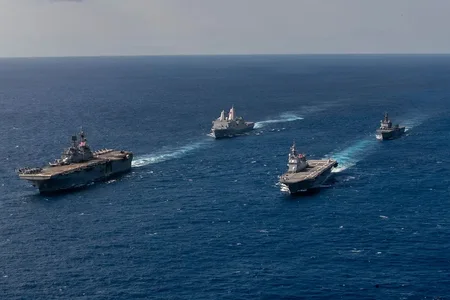
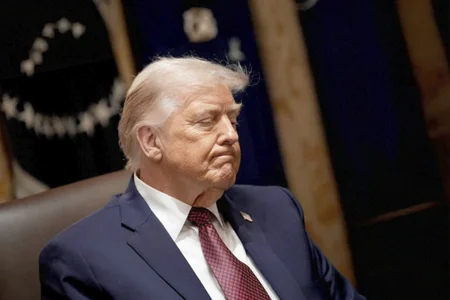
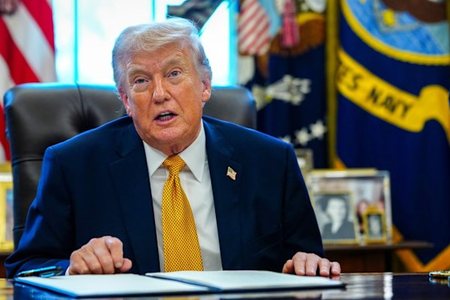
Here begins Washington's biggest political failure. Donald Trump has asked allies for help to secure the Strait of Hormuz and protect the passage of tankers, but according to Reuters, The Guardian and the Financial Times, the response has been lukewarm at best and outright refusal at worst. Britain, France, Germany, Japan and Australia have shown no willingness to engage in a naval operation that could draw them into a direct confrontation with Iran. Some are considering limited measures, others are seeking diplomatic channels, but the big signal is this: Western allies are unwilling to unconditionally foot the strategic bill for a war they see as being chosen by Washington and Tel Aviv.
This hesitation by allies strips the American narrative of the strength that coalitions usually give it. Trump can speak harshly, he can demand solidarity, and he can publicly attack partners who do not answer the call, but the reality of March 17, 2026, is that the US is failing to build a broad international front for military management of the crisis in Hormuz. This is not a cosmetic rift; it is symptomatic of a deep mistrust of where this war is going and how far it can go. When major Western powers hesitate to align themselves at a node as vital as Hormuz, the diplomatic message is that no one is convinced that the American plan has a clear way out.
On the ground, meanwhile, Iran is showing that even under heavy blows it continues to maintain its capacity for regional destabilization. The attacks on the embassy in Baghdad, the fires in Fujairah, the strikes on oil fields and the constant threat to traffic in Hormuz create the impression of a strategy designed not for classic military victory, but for the political and economic exhaustion of the opponent.
Tehran knows that it cannot defeat the US in the conventional sense, but it can force Washington to face an increasingly costly war, increasingly unpopular with allies, and increasingly expensive for the world economy.
Even US Secretary of State Marco Rubio has indirectly acknowledged this reality. According to Reuters, he has instructed US diplomats to push allies to designate Iran’s Revolutionary Guard Corps and Hezbollah as terrorist organizations in an effort to build a broader political front against Tehran. This is an indication that Washington is trying to compensate for the lack of operational consensus with diplomatic and symbolic pressure. But when it comes to convincing allies to move after the war has begun, it means that the political ground has not been properly prepared in advance.
From a political observer's perspective, the big news is not just that Baghdad was hit again. The big news is that this conflict is entering a phase where a missile in Iraq, a drone in the Emirates, and a tanker blocked in Hormuz all produce the same strategic effect: they weaken the sense of American control, raise energy prices, and increase fears that the crisis could spill out of the Middle East and hit the pockets of citizens in Europe directly.
For the Balkans, which depends on imports, European markets, and supply chain stability, this means more economic uncertainty, more inflationary pressure, and more dependence on decisions made far from our region.
In the end, the attack on the US Embassy in Baghdad should be read as the most accurate picture of the moment: the US is still the greatest military power in the region, but no longer the actor that controls the pace of events without heavy costs. Iran, even hit, is finding ways to extend the war to points where the West is most vulnerable politically and economically. Allies are withdrawing from the open military adventure. Markets are reacting with panic. And Hormuz, the planet's most important energy hub, is becoming the place where not only Washington's patience is being tested, but also the nerve of the entire world economy. The attack on Baghdad, therefore, is not just news of the day. It is a warning that this war has entered the phase when every local blow produces a global earthquake. / Pamphlet


Lini një Përgjigje