


 Shkruar nga Pamfleti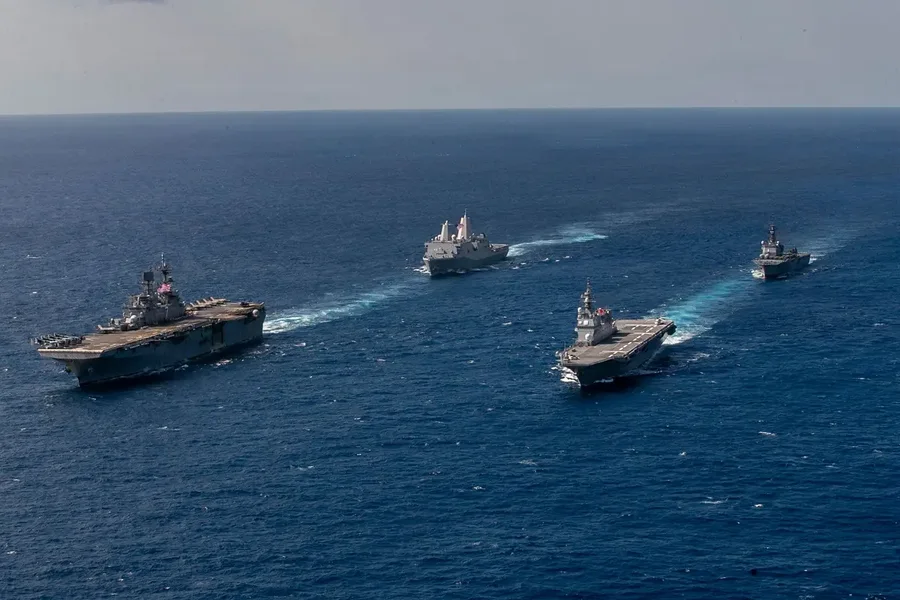
The regime in Tehran is militarily inferior to the US, but small-blow tactics are paying off. A look at the Iranian arsenal in the fight against tankers and possible American responses…
The Strait of Hormuz clearly shows the paradox of American power: since the first Gulf War in 1991, the United States has never amassed such a large naval force in the region as it does today: two aircraft carrier battle groups, dozens of other warships, and thousands of Navy sailors. Yet despite this large concentration of naval forces, the US is unable to establish control over the Strait of Hormuz.
Washington’s apparent incompetence is causing frustration at the highest levels. President Donald Trump last week asked his top military adviser, General Dan Caine, to explain why the strait could not be opened immediately. Caine responded, according to the New York Times, that a single Iranian attack on a supertanker would be enough to scare insurance and shipping companies.
Iran has a wide range of weapons to carry out these striking actions:
• Naval mines: Iran is estimated to possess 5,000 to 6,000 naval mines. A few mines are enough to create significant uncertainty. Although the US has destroyed some of the deployment vehicles, mines can also be deployed from other platforms covertly. Iran may have already placed about a dozen mines in the strait, according to reports.
• Anti-ship missiles : Iran has several types of missiles and cruise missiles with ranges from 120 to over 1,000 kilometers. Some of them fly very close to the surface of the water, making them difficult to detect by radar. They can be launched from hidden positions, trucks, or ships.
• Fast naval vessels : Equipped with mines, machine guns, or anti-ship missiles, these vessels are highly flexible. They can attack in groups and, due to their small size, are easily hidden in tunnels or caves along the coast. Before the war, Iran had several thousand of these.
• Unmanned systems : With drones, Iran can attack ships from the air, as well as on the surface or underwater. The underwater drone "Azhdar" can stay in the water for up to four days before attacking. It is slow because of its electric motor, but very quiet and difficult to detect.
• Small submarines : Since 2007, Iran has produced about 20 Ghadir-class submarines, only 29 meters long. They can launch torpedoes, anti-ship missiles and lay mines.
The US is not powerless against this arsenal, but the confrontation is difficult, takes time, and does not guarantee complete success. Some of the options are:
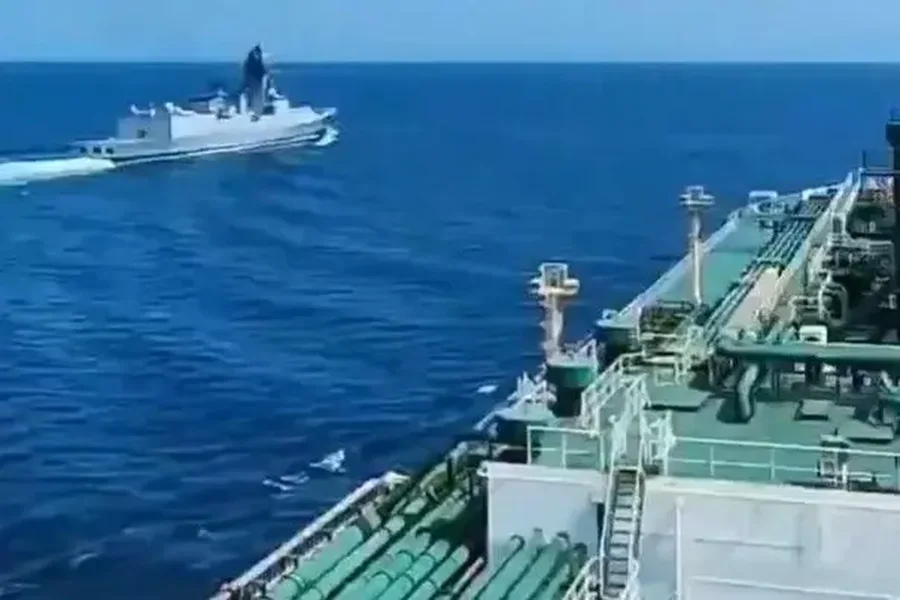
• Military escort : The US plans to escort tankers with warships to deter Iranian attacks. However, Energy Secretary Chris Wright has acknowledged that the US is not yet ready. Even for US warships, entering the Persian Gulf remains dangerous. Meanwhile, an Indian tanker was successfully escorted by an Indian ship, in an operation that appears to have been coordinated with Tehran.
• Negotiating free passage : Some countries are trying to negotiate safe passage for their ships. One such case is the Pakistani tanker “Karachi”, which crossed the strait by following a route close to the Iranian coast, possibly because the main route is mined.
• Destruction of coastal positions : The US has bombed Iranian targets along the Persian Gulf and Gulf of Oman, destroying dozens of naval vessels, according to its statements. However, smaller vessels remain a threat due to their numbers and difficulty in detecting.
• Threat of a ground operation : Some experts suggest a ground operation to eliminate the threat. This would involve occupying part of the coast or the Iranian island of Kharg. Such a step carries great risks and is not seen as possible at this stage.
• Mine clearance : The US must locate and clear mines laid by Iran, a long and complex process. Although there are ships specialized for this mission, some of them were relocated from the region to the Pacific before the war.
According to maritime security expert Christian Bueger of the University of Copenhagen, the problem cannot be solved by military means alone. He emphasizes that a few missiles are enough to keep the risk high, so the solution requires de-escalation and diplomacy.
The Pentagon, however, believes that military pressure could force Iran to accept a ceasefire. So far, there is no sign of such a development. Tehran has rejected talks and has declared that it will not allow oil to pass to the US and its allies through this strategic strait. /Adapted from NZZ /




Lini një Përgjigje