


 Shkruar nga Pamfleti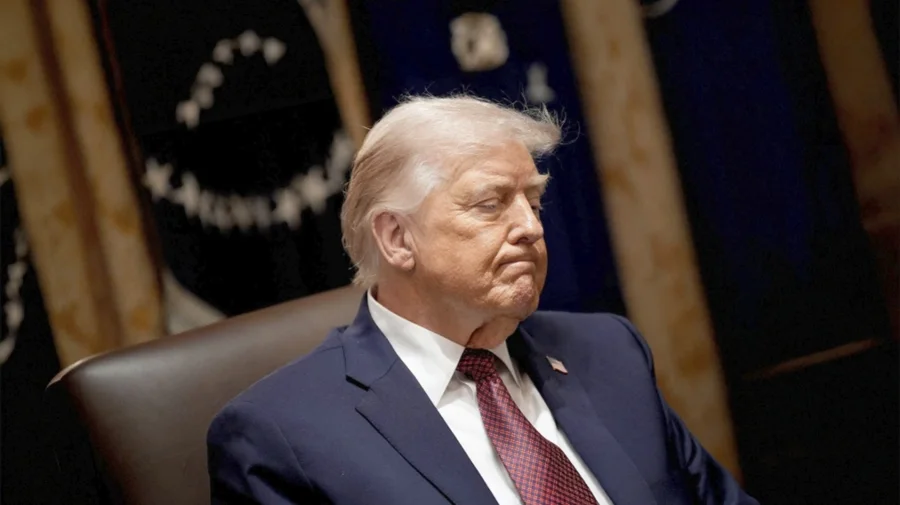
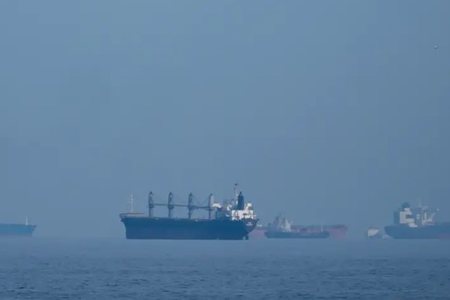
The US administration is seeking an exit strategy from the Strait of Hormuz, as the shift of military operations to the most critical point for the global oil economy is forcing both the White House and the Pentagon to update their strategy.
The shifting interest in the Strait of Hormuz and the need to ensure freedom of navigation directly impacts both international markets and U.S. fuel prices, making a possible path toward disengagement from direct involvement imperative.
According to the New York Times, “Iran’s willingness and ability to disrupt the global economy by blocking the Strait of Hormuz, a vital sea route for oil and trade, has surprised the Trump administration,” although several possible retaliation scenarios had been anticipated earlier.
Trump's dilemma
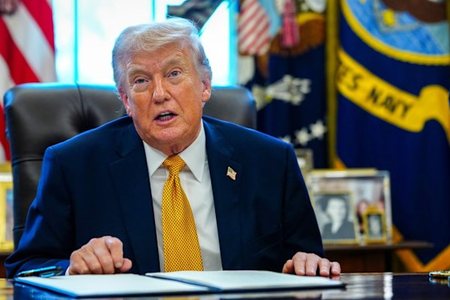
In this context, President Donald Trump faces a strategic choice between continuing military operations and withdrawing from an expanding conflict.
As the New York Times points out, he must choose between “staying in the war to achieve ambitious goals” or “trying to withdraw from a conflict that is sending military, diplomatic and economic shockwaves.”
The prolongation of the conflict has also prompted reactions in the US, where Democrats in the House of Representatives are seeking clarification from Secretary of State Marco Rubio and Secretary of Defense Peter Hegseth.
Meanwhile, developments on the ground have brought two main consequences: the increase in Iran's strategic preparedness after the first wave of bombings and the intensification of pressure through missile attacks, drones, and naval mines in the Strait of Hormuz.
Allies as support
In an effort to gain time and support, Trump has called on international allies to contribute to securing the strait.
"Let's hope that China, France, Japan, South Korea, the United Kingdom and other countries affected by this artificial restriction will send ships to the area so that the Strait of Hormuz is no longer a threat," he said in a post on Truth Social.
However, European military circles estimate that deploying warships in this area would make them easy targets for Iran and significantly increase the risk of escalation.
Meanwhile, the European Union has signaled a lack of readiness for greater military involvement. High Representative for Foreign Policy Kaja Kallas declared that the bloc has “no appetite” for expanding its naval mission in the Strait of Hormuz.
Germany has also distanced itself from the American approach. Government spokesman Stefan Cornelius stressed that “this war has nothing to do with NATO; it is not a NATO war.”
The economic consequences are expected to be significant. According to Deutsche Welle, if the conflict ends quickly, economic growth in Germany could drop to 0.8%, while if the war is prolonged it could fall to 0.4%.
In this climate of tension, drafts prepared for the upcoming EU summit call for "maximum de-escalation and restraint" in Iran and the region, reflecting a more cautious approach by European countries.



Lini një Përgjigje