


 Shkruar nga Pamfleti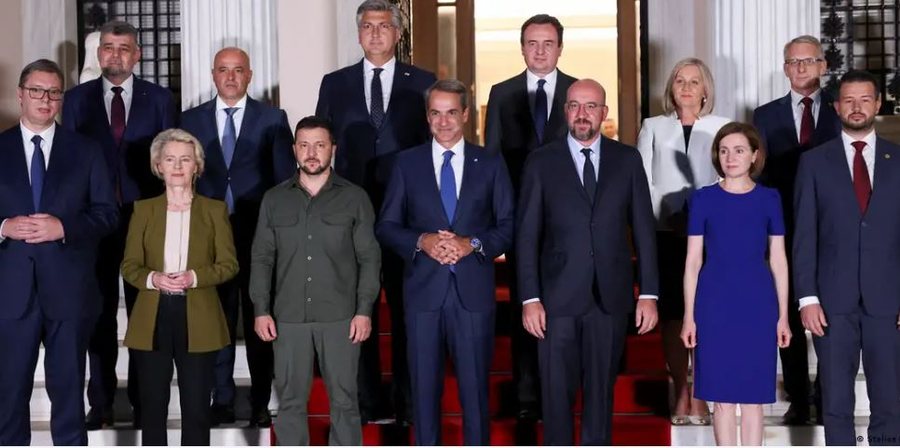
"The future of the Balkan states is in Europe." This "promise of Thessaloniki", which bears the name of the port city near the place where the summit was held, has not been fulfilled even today after two decades.
When EU heads of state and government met in June 2003 in the Greek tourist town of Porto Carras, they had the restive Balkans firmly in mind. The Union supports "without any reservation" the membership of Albania, Bosnia-Herzegovina, Kosovo, Montenegro and Serbia, says the final statement: "The future of the Balkan states is in Europe." This "promise of Thessaloniki", which bears the name of the port city near the place where the summit was held, has not been fulfilled even today after two decades.
Current importance: In June of last year, the EU states took their historic decision, despite the negative experiences with the Western Balkan states, to officially support Ukraine and Moldova as candidate countries for the EU.
A dinner for the 20th anniversary
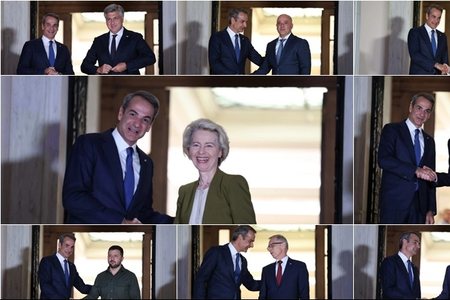
On the evening of August 21, 2023, Greek Prime Minister Kyriakos Mitsotakis hosted at a dinner in Athens the heads of state and government of the six countries of the Western Balkans together with the president of the EU Commission, Ursula von der Leyen. The reason was precisely the "Promise of Thessaloniki" 20 years ago. The important and influential Prime Minister of Albania, Edi Rama, according to the Greek media, was not invited, because Albania and Greece are currently fighting again strongly about the Greek minority in Albania.
This example makes it clear why the countries of the Western Balkan region have not been members of the EU for so long. From time to time EU member countries use bilateral problems to hinder the accession process. Bulgaria once questioned the Macedonian language and demanded the inclusion in the constitution of the Bulgarian minority in North Macedonia. Before that, Greece blockaded Macedonia for decades, forcing it to change the country's name to North Macedonia, so that the neighboring country could be distinguished from the Greek province of the same name, Makedonia. Another time, Croatia tries to solve bilateral problems by hindering candidate countries such as Serbia, Montenegro or Bosnia-Herzegovina by threatening to impose a veto in the EU.
Enthusiasm for the EU on the decline
The situation regarding EU membership has been in limbo for a long time. Especially in Serbia, the largest and strategically important country in the region, it has left deep traces: In a representative survey in the summer of 2023, only 44 percent of respondents prefer their country's membership in the EU, 47 percent are against. In another poll by the Demostat Institute in June 2023, only 23 percent of citizens agree with Brussels' request that Serbia, as an EU candidate country, should join the sanctions against Russia. While 42 percent say that their country should maintain good relations with Russia, even if this prevents EU membership.
German Chancellor Olaf Scholz and French President Emmanuel Macron last year took a major initiative to reach a compromise in the ongoing dispute between Serbia and Kosovo. Even the EU Commission engaged with all its political weight to mediate between the two sides. The EU Commissioner for Foreign Policy, Josep Borrell, after continuous talks, even declared: "We have a deal!" But actually the opposite happened. Both sides escalated the conflict, which again threatened to escalate into armed clashes.
Deficite në demokraci dhe bllokim reformash
Edhe pas dy dekadash reformat kanë mbetur si kantier i hapur në shtetet e rajonit njësoj si dhe përpara 20 vjetësh. Medie të censuruara dhe të centralizuara, instrumentalizim i drejtësisë, shkatërrim i institucioneve të pavarura shtetërore, korrupsion dramatik në shkallë të gjerë dhe kriminalitet i organizuar. Megjithatë: Si mund të veprojë BE kundër këtyre rrethanave, në një kohë që brenda vet radhëve të BE-së është e mundimshme të ndalohen kontrolli ndaj mediave, drejtësisë dhe opozitës, sikurse konstatohet në Hungari dhe në Poloni, vende anëtare të BE-së?
Ndaj nuk është rastësi me sa duket, që kryeministri hungarez Viktor Orban Ballkanin Perëndimor në përgjithësi dhe veçanërisht Serbinë i ka përzgjedhur si partnerë. Presidenti i Serbisë që vendos për gjithçka Aleksandar Vuçiç e shpreh hapur vlerësimin e tij për stilin e qeverisjes dhe konceptet politike të kryeministrit hungarez. Të dy politikanët në më shumë se 40 takime ruajnë kontakte të ngushta. Vuçiç pret nga Hungaria që të zbusë presionin e Brukselit ndaj Serbisë për reformat. Orbani nga ana e tij pret, që Serbia ta ndihmojë atë që të marrë një rol kyç në rajon.
Failure to keep the promise to bring the Western Balkan states closer to Brussels has been replaced by new rounds of conferences. An example is the Balkan-EU summit held every year since 2014 under the slogan "Berlin Process". Or the initiative created since June of this year by Austria in the format named "Friends of the Western Balkans". /DW/


Lini një Përgjigje