


 Shkruar nga Pamfleti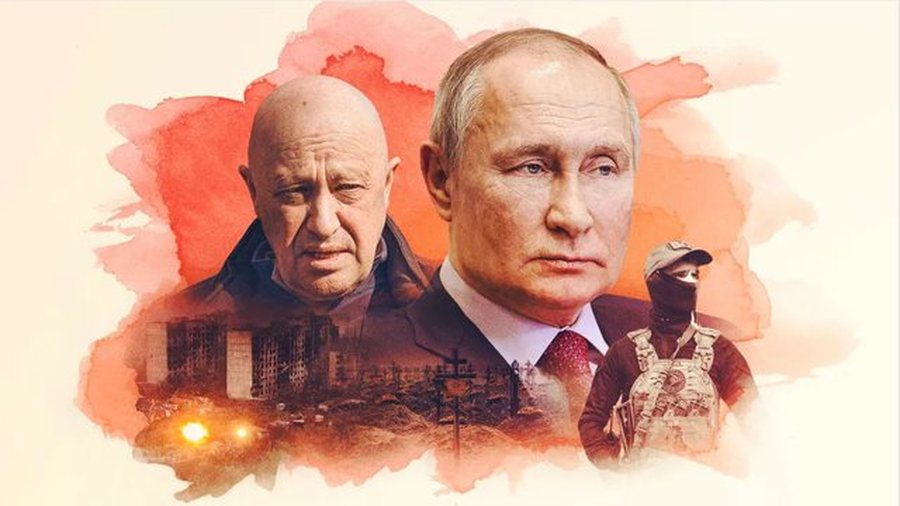
At first glance, he appears weakened, outmaneuvered by Prigozhin and president of a country where chaos reigned for a full day. Relying on the leader of Belarus to save the day seems difficult.
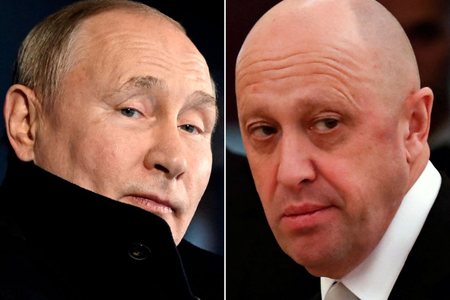
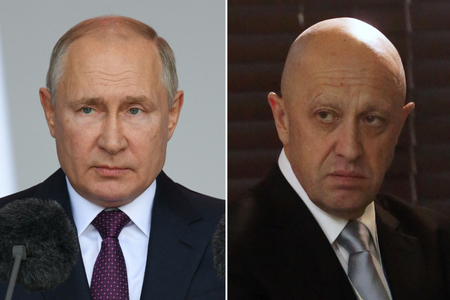
For one long night and day in June, Russia's notorious mercenary leader Yevgeny Prigozhin staged an uprising, sending an armored convoy toward Moscow and challenging Vladimir Putin's grip on power. The Russian president accused his former ally of treason for having launched an armed rebellion with "a knife in the back of the country".
But by late Saturday, Prigozhin had called it all off and ordered his men back to base. "In 24 hours we reached 200 km from Moscow. At that moment we did not shed a single drop of blood of our fighters," he said. 24 hours of chaos, but in fact we don't know so much of what happened.
Was Wagner's boss plotting a coup?
Prigozhin said that he was convinced that this was "a march for justice", not a coup. Be that as it may, it ended too soon. For months he has played a vital role in Russia's military campaign in Ukraine, recruiting thousands of people into his Wagner mercenary group, mostly from Russian prisons.
He has long been at loggerheads with the military chiefs running the war, but it turned into open revolt after they sought to bring his forces under their command structure by July 1.
Wagner's fighters crossed from occupied eastern Ukraine to the large southern Russian city of Rostov-on-Don. Then they moved to the main highway through Voronezh, on the way to Moscow. It felt like a defining moment in Russia's 16-month invasion of Ukraine. But as Wagner's motorcade headed north, news came of a deal, oddly brokered by Belarus's leader, Alexander Lukashenko.
Few believe the story is that simple, but if the Kremlin is right, this could be the end of Prigozhin's role in the war and in Russia itself. He is going to Belarus and will not face criminal charges, the Kremlin says. His fighters have been promised amnesty. Was it completely bloodless? This is unclear as at least one military helicopter crashed. And what the consequences of this are for Vladimir Putin is another matter.
Wagner against the military leaders of Russia
Prigozhin has for months lashed out at Defense Minister Sergei Shoigu and Armed Forces Chief Valery Gerasimov for their failure to supply his mercenaries with enough equipment and ammunition. When President Putin backed Shoigu and Gerasimov's deadline to force all mercenary groups fighting in Ukraine to sign defense ministry contracts, Pripgozhin refused, seeing it as a challenge to his influence.
In a lengthy speech on June 23, he told the Russians that the entire justification for their war in Ukraine was a lie and just an excuse for "a small, nefarious group" to promote themselves and deceive the public and the president. . Then came an extraordinary escalation in the disputes between them.
Prigozhin accused the Russian military of orchestrating a deadly attack on his men in Ukraine. The military denied launching an attack, and the video Prigozhin produced as evidence showed nothing. Late Friday he announced that his "march for justice" had begun.
"We are 25 thousand people and we will find out why there is such chaos in the country. All those who want, join us" Prigozhin shouted. General Sergei Surovikin, deputy commander of forces in Ukraine, called on him to step down and submit to President Putin's authority.
Moving his forces across the border into Rostov-on-Don overnight, he claimed control of the military headquarters from where the war was being waged, and videos showed his men in the center of the city encountering no resistance. On Saturday morning he declared: "We are inside the [military] headquarters." The city, he later said, had been taken "without a shot being fired".
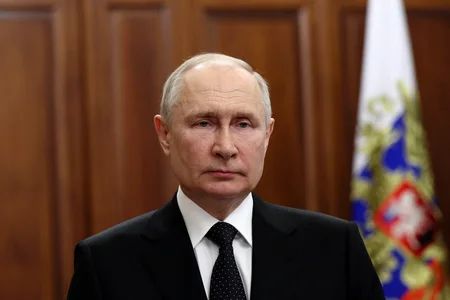
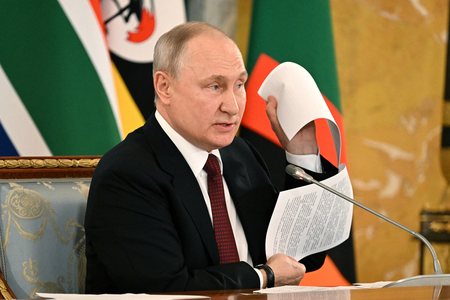
The Russian FSB security service then opened a criminal case. The entire Moscow region was put on alert under a "strict anti-terrorist operation regime". This happened when Prigozhin's forces reached Voronezh halfway along the highway from Rostov to Moscow. On Saturday morning, looking tough and determined, Vladimir Putin gave a five-minute speech on state television and called for unity.
"What we are facing is precisely betrayal" - he told the nation. Without naming his former ally, he said those behind the military coup had betrayed Russia and would be held accountable. Prigozhin immediately denied that he had betrayed his country and then went on to criticize the president as "deeply wrong".
Until this point, he had never gotten over his anger at Mr. Putin. Columns of Wagner's armored vehicles were immediately seen heading for the highway through the Voronezh region and further north to Lipetsk. A fuel depot was burned by an airstrike in Voronezh, although it was not clear why.
Prigozhin said with conviction that he was not challenging Russia's war in Ukraine, but only the "clowns" at its head. He also maintained that he was not challenging the president's leadership, although he threatened to march on Moscow if his military demands were not met. For several hours, Vladimir Putin looked like a leader who had lost control of the situation.
Then, on Saturday evening, word of a deal came from Belarus's leader, Alexander Lukashenko, another close Putin ally. Prigozhin would leave for Belarus and avoid criminal charges. He was later seen leaving Rostov in a car. His Wagner fighters would escape prosecution and those who wished could sign contracts with the defense ministry.
Where does this leave Putin?
At first glance, he appears weakened, outmaneuvered by Prigozhin and president of a country where chaos reigned for a full day. Relying on the leader of Belarus to save the day seems difficult. It was Russia that backed Lukashenko when protesters blockaded the country in 2020 after elections widely seen as rigged. The Ukrainian presidency said that Putin had been left humiliated.
But there is another point of view, that Russians have now seen the alternative to Putin's presidency and that for a few hours it looked like anarchy. The military has also found a way to bring under its control a force of potentially 25,000 mercenaries. This has yet to happen, but their leader, Yevgeny Prigozhin, is already off the scene. /BBC.


Lini një Përgjigje