


 Shkruar nga Pamfleti
Brussels and NATO are laying the foundations for a “military Schengen” that would allow the rapid movement of troops and weapons across Europe. At the same time, the EU warns that the war in the Middle East is threatening the continent’s economy, energy and food supplies.

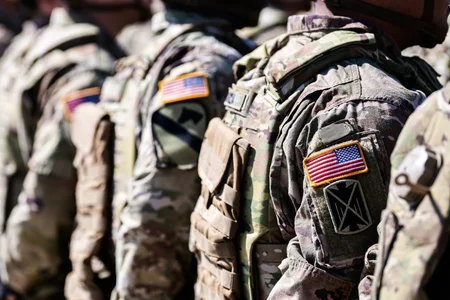
The European Union and NATO have agreed on a €100 billion infrastructure project that will lay the foundations for a "military Schengen" area, aimed at speeding up the movement of troops and military equipment across Europe.
The news was published by the Greek media outlet Kathemerini , which quoted Commissioner for Transport and Tourism, Apostolos Tzitzikostas, during a conference in Athens.
The project, he said at the "Energy Transition Summit: East Med & Southeast Europe", organized by the Financial Times, envisages the development of 500 "key points", where infrastructure to facilitate military mobility will be created or strengthened over the next three to four years.
According to him, this will significantly speed up the time needed to transfer troops and military materials from one part of the European bloc to another, both for military exercises and in cases of emergencies.
A joint reserve, or "pool", of military equipment will also be created, modeled after the European Union's civil protection mechanism, Tzitzikostas said.
He added that the regulation for this project will be ready by 2027, while the infrastructure is expected to be completed in early 2030.
Tzitzikostas also expressed optimism about this year's tourist season, despite tensions in the Middle East, which have caused flight disruptions and increased fuel prices.
He said tourists should feel confident about booking their holidays in Europe this summer, as fuel supplies for aircraft on the continent remain guaranteed.
"We have no signal that we are running out of jet fuel," Tzitzikostas declared, adding that 70% of aviation fuel is produced within the European Union and that the bloc has significant reserves, which the European Commission is currently identifying.
Flight cancellations across the EU, which have caused concern ahead of the tourist season, "are related to costs and not shortages," he said.
However, the Greek commissioner acknowledged that tensions in the Middle East, and especially flight disruptions in the region's main air hubs, will inevitably have an impact on tourist arrivals this year.
"We will certainly have a decline in tourists from the Asian market," he said.
"But any losses we may have from some parts of the world, we will recover through tourism within Europe."
Tzitzikostas also stressed that Europe has very clear guidelines and protections for travelers.
"Passengers are protected, so they should not feel at risk when booking holidays in Europe," he said.
He was more cautious about the broader economic impact of the crisis in the Middle East, warning that if the war, which has so far cost Europe around 35 billion euros, does not end within the coming weeks, it "will cause problems in the real economy."
According to him, the biggest concern is related to the ongoing impact on energy prices, but also on chemical fertilizers, which, combined with the approach of winter in a few months, could put pressure on food supplies.
"The situation is extremely problematic ," he said, adding that the European Commission "has already published a package of measures that member states can implement immediately" to mitigate some of the consequences.
Asked whether a joint borrowing scheme at the European level is also being considered, Tzitzikostas replied that "everything is on the table."


Lini një Përgjigje