


 Shkruar nga Pamfleti
The Chinese leader sought and received confirmation that his country is on the same level as the United States. But regarding Taipei, Rubio said Washington's policy "is not changing."
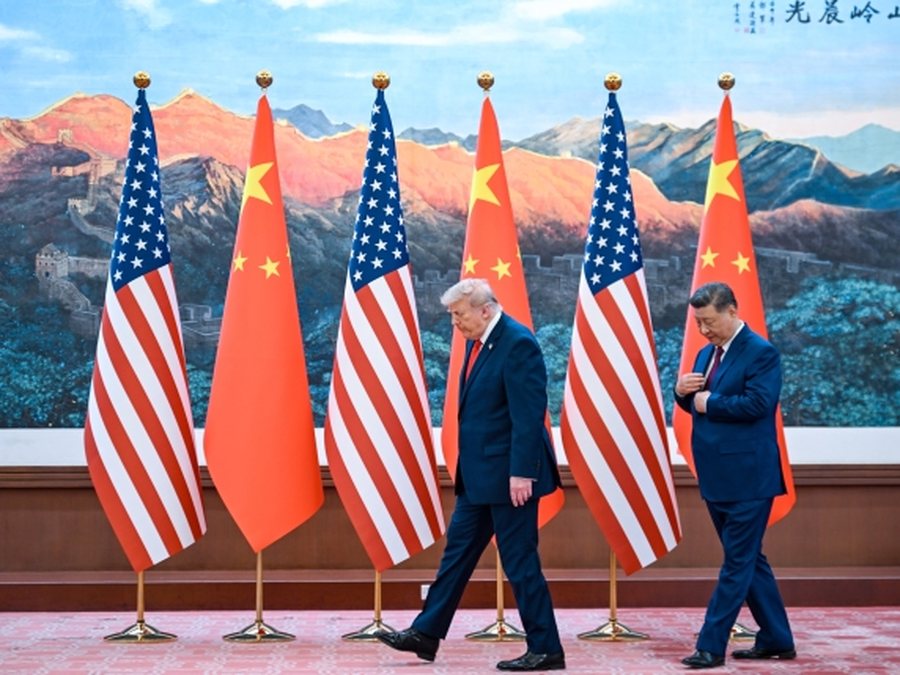
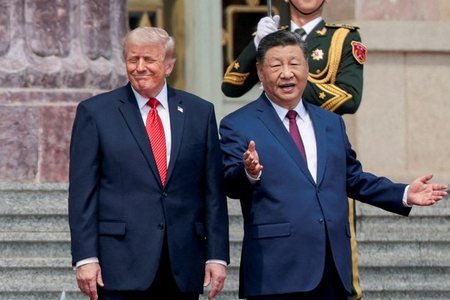
Beyond the specific agreements, the Xi-Trump summit had the broader goal of redefining diplomacy between the two countries as a constructive relationship of strategic stability.
Xi said China will consider this as the guiding principle for the next three years (and beyond): it means cooperation and “moderate competition,” with differences managed through barriers to avoid dangerous escalations (for example, work is underway on “safeguard measures” regarding artificial intelligence). Xi sought and received confirmation that his country is on a level playing field with the United States. This is likely to lead to a possible extension of the tariff truce reached last October.
For Xi, stability serves to strengthen China in the long term (surpassing the United States as the world's superpower) by increasing technological, commercial, and scientific independence, with the conviction that China's rise is a historical certainty, along with America's decline.
Taiwan
What Xi wants most from Trump is to soften US political and military support for Taiwan by delaying or reducing arms sales or getting a statement from Washington against Taipei's independence. It's not clear what Trump's response was, but Rubio stepped in to assure that US policy "is not changing."
The Secretary of State told NBC that Xi raised the issue of Taiwan as he always does, but it was not a central focus of the summit, and America, as always, “made its position clear and moved forward.” Rubio warned that it would be “a terrible mistake” for China to take Taiwan by force: “Any deviation from the status quo would be negative for both countries” and “would have global consequences.”
Business and trade
Trump told Fox that Xi has agreed to buy soybeans, energy and 200 Boeing planes from the United States. China has renewed the licenses (suspended in response to tariffs) of hundreds of American slaughterhouses to export meat. And Xi promised businessmen who arrived with Trump that China will “open up more” and that they will have more opportunities. Nvidia has also resumed discussions about possible Chinese orders for advanced H200 chips, according to rumors.
The presence of Trump's son, Eric, in China has caused controversy, with the Financial Times reporting that he is involved in a possible deal, but he denies this: "I am here in a personal capacity."
Bessent said two boards would be created, one for trade and one for investment, to identify $30 billion in "non-sensitive" Chinese products (such as fireworks) on which lower tariffs would apply. In return, China could buy more oil and gas from the US, reducing its dependence on Iran: at least that's what Washington wants.
Iran
Trump added that Xi “wants a deal” with Tehran and has “offered his help.” According to the White House, the Chinese leader “agrees to keep the Strait of Hormuz open” and is against “tariffs” and a nuclear Iran. But the Chinese statement does not mention Iran (it refers vaguely to the “Middle East”). It is unclear whether Xi is ready to actively engage in negotiations, especially on difficult issues like uranium. Rubio tempered expectations.
"It's good that we have an alliance or at least an agreement on that point (Hormuz), but Trump hasn't asked for China's help, we don't need it," Rubio said.
Washington hopes that this time Beijing will avoid vetoing a UN resolution on freedom of navigation. Trump also said that Xi has pledged to "no longer supply military equipment" to Iran, but US intelligence warns that Chinese companies are seeking to use third-party countries to avoid controls.




Lini një Përgjigje