


 Shkruar nga Ralph Schoellhammer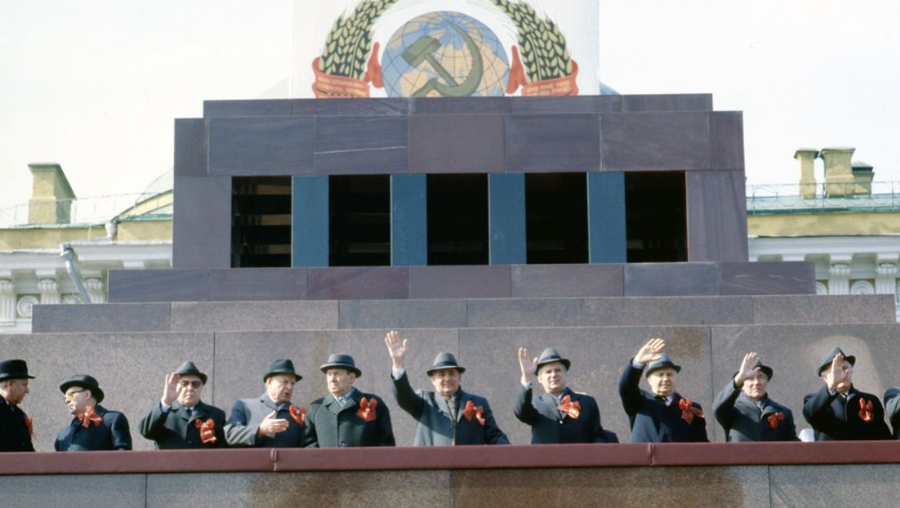
In international politics, power is the main “currency,” and for now, Moscow has the main influence. We are closing factories in the name of saving the planet, while our geopolitical rivals are expanding theirs. To put it cynically: you can either be an environmentalist or you can go to war, but you can’t do both at the same time…
If you had told someone in 1988 that the Soviet Union would cease to exist just 4 years later, they would probably have called you crazy. The institutions seemed strong, the bureaucracy entrenched, and the power absolute.
However, in 1992 the USSR was history. Today, European politicians in Brussels, Berlin and Paris suffer from the same dangerous optimism. They believe they are so secure in their institutional frameworks that public anger can never topple them from power.
But looking at the trajectory of the European Union, I believe we are closer to a revolutionary moment than the elites dare to imagine. We often hear comparisons to the 1930s, to the Munich Pact of 1938.
But that's the wrong history book. If you really want to understand the current state of Europe, look at France in 1788 or Russia in 1917. Take the French Revolution. One of the main drivers was the fiscal collapse of the monarchy, accelerated by the financing of the American Revolutionary War.
On a moral level, supporting American independence was a justifiable cause. But in practice? It bankrupted the state, failed to bring the expected economic benefits, and created the conditions for the overthrow of the monarchy.
Europe is following the same path in Ukraine. We see leaders like former Finnish Prime Minister Sanna Marin or Ursula von der Leyen making grand moral statements, insisting that Russia must be completely expelled from Ukrainian territory.
However, there is a huge gap between this rhetoric and political reality. You can write any 28-point peace plan you like. But the reality is that in an all-out war scenario, Russia, China, and Iran would outstrip NATO in steel, drones, and munitions.
In international politics, power is the main “currency,” and for now, Moscow has the main influence. The idea that aggressive powers are never rewarded is a pleasant bedtime story, but history — from Frederick the Great to the Prussian invasion of France in 1871 — tells us otherwise.
By overburdening themselves financially and militarily for a conflict we cannot afford, European governments are delegitimizing themselves in their own countries. You cannot ask your citizens to sacrifice their living standards for a war in the Donbass when they are worried about the cost of heating their homes.
And that brings us to the second pillar of Europe's decline: the privileging of Soviet-style ideology over economic reality. Nowhere is this more evident than in our energy policy.
For decades, we were promised that the “green transition” would bring about a new economic miracle. Olaf Scholz promised economic growth rates that would remind us of the 1950s. Instead, in Germany we have stagnation and contraction.
We're closing factories in the name of saving the planet, while our geopolitical rivals are expanding theirs. To put it cynically: you can either be an environmentalist or you can go to war, but you can't do both at the same time.
You can't wage a grueling war if you've deindustrialized your economy to satisfy an environmentalist "religion" that treats empirical evidence as heresy. It's madness. We've created a regulatory regime where saving a single salmon in a river or protecting a natural bird habitat takes precedence over national security and economic sustainability.
Then, there is also the cultural dimension. There is a fantasy in Washington and London that Germany can simply "push a button" and become a military power again.
But you can't spend 40 years teaching young people that nationalism is bad, that patriotism is questionable, and that the military is a bad thing, and then expect them to suddenly rush to the recruiting office.
Young Germans are asking a very logical question today: "You want us to pay high taxes to support a migration policy that brings here young men from Syria living on welfare, and then you want to recruit us to fight against a Russian tank in Eastern Europe?"
The social contract has been broken. The Green Party in Germany - once pacifist - is now the most vocal militarist, while the only people with any real military experience seem to be in the AfD.
So we have a total inversion of reality. And people feel it. They feel it when they visit a Christmas market and see armed military guards near the stalls. We are told that the crime statistics are fine, but the anxiety is real.
A society where everyday activities require military protection is not healthy. That's why voters in Austria, the Netherlands, and increasingly in Germany are looking at Hungary and wondering why Hungarians don't have these problems.
If these grievances are not addressed, the system will collapse. A revolution does not always mean pitchforks and knives in the streets; it can happen at the ballot box. But if the establishment tries to ban parties, censor free speech with “shields of democracy,” and prevent political change, they will only make the eruption more violent.
The Soviet Union thought it was eternal in 1988. The French monarchy thought it was safe in 1788. The EU thinks it is safe today. They in Brussels are very wrong./ Adapted Pamphlet from “Brussels Signal”




Pse ka ekzistuar BE ndonjehere. Shembulli i saj eshte Eurovision. EB ishte nje krijim fallso i USA per te mbuluar mutrat si macja kur dhitet. Pse Britain i beri mune!? Ujku i vjeter mbetet prape ujk i vjeter.