


 Shkruar nga Pamfleti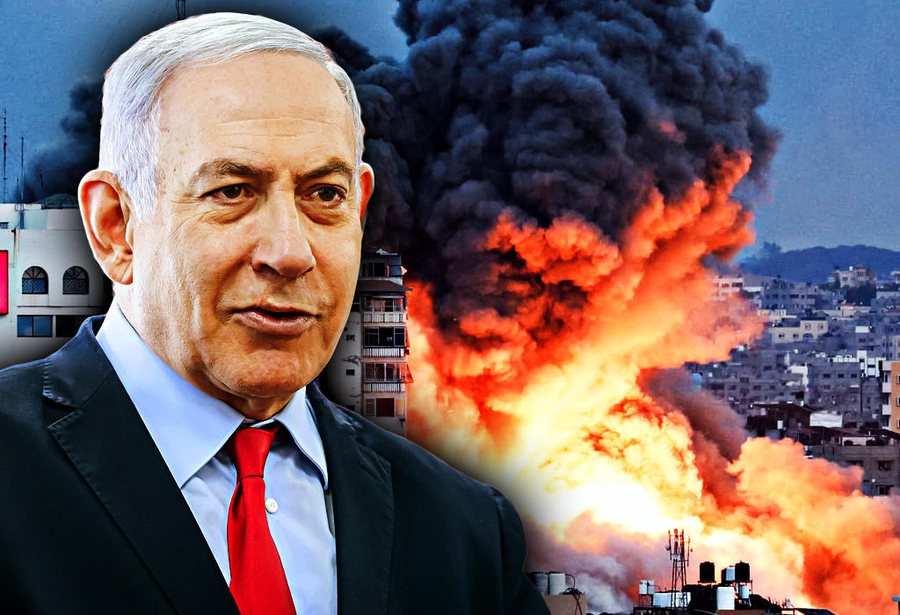
The successes against Hezbollah have emboldened the 74-year-old as Israeli leaders weigh one of the most important decisions of the war, their response to Iran.
In the days following the devastating Hamas attack on October 7, Benjamin Netanyahu's political career seemed over. Israel's prime minister and self-styled "Mr Security" had just overseen the country's worst security failure and the deadliest day for Jews since the Holocaust.
But as Israelis marked the somber anniversary of the Hamas attack this week, after a tumultuous year in which the Middle East slid ever deeper into conflict, Israel's most ruthless political operator was still in charge.
Over the past 12 months, he has turned Israel's fire on enemies from Gaza and the occupied West Bank to Lebanon and Iran, and defied calls from the US and its security chiefs for a ceasefire. Channeling the anger of a traumatized nation, he now promises not only "total victory" over Hamas, but "to change the balance of power in the region for years."
"Netanyahu has always had a kind of messianic belief that he is the only one who can save Israel from the dangers it faces," says Aviv Bushinsky, who served as his chief of staff in the early 2000s.
October 7 shattered that image. The Hamas attack was a disastrous refutation of Netanyahu's years-long approach to trying to tame the militant group through a mix of military deterrence and economic incentives. It shook Israelis' confidence in their country's security apparatus. Netanyahu's long refusal to apologize for the failures that preceded him angered his countrymen.
Ministers were attacked when they appeared in public. On the streets not far from Netanyahu's Jerusalem residence, "Fuck Bibi" — a reference to his childhood nickname — was repeatedly scrawled, erased and scratched again. Had there been a mechanism in his Likud party to replace him in the days after October 7, insiders say he could have been removed.
Instead, Israel's longest-serving prime minister ascended. He launched a vicious bombing and offensive in Gaza. But in the early days of the war, under pressure from the US and wary of opening a second front, he opted against calls from colleagues for an all-out attack on Hezbollah, which had begun firing on Israel in support of Hamas.
Now, after the destruction of Gaza, Israel is ramping up its attacks elsewhere. In July, senior Hezbollah and Hamas figures were killed in Beirut and Tehran. In recent weeks, Israel has dramatically escalated its campaign against Hezbollah, killing its leader, Hassan Nasrallah, bombing thousands of targets and invading Lebanon.
For some, the shift is less a shift in Netanyahu's approach than a result of the evolving dynamics of the war and a delayed implementation of plans long championed by security chiefs.
But others say the successes against Hezbollah have emboldened the 74-year-old as Israeli leaders weigh one of the most important decisions of the war, how to respond to Iran.
Abroad, the multifront campaign has deepened Israel's isolation. The Gaza offensive has sparked international legal moves against Israel and Netanyahu. His refusal to agree to a cease-fire deal in exchange for the release of Israeli hostages still held by Hamas has angered the Biden administration.
Domestically, although many Israelis believe Netanyahu is paying more attention to his political calculations than to strategic imperatives, the spiraling conflict has been accompanied by a revival of his political fortunes. Likud leads the polls again. The same polls still suggest that Netanyahu's coalition would lose the election tomorrow. But given the scale of the October 7 debacle, few expected any recovery.
It is not the first time that Netanyahu has surprised his critics. After serving in one of Israel's elite commando units, Netanyahu first became prime minister in 1996. Deposed in 1999, he returned in 2009. Defeated again in 2021, he returned in 2022, outmaneuvered the main parties that shunned him over corruption allegations - which he denies - to assemble the most right-wing government in Israel's history.
Over the past year, the coalition has faltered. Two far-right parties have repeatedly threatened to quit if he makes concessions to the Palestinians. Netanyahu has also fallen out with Defense Minister Yoav Gallant, with whom he is barely speaking, according to people with knowledge of the relationship. Ever the master manipulator, he has strengthened his majority by adding Gideon Sa'ar's party - his ally-turned-foe - to the coalition.
Since the Iran barrage, hawks have urged him to seize the opportunity to attack Tehran's nuclear program, widely seen as the most serious strategic threat to Israel. The US is pushing for a smaller response, such as striking Iranian military targets. / Adapted "Pamphlet" from "Financial Times"




Lini një Përgjigje