


 Shkruar nga Pamfleti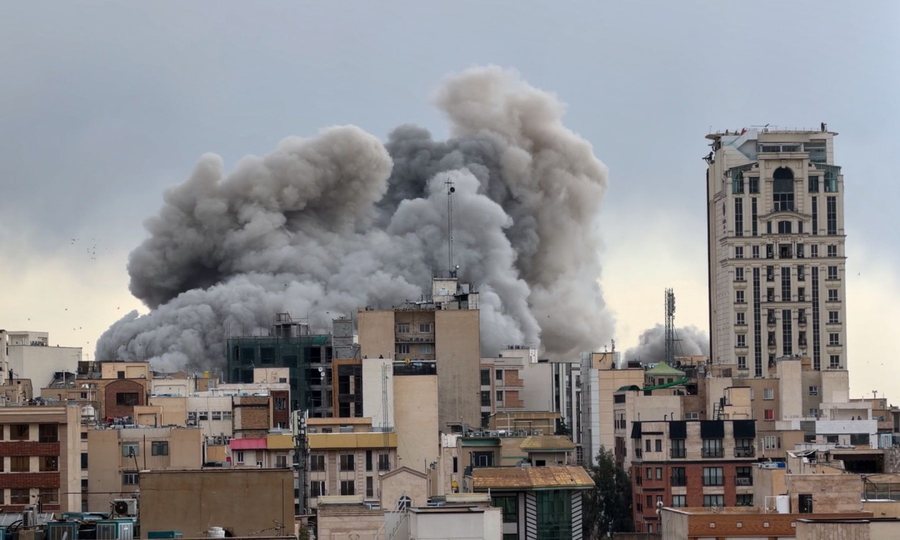
Iranian attacks on Israel and uncertainty about the end of the conflict shake markets
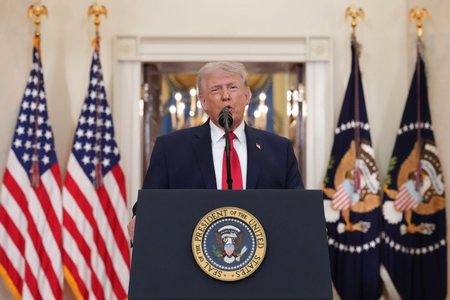
Stocks fell and oil prices rose sharply after US President Donald Trump gave few details on how he intends to end the conflict within the next two to three weeks.
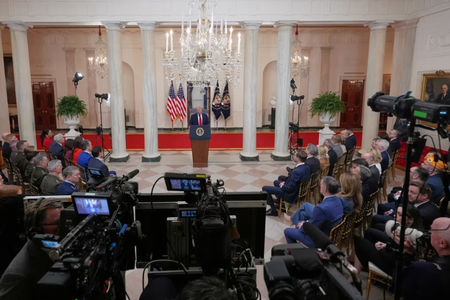
Hopes for a quick end to the Middle East war faded after Trump promised more aggressive strikes on Iran in a highly anticipated speech that disappointed investors who were expecting clearer signals about an exit from the crisis.
Stock markets fell and oil prices rose after Trump said military operations would intensify in the next two to three weeks, without giving a concrete deadline for ending the conflict, which has disrupted global energy supplies and threatened the world economy.
Trump also hinted that the war could escalate if Iranian leaders do not accept US conditions during negotiations, including the possibility of attacks on Iran's energy and oil infrastructure.
No guarantees for the energy crisis
Brent crude prices rose about 5% to $106.16 a barrel as Trump's speech offered no assurances about reopening the Strait of Hormuz, a vital route for global energy. Prices had fallen earlier on Thursday after stabilizing in the previous session.
Stocks took a hit, with US index futures down about 1% and European ones down more than 1.5%. Almost all Asian markets were down, with Japan's Nikkei losing 1.8% and the MSCI Asia-Pacific index down more than 1.5%.
“If Trump was aiming to boost confidence in the markets, he hasn’t succeeded,” said Russell Chesler of Vaneck Australia, adding “the key question for investors is: when is this going to end? This is causing volatility.”
Immediately after the speech, the Israeli military announced that it had identified missiles launched from Iran towards Israeli territory.
Since February 28, thousands have been killed in the Middle East after the US and Israel attacked Iran, prompting Iranian counterattacks on Israel, US bases and Gulf states, and opening a new front in Lebanon. Iran also nearly closed the Strait of Hormuz, through which about a fifth of the world's oil and liquefied gas supplies pass, raising energy costs.
Trump declared that the US does not depend on this route and called on allies to contribute to its reopening. He blamed Iran for the increase in US fuel prices.
The International Monetary Fund, the World Bank and the International Energy Agency warned that the war has significant and uneven consequences globally and that they will coordinate the response, including financial support for the most affected countries.
In an interview with Reuters, Trump claimed that US-Israeli strikes had prevented Iran from developing nuclear weapons, without providing evidence. He said the US could strike again if the threat returned.
Meanwhile, Iranian President Masoud Pezeshkian declared that Iran has no animosity towards the American people. Trump said talks are underway with Iranian leaders, whom he considers less radical than his predecessors.
He claimed that Iran had requested a ceasefire, but that this would not be considered without an end to the blockade of Hormuz. Iran denied such a request.
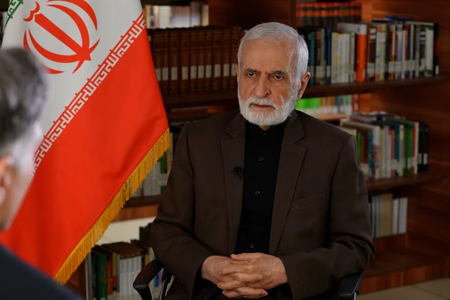
A senior Iranian source said Tehran is seeking a guaranteed ceasefire to stop the attacks and that there have been no talks about an interim agreement.
Sources in Pakistan, which is trying to mediate, said a temporary ceasefire has been proposed, but without a response from the sides. US Vice President JD Vance has contacted Pakistani mediators and signaled openness to a ceasefire under certain conditions.
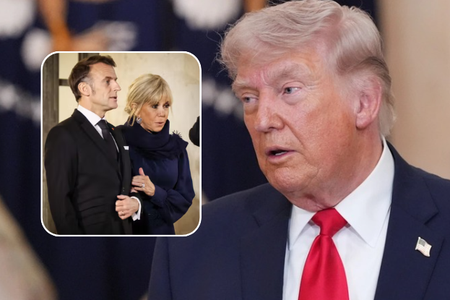
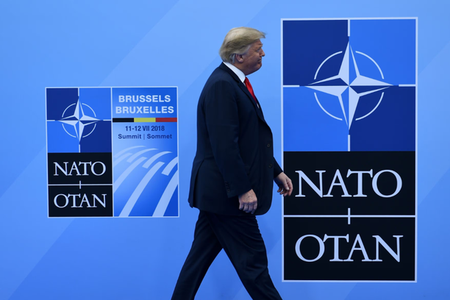
Trump had previously suggested he could end the war without a deal and criticized the lack of support from NATO allies, although he did not directly mention the alliance in his speech.
He called on countries that depend on oil to buy from the US or take responsibility for their own supplies. “Go to the Strait and take care of it yourself,” he said, adding that the US would no longer provide the same support as before.
European states have maintained a cautious stance, while a French official stated that NATO operations in the Strait of Hormuz would constitute a violation of international law.


Lini një Përgjigje