


 Shkruar nga Pamfleti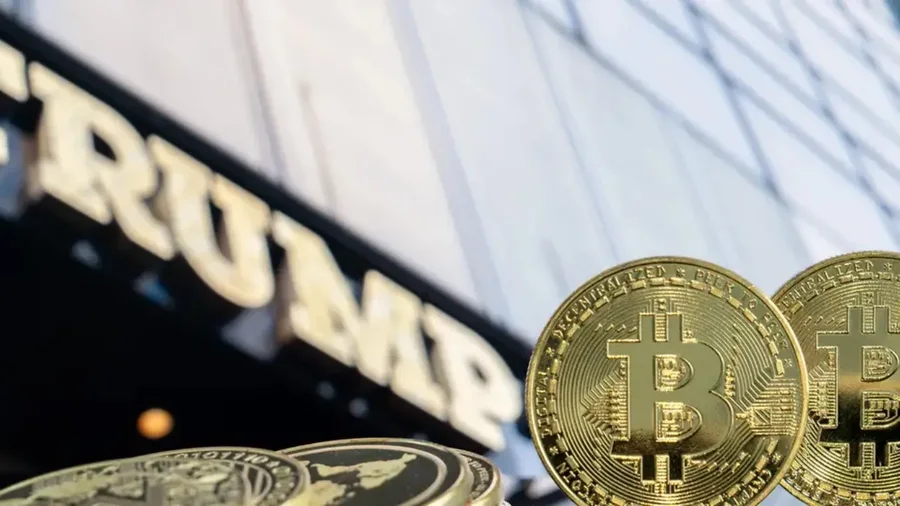
US President Donald Trump has unveiled plans for a national cryptocurrency reserve. But buying bitcoin at all-time highs could be a costly move.
Bitcoin is often considered an alternative to the US dollar, the world's reserve currency, as only a limited number of coins will ever be produced. Proponents argue that bitcoin's fixed supply makes it an inflation-protected store of value outside the global financial system. Bitcoin is often compared to gold for a similar reason.
While central banks around the world hold large reserves of dollars and gold, so far, only one country – El Salvador – has created a strategic reserve of cryptocurrencies, although some governments do hold them, mainly to capture criminal activity or to circumvent international sanctions.
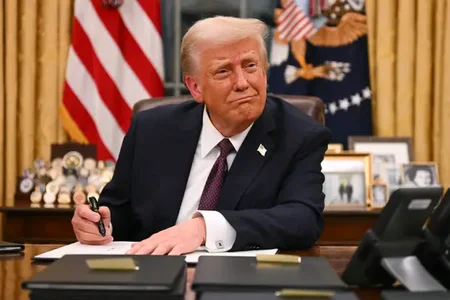
Last week (03/06/2025) US President Donald Trump signed an executive order to create a strategic reserve of bitcoin, after previously saying he wants the United States to be a leader in digital money.
Crypto advocates have responded euphorically to the plans, while skeptics argue that they will expose American taxpayers to the huge price volatility of digital currencies.
As Trump welcomed top crypto executives to the White House, DW explored what the president has in mind.
What do we know about Trump's plan?
Under Trump's order, the federal government will hold nearly 200,000 bitcoins seized in criminal and civil proceedings, according to Trump's "cryptocurrency" guru David Sacks. "The U.S. will not sell any bitcoins deposited in the Reserve. It will be held as a store of value. The Reserve is like a digital Fort Knox for cryptocurrency, often referred to as 'digital gold,'" Sacks wrote in X, referring to the Kentucky location where most of the U.S. gold reserves are stored.
The executive order requires a “full accounting” of the government’s bitcoin holdings, which Sacks said have never been fully audited.
Sacks added that over the past decade, Washington had sold about 195,000 bitcoins for $366 million, which he said would be worth about $17 billion if they were still held.
Sacks said the order allows the Treasury and Commerce Departments to “develop budget-neutral strategies for purchasing additional bitcoin.” On Sunday (09.03.2025), Trump named the five cryptocurrencies to be held in the reserves, namely bitcoin, ether, XRP, solanum and cardano.
“A U.S. crypto reserve will elevate this critical industry after years of corrupt attacks by the Biden administration,” Trump wrote on his “Social Truth” platform. “I will ensure that the U.S. is the Crypto Capital of the World.”
Trump, who was once anti-crypto, is now a growing fan of alternative currencies and first floated the idea of a strategic reserve at the 2024 Bitcoin Conference in Nashville, Tennessee, in July.
US agencies hold 198,109 bitcoins, worth about $18.1 billion (16.7 billion euros) as of Thursday (06.03.2025), according to a report from Arkham Intelligence.
Most of the assets are seized proceeds from crime, including drug trafficking, money laundering and hacking. The government also holds millions of dollars in seized ethereum, tether and other smaller digital currencies.
What is a strategic reserve?
A strategic reserve is a reserve of vital resources held by governments or large organizations to provide a safety net in difficult times.
Examples include the US Strategic Petroleum Reserve, which helps ensure a regular supply of oil during crises, food reserves, including grain reserves, to protect against famine, and the stockpiling of vaccines by the US and European Union during the COVID-19 pandemic.
Countries also hold monetary reserves, such as foreign currencies or gold, to stabilize their economies and facilitate trade. The U.S. government, for example, holds about 8,133 metric tons of gold, most of it in the United States Gold Bullion Depository at Fort Knox, Kentucky.
Reserves of critical minerals needed for technology, energy transition, and defense are increasingly being created.
Will crypto stocks work?
Proponents say a strategic crypto reserve could help financial stability by diversifying the U.S. national reserves beyond traditional assets like gold and foreign currencies.
Such a reserve would also help legitimize cryptocurrencies, encouraging more financial institutions to hold them. The likes of bitcoin are still viewed with suspicion by many institutional investors due to their price volatility and decentralization.
But some analysts think the stock's value could disappear in a market crash.
Others worried that if the government were to buy Bitcoin near its all-time high price of $109,000, it would be a costly endeavor, at a time when Trump is seeking billions of dollars in public sector cuts.
But Sacks insisted the use of seized crypto assets "means it won't cost taxpayers a dime."
Other critics accused Trump of favoring a highly speculative investment, without providing clear strategic benefits to the nation.
Many of Trump's supporters are big crypto investors. Trump himself has a meme currency named after him.
Some observers have noted the contradiction between creating a government reserve of an asset considered anti-establishment. Bitcoin was originally created as a way to bypass government and central bank control.
Others were concerned that if more governments started hoarding reserves like bitcoin, they could potentially start manipulating the crypto market, just as they do with gold and currencies.
The price of gold last month hit a record $2,956, much of it due to large purchases by Poland, Turkey, India and China. Trump now faces significant legal and political hurdles before the stockpile becomes a reality as the idea still lacks congressional support and as large amounts of crypto seized by US authorities once had legitimate owners./ DW




Lini një Përgjigje