


 Shkruar nga Wolfgang Munchau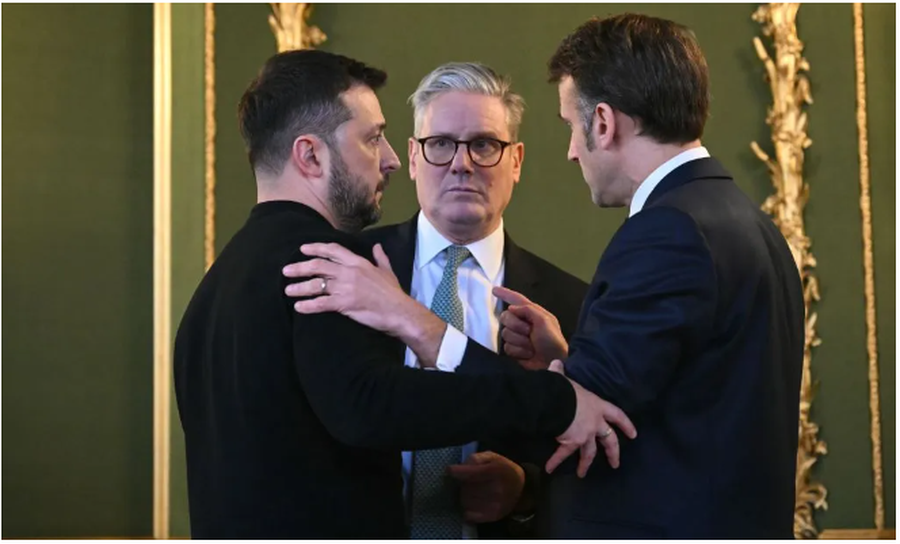
Trump has checkmated Europe because the continent lacks strategists and long-term strategies...
"And are we not guilty of the insulting contempt, calling chess a mere game? Is it not a science and an art, suspended between those categories, just as the shroud of Muhammad hovered between heaven and earth, a unique bond between opposites: ancient, yet eternally new."
The famous German writer Stefan Zweig understood the strategic complexity of a game, in which simply repeating familiar moves does not necessarily lead to victory. The puzzle changes with every move you make, but also with your opponent's response.
This understanding is a central element in his novella “The King’s Game,” and it has a significant impact on the current political moment. Zweig’s characters bear an uncanny resemblance to some of our geopolitical actors. The story of his novella takes place on a ship traveling from New York to Buenos Aires in the 1930s.
One of the passengers is the reigning world chess champion. He is described as undeveloped, semi-illiterate, the opposite of intellectual. He is a transactional type, interested only in money, but endowed with a special talent: he is able to win chess games just by watching what is happening on the field.
The other character, opposite to him, is a cultured intellectual, Doctor B, in many ways a better chess player. Sadly, Doctor B has never played with a real opponent. He learned to play chess from a book while in prison. After memorizing all the detailed games in it, he tried to play them in his head.
When the two begin to play against each other, Doctor B is greatly troubled by the world champion's irritating and unpredictable moves. He is not playing according to the formulas the doctor has memorized, and inevitably the latter loses the game.
What is Zweig trying to tell us with this novel? To triumph in chess, you need patience and the ability to wait. So this game is not just about logic. There are people who try to play intellectually, who have the ability to memorize entire games and then try to repeat them.
But then you come across intuitive geniuses like Zweig's antihero, who has nothing memorized: he simply knows how to exploit his opponent's mental weaknesses. Does he remind you of anyone? I've heard Donald Trump described as uneducated. That he doesn't understand European history, and confuses very important details, like who started the war in Ukraine.
That he doesn't care, even when he sees he's wrong. When he formally expressed regret for his statement that the EU was founded "only to destroy the US," he apologized only for what he described as a "bad word." But I think it's a waste of time to try to fact-check what he says.
What we Europeans should do is try to anticipate his next move. But unfortunately we seem to have an institutional inability to think two steps ahead. Consequently, we are not raising important questions, such as what capabilities does Ukraine need to win the war?
What are the obstacles, and how can we remove them? What are the end-game scenarios? What would be an acceptable second-best outcome? What does it mean to win or lose? Instead of strategic play, we Europeans have principles. We want Russia to be expelled from all occupied territories in Ukraine.
Some would even like to see regime change in the Kremlin. But we want someone else to drive that. Not being strategic, we have not invested in defense. And that means no one has a smart answer to the question of what would happen if a Putin backed against the wall chose to use nuclear weapons?
After all, this scenario was considered plausible by the CIA in 2022. It is almost certain that he would not launch an all-out nuclear attack. But what if an underwater nuclear bomb were to explode in the Baltic Sea, near the coast of a NATO member state? The Baltic Sea is very shallow. A nuclear explosion could cause a tsunami.
Radioactive isotopes released from a nuclear explosion could contaminate coastal regions. There would be a large release of radioactive material into the air. This is just one of many intermediate escalation scenarios for which we have no answers.
Instead, our leaders repeat the slogan that they will do “whatever it takes” to help Ukraine defeat Russia. This now-fashionable phrase was first used by Mario Draghi, the former president of the European Central Bank. But he used it as a credible threat against speculators.
However, what worked so well in finance does not work so well in war. When you are involved in a war, you are subject to all kinds of constraints, physical, human, financial and political. This is what it means to be in a democracy: we cannot do whatever we want.
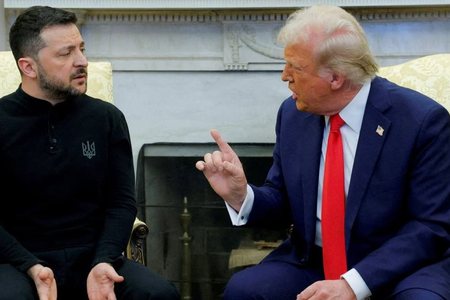
However, as non-strategic players, European leaders stood in solidarity with Zelensky after what happened with Trump in the Oval Office. But ambiguity is not a strategy. I have yet to see any strategic purpose behind any action the Europeans have taken in the last 2 weeks, including Starmer.
Everything they have done, including Friedrich Merz's decision to exempt defense spending from Germany's constitutional fiscal rules, has been the result of Trump's first move. They are not waiting for his second move. Trump, meanwhile, is an intuitive and transactional strategist.
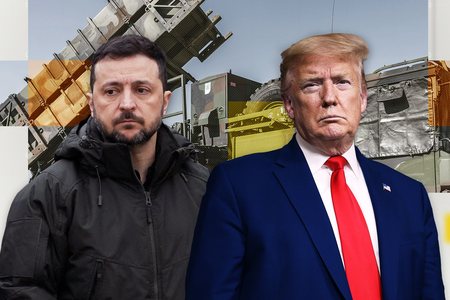
He met with Zelensky and concluded that the Ukrainian president was not ready for peace. He immediately canceled military aid to Ukraine, turned off American satellites and stopped sharing intelligence on Mondays. Europeans continue to express shock and concern at Trump's every move.
But if you look at the situation purely from a strategic perspective, his actions should not be unexpected. Of course, he knows what he wants to happen next. And there is much more room to escalate the current course. He could suspend intelligence sharing for NATO.
It could withdraw US troops from Eastern Europe, abandon its commitment to the collective defense clause of Article 5, on the grounds that the US had warned Europeans not to engage in a proxy war against Russia. It could also begin withdrawing troops from Western Europe.
He could warn American citizens not to travel to Europe and sound the alarm for investors. Has any European leader thought about how to respond to any of these potential escalating steps? Will we see more action than just a few photos with Zelensky?
Where have all our great European strategic thinkers gone? They are certainly not in politics. And not in journalism either. Instead of strategies, we now talk endlessly about relationships. Zweig wrote his novel in 1941, not long before he committed suicide, and when the Nazis had conquered almost all of Europe.
He knew what the lack of strategy had done to Europe. His chess story represented what was being played out in global politics as opposing forces clashed: the old order was defeated by the new. Today it is happening again, and Europe is paralyzed. /Adapted from “Pamphlet” by “Unherd”/


Lini një Përgjigje