


 Shkruar nga Pamfleti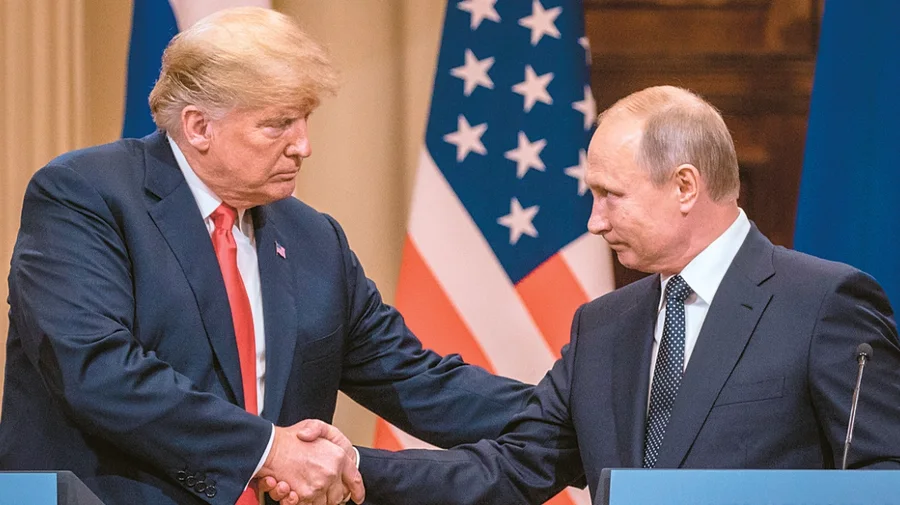
The prospect of a summit allowed Trump to trumpet “progress,” thus avoiding having to follow through on the threat of new and ineffective tariffs, and allowed Putin to avoid a breakdown in relations with Washington, however, without bowing to his ultimatum.
Today, in theory, US President Donald Trump's ultimatum to Russia to agree to a ceasefire in Ukraine expires. Although Russian President Vladimir Putin has announced that he will not meet with Ukrainian President Volodymyr Zelensky anytime soon, he is expected to meet with Trump next week, possibly in the United Arab Emirates.
Whether the meeting will actually take place is still unknown. Of course, as Rosalba Castelletti writes in Repubblica, the mere announcement of an imminent US-Russia summit, the first since 2021, was enough to offer both leaders a temporary escape from the impasse on the eve of the US ultimatum to Russia. The prospect of a summit allowed Trump to trumpet "progress", thus avoiding the obligation to follow through on the threat of new and ineffective tariffs, and allowed Putin to avoid a breakdown in relations with Washington, however, without bowing to his ultimatum.
A "negotiating ploy," as the Russian press called it, to buy time while the Kremlin's army continues to advance in Ukraine. But the talks are unlikely to lead to a quick end to the war. Meanwhile, Putin also managed to reject the possibility of a trilateral meeting with Ukrainian President Volodymyr Zelensky and, above all, keep Europe out of the negotiations.
The Russian president is banking on his face-to-face meeting with Trump, hoping to force a deal on his terms, namely, Ukraine's capitulation. The goal would be to convince Trump that the only path to peace is the Russian memorandum presented in Istanbul last June and to pressure Zelensky to accept it.
A summit with Trump is, in any case, good news for Russia, as evidenced by the 4.6% rise in the Moscow stock market. For Putin, the very act of meeting with the US president after three and a half years of isolation would represent a major diplomatic victory. If it does help delay sanctions or soften Kiev's stance, it will be a double victory.
However, it is less likely that this will succeed in bringing peace closer. Tatiana Stanovaya, founder of the research organization R.Politik and a political scientist at the Carnegie Russia Eurasia Center, does not see any progress in the near future. Even if the meeting were to take place, “the most likely scenario is that this peace effort will fail again” because “the Russian side can present it in ten different ways to create the impression that it is open to concessions and serious negotiations,” but in reality “its fundamental position remains unchanged: it wants Kiev to capitulate.”
Moscow will continue its campaign in the hope that, within a few months, a new round of negotiations will be held, perhaps this time with a weaker Ukraine./ Adapted by "Pamphlet" from "Linkiesta"




Lini një Përgjigje