


 Shkruar nga Pamfleti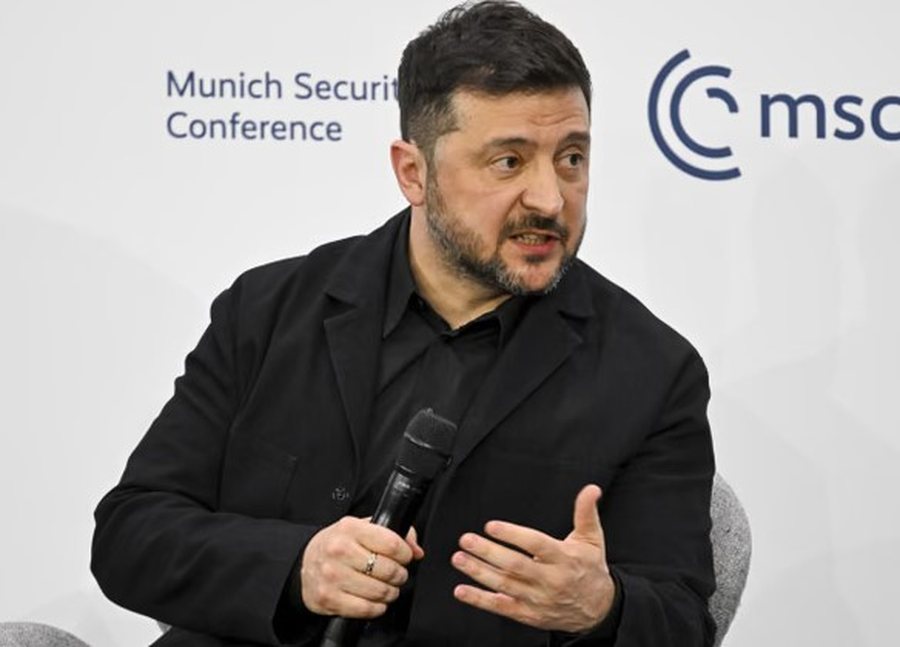
Zelensky's five-year term was scheduled to end in May 2024, but war conditions have postponed any electoral process...
Last week, Ukrainian President Volodymyr Zelensky declared that Ukraine “will go to elections” if a two-month ceasefire with Russia is reached. He has previously stressed that the electoral process can only take place if the country’s security is guaranteed by allies, while authorities in Kiev express concern about possible Russian interference.
Ukraine has been under martial law since the start of the full-scale Russian invasion in 2022. Zelensky's five-year term was scheduled to end in May 2024, but war conditions have postponed any electoral process.
The debate over holding elections during a wartime conflict is fraught with practical and political challenges. Millions of citizens have been displaced within and outside the country, while parts of the country remain under Russian occupation. Organizing an election under these conditions would face significant logistical and legal difficulties, including the impossibility of participation for citizens in occupied areas.
Another issue is the risk of external interference. Russia has established its own administrations in the occupied territories, including parts of the Donetsk and Luhansk regions in the Donbas. In the event of elections, there is concern that Moscow could try to influence the process through political, cyber, or informational means.
As for the possibility of a pro-Russian candidate, the current political landscape in Ukraine shows high support for the country's pro-Western course. However, an electoral process under extraordinary conditions could create room for internal tensions and attempts at external influence.
On the political front, a decision to hold elections during a temporary ceasefire would signal institutional commitment to democratic procedures. But practical implementation would require strong security guarantees and international support so that the outcome enjoys full legitimacy at home and abroad.
Reports last week also suggested that Zelensky could present plans for the next presidential election on February 24, the fourth anniversary of the full Russian invasion. This has sparked discussions about whether such an announcement would have concrete content or serve primarily as a political message.
But according to experts, there is a belief that the presidential elections in Ukraine are not expected to take place under the current conditions. The main argument is related to the fact that the country is under a state of war and faces serious security challenges, which makes it practically impossible to organize a regular and inclusive electoral process.
During the Munich Security Conference, Zelenskyy ironically declared that "Ukraine will have free elections when Russia has free elections," signaling that the issue of elections remains closely linked to the developments in the war and democratic standards in the region.
Experts point out that it is difficult to find a historical precedent where a state has held national elections while fighting for survival within its territory. The closest example mentioned is the presidential election in the United States in 1864, during the Civil War. However, even that election was held under exceptional conditions: the Confederate states did not participate and some of the votes were not counted.
In this context, the discussion of elections in Ukraine is seen more as a political and symbolic debate than as an imminent practical process. In fact, the martial law in force and the security situation significantly limit the possibility of organizing a free and fair vote throughout the country.




Lini një Përgjigje