


 Shkruar nga Pamfleti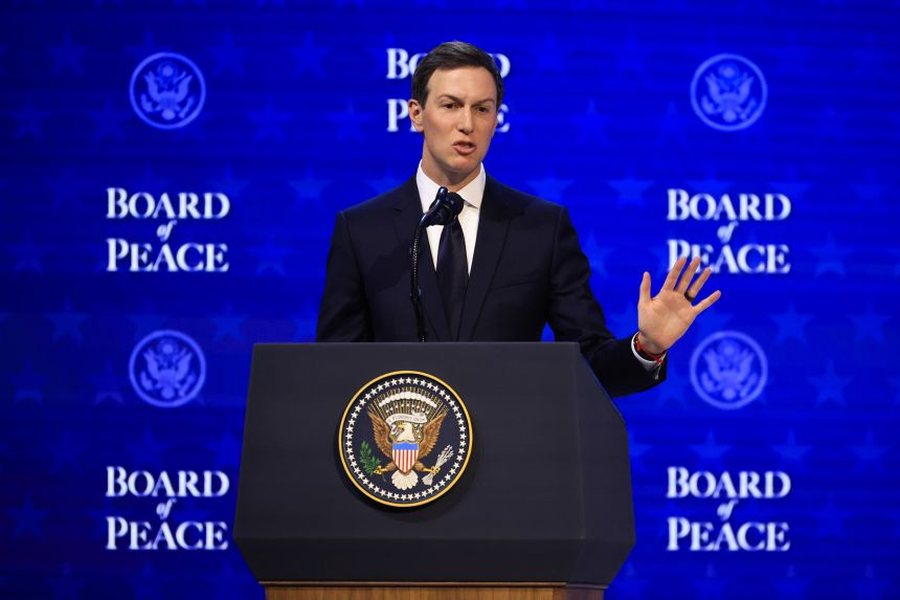
The reconstruction of Gaza is being conceived through the Peace Board as a process dominated by private interests, with Jared Kushner playing a central role. As a key executive board member and head of the investment fund Affinity Partners, Kushner is in a position to combine diplomacy with economic gain. The funding of his fund by Gulf states, which are expected to be key players in the reconstruction, has raised concerns about conflicts of interest, lack of transparency and the privatization of humanitarian aid...
While the administration of US President Donald Trump promotes the Peace Board as the key mechanism for implementing the 20-point plan for Gaza and Israel, more and more details suggest that this body is becoming more of an economic profit structure than a real instrument of peace and reconstruction. At the center of these concerns is Jared Kushner, Trump's son-in-law, who plays a key political and economic role in this process.
The Peace Board was approved by the UN Security Council in November, initially as an implementation mechanism for the US plan. However, its current composition and mandate have raised serious questions. At the head of the board is Trump himself, as the final decision-maker, while the executive structures are dominated by billionaires, hedge fund managers and real estate figures. There is almost no Palestinian representation, while most European Union countries are outside the format.
Jared Kushner's role is particularly controversial. He is a key board member and head of the investment fund Affinity Partners, a company that manages billions of dollars, mainly from sovereign wealth funds of Saudi Arabia, Qatar and the United Arab Emirates. These countries are expected to play a central role in financing and directing reconstruction projects in Gaza, raising serious concerns about conflicts of interest.
According to investigations and analyses by US institutions, Affinity Partners has benefited from high management fees, despite limited investment results. Critics point out that Kushner has built a business model that benefits from political proximity to the US administration and from his role in Middle East diplomacy. In this context, the reconstruction of Gaza appears not only as a political project, but also as a major financial opportunity.
The composition of the Peace Board reinforces this perception. In addition to Kushner, it includes figures such as private equity executives, big businessmen and global investors, while the humanitarian sector is only symbolically represented. International aid organizations and UN agencies, which have traditionally led post-conflict reconstruction, have been marginalized or completely excluded from Gaza.
One of the flagship projects of this approach is “New Rafah,” a new urban development for which the United Arab Emirates has pledged $1.5 billion. The project envisages new residential areas and infrastructure, but also strict security checkpoints. It remains unclear who will provide basic services to the population, such as temporary shelter, food distribution and health care, functions traditionally carried out by NGOs and UN agencies, now limited to the field.
Analysts warn that privatizing Gaza's reconstruction, without strong oversight and transparency mechanisms, creates a risk that financial interests will prevail over humanitarian needs. In this model, private companies answer to their clients and investors, not the conflict-affected population.
Criticism has also mounted over the lack of transparency. The UN resolution supporting Trump's plan only requires periodic reports, with no clear obligations to publish funding sources, contracts or final beneficiaries of projects. Previous precedents in Gaza, where aid distribution was delegated to private companies, have ended with serious consequences and a lack of accountability.
Against this backdrop, Jared Kushner's statements about "tremendous investment opportunities" in Gaza have provoked strong reactions. Critics argue that this language shifts the focus from the humanitarian catastrophe to the financial potential, treating a war-torn territory as an investment market.
As violence and casualties in Gaza continue, more and more voices warn that the Peace Board, in its current form, risks being perceived not as an instrument for stability and just reconstruction, but as a “Board of Profits,” where the political and economic interests of a narrow circle outweigh the real needs of the Palestinian population. / Adapted from “The American Prospect”





Termeti, fatkeqesia natyrore, që mbushi xhepat e kryeministrit, te Shqipërisë.
"Krijoni mundësi pa-konkurruese për të mbushur xhepin". "Paqe" është një emër-etiketë. Nëse ata janë për paqen, kush janë krijuesit e konfliktit dhe shkatërrimit atëherë? Alienët nga Proksima?