


 Shkruar nga Pamfleti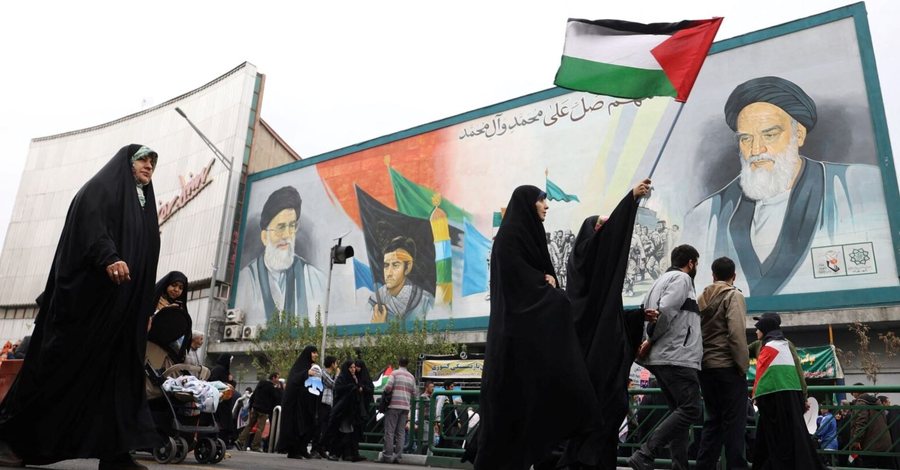
As fighting between the Palestinian militant group Hamas and Israel intensifies, Iran has become more vocal about the possibility of additional firepower to score victories in what Tehran calls the "axis of resistance" against Israel.
The axis, perfected by the Islamic Republic over the past four decades, is a network of collaborators, Tehran-backed militant groups, and other state actors who play an important role in Iran's strategy to challenge the West, its Arab enemies, and most importantly, Israel.
Active in the Gaza Strip, Lebanon, Iraq, Syria and elsewhere, this network enables Iran to create chaos on an enemy's territory, while at the same time enabling it to deny that it is involved.
In the case of the latest conflict involving Iran-backed Gaza's Hamas, the stronger Israel's response and the greater Israel's blow to its Shia and Sunni enemies in the region, the better for Iran, they said. the experts.
This strategy predates the 1979 Islamic Revolution, experts said, but was rebranded as the axis of resistance by the Quds Force, the elite overseas wing of Iran's Islamic Revolutionary Guard Corps.
"The new term 'axis of resistance' describes an old phenomenon: any individual or group willing to fight Iran's wars in exchange for funding, weapons, military training and intelligence support," Ali Alfoneh told Radio Free Europe. , senior researcher at the Arab Institute for the Gulf States, based in Washington.
But while Iran openly positions itself as the main voice of the network as it calls for global resistance against Israel and the West, "the Quds Force avoids micro-managing and gives its collaborators room to maneuver," Alfoneh said.
This relative autonomy, which has at times enabled associates and partners to work against Tehran's regional interests, makes it difficult to directly blame Iran.
"If there is any kind of kinetic retaliation, your collaborators, your partners absorb the retaliation, and if your enemy wants to expand the scope, he will have difficulty politically connecting the dots for something like that," Behnam told REL. Ben Taleblu, senior fellow at the Foundation for Defense of Democracies, a Washington-based think tank.
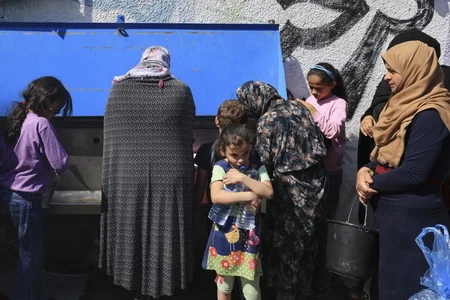
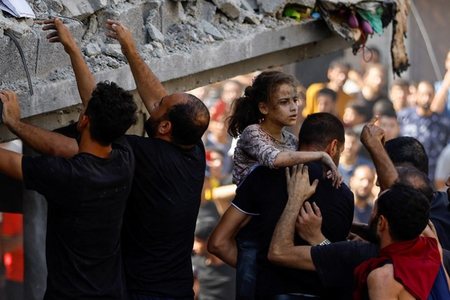
The October 7 attack on Israel by the Sunni militant group Hamas was one such case. The attack, which was praised by Iran, killed more than 1,400 Israelis and prompted a retaliation by Israel which is bombing Gaza, where more than 5,000 people have been killed, causing a humanitarian disaster.
But despite Iran's staunch support for Hamas — which, according to Alfoneh, is historically closest to Sunni Arab states and receives its main funding from Qatar — Israel and the West have been unable to directly link Iran to the attack. .
"When we evaluate the relationship between Iran and Hamas, we cannot forget that the desire for Iran to disguise its hand is related to the successful strategy of the Islamic Republic," said Taleblu. "The fact that some people have a hard time finding the order or a clear message for a green light speaks to the success of the strategy as far as Iran's collaborators are concerned," he said.
The axis of resistance is part of Iran's efforts to export the Jafari School of Shiite Islam, which is the official religion in Iran after 1979 and is "a kind of vision of what the Middle East would look like," Taleblu said.
"This ideology only resonates when the Middle East is in chaos and the Islamic Republic is an expert at managing chaos," he added.
In 2020, the United States killed Quds Force commander Qassem Soleimani, who was seen as the architect of the resistance axis and had great influence over its members. His assassination injected an element of chaos within the network itself.
But while the killing of Soleimani presented a challenge, it was not enough to split the Quds Force, or break the axis.
"The Quds Force is a highly institutionalized military organization and the killing of Major General Soleimani had no impact on the organization's performance," Alfoneh said.
The axis of resistance has continued its operations through Hamas and the Palestinian Islamic Jihad in Gaza, against the sworn enemy, Israel, and also through the operations of the Lebanese Hezbollah and the Iranian-backed Shiite militias in Iraq known as the Popular Mobilization Forces. In Syria, Iran's Islamic Revolutionary Guard Corps has deployed troops to assist government forces supporting President Bashar al-Assad in the Syrian civil war. In Yemen, Iran has backed the Houthi rebels, who have been fighting a military alliance led by Saudi Arabia, Iran's regional rival.
At times, some of these groups have become "independent" of Iran and acted against Tehran's interests.
Alfoneh recalled the kidnapping of Israeli border guards by Hezbollah in 2006, which, he said, "resulted in a devastating war that was much more problematic, as it ran counter to Iran's strategy of using Hezbollah as a deterrent against Israel."
Major differences were seen between Hamas and Iran during the Syrian conflict, as the Palestinian militants refused to come to the aid of Assad, Tehran's key ally.
Ngritja politike e disa grupeve, përfshirë në Irak dhe Hamasit në Gazë, ka bërë që disa nga këto grupe të distancojnë veten nga Irani, të paktën në aspektin retorik, në mënyrë që të ruajnë legjitimitetin e tyre të brendshëm.
Hamasi ka insistuar se vet e ka organizuar sulmin ndaj Izraelit dhe se Irani dhe Hezbollahu nuk kanë pasur rol në të. Ditëve të fundit, Hezbollahu ka këmbyer zjarr me forcat izraelite përgjatë kufirit, që përbën përshkallëzimin më të madh të dhunës që nga lufta e tyre më 2006. Izraeli e ka akuzuar Hezbollahun se ka kryer sulme “nën instruksionet iraniane”.
Xhihadi palestinez Islamik, që ka prani edhe në Liban, po ashtu besohet se ka kryer një sulm ndërkufitar në Izrael më 10 tetor.
Në Irak, burimet i thanë Radios Farda të Radios Evropa e Lirë se zyrtarët iranianë janë takuar me krerët e milicive shiite pro-iraniane pas sulmit të 7 tetorit ndaj Izraelit.
Që atëherë, Radio Farda ka raportuar se milicitë shiite në Irak kanë krijuar një seli të përbashkët operacionale, që synon të mbështesë operacionet e grupeve militante palestineze kundër Izraelit.
Përderisa Irani angazhoi grupe të ndryshme në operacionet e përbashkëta në Siri, Alfoneh tha se : “Në përgjithësi, Irani preferon të ruajë një shkallë të ndarjes në mënyrë që të mos dalin informacione të inteligjencës nga bashkëpunëtorët e tij dhe që të mos komprometohet i gjithë rrjeti i bashkëpunëtorëve”.
Nga ana tjetër, reagimi ushtarak i Izraelit dhe mbështetja ushtarake dhe diplomatike e SHBA-së për Izraelin pas sulmit të Hamasit, por edhe kërcënimi nga përfshirja e anëtarëve të tjerë të boshtit të rezistencës, mund të shihet si një fitore strategjike e Iranit.
“Fakti që SHBA-ja ka dërguar pajisje ushtarake konvencionale [në Izrael] shihet si fitore në Teheran, që ata të mund të pengojnë një aktor joshtetëror si Hezbollahu libanez”, tha Talebu nga Fondacioni për Mbrojtjen e Demokracive.
“Kjo tregon se sa shumë janë rritur gjatë dekadave të fundit aftësitë konvencionale dhe hibride ushtarake të Iranit dhe bashkëpunëtorëve të tij”.
Hezbollahu më 18 tetor pretendoi se është “mijëra herë më i fortë” sesa ishte në luftën e fundit kundër Izraelit, duke vënë në pah mundësinë që boshti të jetë edhe më i fuqishëm në aspektin e fuqisë së zjarrit dhe rekrutimit se më herët.
Por, Alfoneh tha se fuqia e boshtit, që vjen pasi Irani ka bërë thirrje për një aleancë të zgjeruar kundër Izraelit, nuk është “e rëndësishme”.
“Por, për sa kohë që grupet më të vogla sikurse Hamasi mund të hapin vrima në Kupolën e Hekurt të Izraelit për të vënë në pah dobësitë e Izraelit, dhe për sa kohë grupet e tjera më të vlefshme sikurse Hezbollahu qëndrojnë jashtë luftës dhe i ofrojnë Iranit një mbrojtje efektive nga bombardimet izraelite ndaj ndërtesave bërthamore të Iranit, Irani është shumë i lumtur”, tha Alfoneh.
Taleblu said that despite efforts to distance itself from a potentially wider conflict that would involve collaborators and militant groups that make up the axis of resistance, it is important not to allow Tehran to hide behind a shield that allows it to deny inclusion./Rel
"It is important to constantly hold [Iran] accountable and not just its collaborators," said Taleblu./REL



Lini një Përgjigje