


 Shkruar nga Pamfleti
Von der Leyen and the Union's difficulties. Even tomorrow's vote of confidence will not solve the problems...
In the Berlin of "Zero Hour", exactly 80 years ago, a figure emerged and entered forever into memory and myth: Trümmerfrau, the rubble woman, rose as a symbol of the thousands of German women who helped remove the ruins of Germany's capital, razed to the ground by the Allies.
When tomorrow morning, the European Parliament rejects, as seems likely, the motion of no confidence presented by the far right against Ursula von der Leyen, she too will be metaphorically a Trümmerfrau, still president of the Brussels Commission, but sitting on a landscape of ruins: the Europe of this sad summer of the first quarter of the 21st century.
On Monday afternoon, the Strasbourg chamber staged the "trompe-l'oeil" of a pro-European majority that survives only on paper and no longer agrees on anything, or almost nothing.
Manfred Weber defended his acrobatic two-oven policy: "there is a platform, not a coalition," said the leader of the People's Party, who seeks and receives votes from the right whenever he needs to dismantle another part of the Green Pact or toughen the EU's migration policy.
"You can't ask us to be responsible while negotiating with extremists," responded the leader of the Socialists and Democrats, Iratxe García Pérez.
Under pressure from Weber and a dominant EPP, von der Leyen has made transformism her hallmark, on the one hand bowing to their demands, and on the other, trying, as in Monday's debate, at least verbally to appease the socialists and liberals who elected her last year alongside the People's Party.
The internal division within the right was also evident in the debate in the hall, where the Brothers of Italy party, increasingly uncomfortable within the ECR group, announced its vote against, disagreeing with the Romanians and Poles who proposed a motion of no confidence.
But ultimately, the real ruins lie elsewhere, and the toughest tests are yet to come.
First of all, on tariffs, where the dilemma between a bad deal and no deal remains unresolved. The Von der Leyen Commission, which holds power, is negotiating in uncertain and difficult conditions, weighed down by the division that sees Germany, Italy and other countries heavily dependent on exports defending the "little, damn it, now" approach, while France and Spain are calling for more determination and symmetry in the face of Trump's threats. The fundamental mistake, once again, is appeasement: Donald Trump is not Hitler, nor Putin, he is the leader of our main ally, but the illusion that making concessions, making concessions, can appease him and curb his appetites is pure illusion. With strong people - enemies, adversaries or allies - history teaches us that appeasement has never worked.
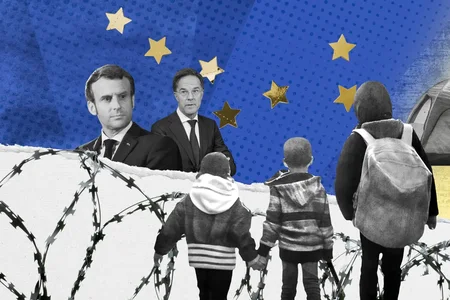
Once again, Schengen is dying before everyone's eyes. A borderless Europe, which, along with the single currency, is among the few dreams of the common project that have become reality, is collapsing amid widespread lack of interest and the Commission's silence.
On Monday, Poland reintroduced border controls with Germany, which had already done so unilaterally in May. They join a long list of countries that have announced or announced them: Belgium, Slovenia, Italy, Austria, the Netherlands, Denmark, Norway, Sweden, France and Bulgaria. The official reason: security and strong migratory pressures. The real reason: domestic politics, with governments pursuing extremist populism for fear of losing the next elections. The result: huge damage to the economy and exclusion as a rule; Schengen is no longer the area of freedom we were promised.
More ruins, von der Leyen is causing herself. On her agenda is an important deadline, that of July 16, when she will have to present the multiannual budget for the seven-year period 2028-2034. But the document under preparation is very controversial: 2/3 of the European Parliament, 14 governments and even some European commissioners, including Italian Vice-President Raffaele Fitto, oppose the president's proposal, which would mean the reduction and de facto renationalization of cohesion spending and not only, in the name of new priorities such as defense and competitiveness.
The problem is that, instead of showing political courage, proposing an increase in resources and a more ambitious budget, von der Leyen has chosen not to ask for additional funds, limiting herself to overturning the rules of governance: "where is the Draghi report, where are the capital markets and sanctions against platforms?", asked the leader of Renew, Valérie Hayer, in the hall on Monday.
On the budget, it is the first time since the start of her second term that von der Leyen has seen her commissioners worried: it is a signal that her model of centralized and personal management is causing a crisis of rejection. And it is essentially the same message that comes from the early resignation of Elisabetta Belloni as foreign policy adviser, tired of being kept away from the impenetrable core of the decision-making process, composed of just two people: von der Leyen and her powerful chief of staff Bjoern Seibert.
The Commission President will probably take the confidence vote tomorrow, even if it will be interesting to see the figures. But, like the Trümmerfrauen of the myth, she will have to work hard to remove the rubble of Europe on which she sits. Unlike her compatriots of the time, it is not certain that she will succeed. /Adapted from Pamphlet from Corriere/





Lini një Përgjigje