


 Shkruar nga Pamfleti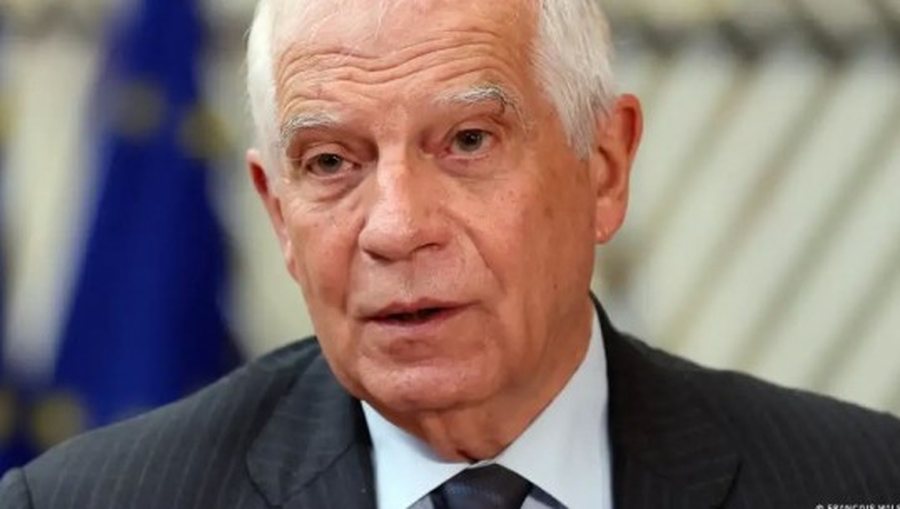
To achieve peace in the Middle East, the EU remains committed to the "two-state" solution in the long term, despite the current war between Hamas and Israel. With this solution, the EU has in mind the state of Israel on one side and the Palestinian state on the other side on the borders, which were defined in thick lines more than 30 years ago in the so-called Oslo negotiations.
Josep Borrell, the EU's foreign policy chief at the meeting of the EU's foreign ministers on Monday (27.05. 2024) reminded once again that the EU really officially stands by the "two-state solution", but this solution is day by day it's getting harder and harder and we need to talk about it. The humanitarian crisis in the Gaza Strip is now a priority, the EU's top diplomat said, but "if we want a long-term political solution, we need to engage more."
The number of recognitions increases to 11
All EU member states recognize the state of Israel. Only 9 countries recognize the Palestinian territories. From Tuesday (28.05.) Spain and Ireland also recognize a Palestinian state, consisting of West Jordan, East Jerusalem and the Gaza Strip. However, there is no unified government in these regions. Hamas, which is categorized by the EU, USA, Germany and many countries as a terrorist organization, has ruled the Gaza Strip until now.
Malta and Slovenia have announced that they want to recognize Palestine as a state, as soon as the moment is right. Belgium decided that it will not recognize the Palestinian territories as a state at a later date, announced the Foreign Minister, Lahbib. Most other EU member states, as well as Great Britain and the US, do not recognize the Palestinian state. Eastern EU member countries, from Poland to Bulgaria, have recognized Palestine as a state since the late 80s, when they were part of the Eastern bloc, which was on the pro-Palestinian side. Even the GDR had recognized Palestine as a state with full rights. With the end of the German Democratic Republic on October 3, 1990 and the merger with the Federal Republic, this recognition was extinguished.
Germany, France, Italy are waiting
Most of the EU countries, including Germany, want to recognize a Palestinian state, when peace reigns and when Israel takes this step. A step that seems increasingly impossible. Prime Minister Benjamin Netanyahu's government has been rejecting a two-state solution since before the current war against Hamas. The terrorist group Hamas, for its part, completely rejects the state of Israel and has declared its goal to destroy the Jewish state.
"We support the creation of a Palestinian state, but the Palestinian state must recognize Israel and be recognized by Israel. There certainly cannot be a Palestinian state run by Hamas, which is a terrorist organization," said Italian Foreign Minister Antonio Tajani, which currently leads the group of the seven most industrialized countries, the G7.
The EU Foreign Ministers were of the same opinion at the meeting in Brussels, that before the serious commitment to the two-state solution can begin, the bloody conflict between Hamas and Israel must end. German Foreign Minister Annalena Baerbock again called for a humanitarian cessation of hostilities in Gaza, "to end the suffering of the hostages taken, to end the suffering of the people in Gaza." Following the Hamas terrorist attack against Israel, during which Hamas killed 1,200 people and took 250 hostages, the Israeli army began a much-expanded military operation to destroy Hamas positions in the Gaza Strip.
Ignoring a court order - what does this mean?
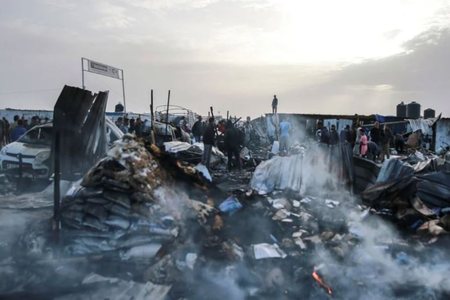
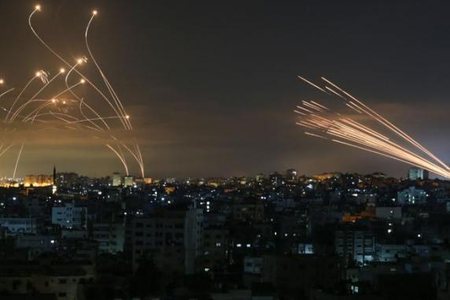
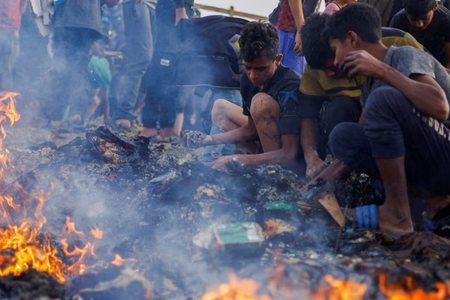
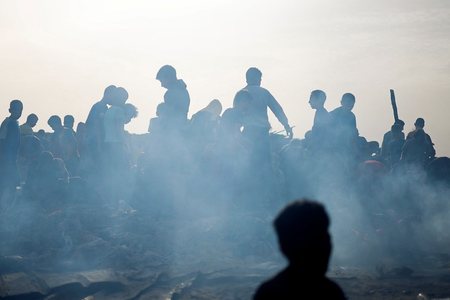
But a cessation of hostilities is still far off. Hamas has again fired rockets from the Gaza Strip at Tel Aviv. The Israeli army bombed in Rafah where a refugee camp was also hit, resulting in the death of 35 people according to Palestinian data. "Both sides are not respecting the guidelines of the International Court of Justice," said the EU's foreign policy chief, Borrell. "This is a real dilemma. What can the international community do to ensure that the decisions of the International Court of Justice are implemented?" With this question, Borrell addressed the EU Foreign Ministers. The International Court of Justice in The Hague on Friday, at the request of South Africa, asked Israel to immediately stop the military operation in Rafah and allow more humanitarian aid.
EU Foreign Minister Baerbock speaks for many member states when she says. "The interim measures of the International Court of Justice are mandatory, and must of course be implemented. We are seeing the opposite. There have been other rocket strikes by Hamas. At the same time, we see that it does not bring any kind of benefit to security of Israel, when none of the hostages are released, and when people are burned in tents."
Baerbock was referring to Israel's attack on Rafah on Sunday, which also hit a refugee camp. The Israeli Prosecutor's Office is now examining the case. "International law applies to everyone. This also applies to Israeli fighting," Baerbock said. Italian Foreign Minister Tajani recalled that Hamas also violates international law, hiding its positions among the civilian population. Hamas instrumentalizes people in Rafah. "Israel must be pulled into a media trap."
"No anti-Semitism of the chief prosecutor"
The EU's foreign policy chief, Josep Borrell, criticized the Israeli government. The announcement that the instructions of the International Court will not be respected at all is not accepted, he said. Borrell demanded that not only the International Court of Justice of the United Nations, which is responsible for states, but also the International Court of Justice, which is responsible for particular persons, be treated with respect.
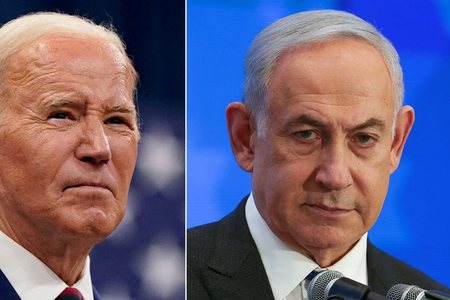
The Chief Prosecutor of the International Court of Justice in The Hague, among other things, has applied for an arrest warrant against the Israeli Prime Minister, Benjamin Netanyahu, on suspicion of war crimes. "We should let the court decide, without insult, what it thinks about the chief prosecutor's request. Unfortunately, this is not the case. The chief prosecutor is accused of anti-Semitism, which always happens, when there is something that the government of Nentanjah does not like. The accusation of anti-Semitism against the prosecutor here cannot be accepted at all," Borrell said./ DW


Lini një Përgjigje