


 Shkruar nga Pamfleti
The second phase of Israeli attacks on the Gaza Strip, the one after the 7-day ceasefire, is as brutal as the first. Planes hit four hundred targets in the 24 hours after the war resumed, the IDF says, and the Palestinian death toll on the ground has reached over fifteen thousand, according to data from the Gaza Ministry of Health.
The bombs also hit the al Shujayea neighborhood, east of Gaza City, and according to local witnesses and according to videos that arrived, they caused the collapse of dozens of buildings. The IDF claims to have killed the leader of Hamas in the area, Wessam Ferhat, who participated in the October 7 attack.
Three streets in a particularly dense area of houses and people appear to have disappeared under the rubble, and Hamas claims that three hundred civilians were killed (this figure has yet to be confirmed, unlike general data from the Gaza Ministry of Health). The deputy of the Hamas political office, Saleh al-Arouri, says that "until the massacres in Gaza stop there will be no more negotiations" for the release of the 137 hostages (the Israelis are 126), still in the hands of the Palestinian group.
Prime Minister Netanyahu ordered Mossad director David Barnea to withdraw the Israeli negotiating team from Doha, where they were engaged in negotiations with the Americans, Egyptians and Qatar, and indirectly with Hamas. At the press conference, he said that the Israeli 'military operation' inside Gaza will go all the way until it achieves its objectives, which are to rescue the hostages and eliminate Hamas from the Strip.
In this context the order given to leave the negotiators is a signal of opposition sent to the Palestinian group, as if to force Hamas to admit that it needs to negotiate more than its Israeli counterpart. Qatar's negotiating delegation remained in Israel, hoping to resume contacts.
Israel demands the return of all women and children, Hamas refuses to return women under 45 because it considers them reservists and therefore potential soldiers and this was the reason for the failure of the first ceasefire. The military is the category of hostages Hamas wants to hold last and wants to pay the most in terms of Palestinian prisoners. He would like "all for all," the emptying of Israeli prisons, an old promise made years ago by Hamas leader Yahia Sinwar.
French President Emmanuel Macron landed in Qatar from Dubai, where he was attending the United Nations Climate Change Conference, to help negotiate a new, more durable ceasefire, but it is unclear how much he might actually contribute.
"Israel will not be able to feel safe if it continues to kill Palestinian civilians ," he told reporters.
US Vice President Kamala Harris also spoke in Dubai and said: “Frankly, the amount of civilian suffering and the images and videos coming out of Gaza are devastating, we must accelerate efforts to build lasting peace. The United States wants to see a unified territory of Gaza and the West Bank under the Palestinian National Authority, which must be strengthened to take responsibility for security within Gaza."
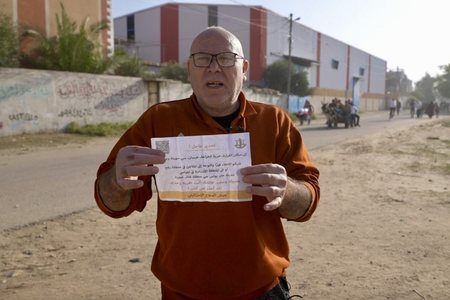
In order to limit the killing of civilians, the Israeli army has divided the territory of the Strip into hundreds of small parts and before the bombing signals to all the inhabitants which lands will be bombed and therefore from which parts they should flee. Sectors to be bombed on the map, which is also distributed online and can be read by "QR code", are orange and safe ones are grey. Does this mean that an attempt was made to protect civilians?
Will it work among Palestinians who have reached the fifty-seventh day of bombing, who do not know where to go and are forced to constantly update the communications of the group's numbers? Is this a military tactic that will achieve results, given that even Hamas men see IDF communications and therefore move in advance? The belt these days is also the site of a massive test that affects the lives of hundreds of thousands of people./ La Repubblica



Lini një Përgjigje