


 Shkruar nga Andreas Kluth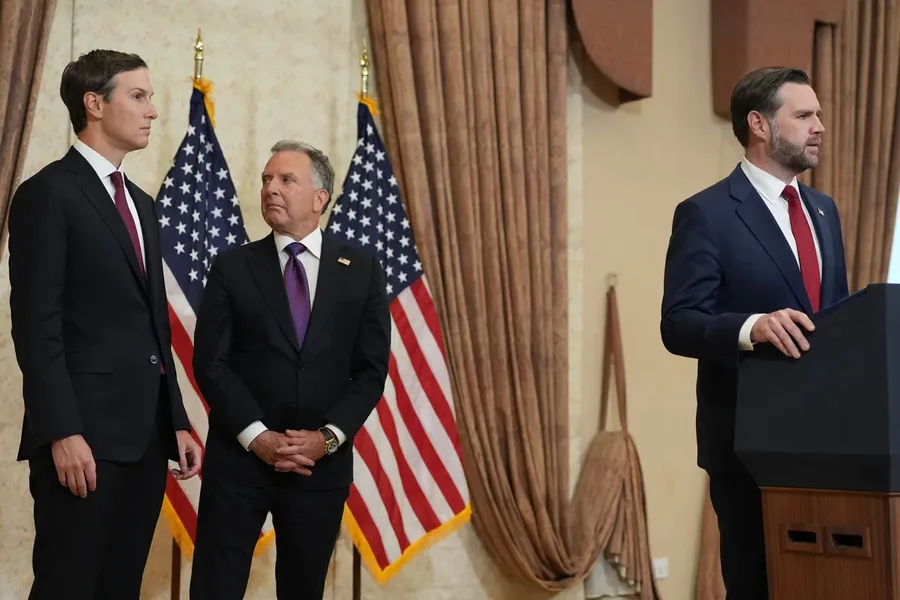
By appointing trusted but inexperienced people, the administration is undermining decades of professionalism in foreign policy. This approach has created a chaotic process, where the president's unclear strategy is seriously undermining the US's leading role in world conflicts.
The negotiations between the United States and Iran in Islamabad were doomed to fail. That’s not to say that the next rounds, which could begin this week, are futile. But the American approach to diplomacy has sabotaged the talks so far for the same reasons that have hampered efforts to broker a ceasefire between Russia and Ukraine, or to turn the fragile ceasefire in the Gaza Strip into a lasting solution between Israelis and Palestinians.
The first reason is that in Donald Trump's second term, the US no longer relies on professional diplomats and experts, but on amateurs who may enjoy the president's trust, but who are completely outside their field.
The second reason is that Trump, as the master strategist, continues to give his negotiators objectives so implausible, confusing, or contradictory that even the most cunning diplomats in history - like Klemens von Metternich in the 19th century or Henry Kissinger in the 20th century - would fail.
In some cases, he even seems determined to deliberately lead his subordinates to failure. This would also explain why he suddenly put his vice president, JD Vance, in charge of the negotiations with Iran.
Amateurism is a problem in itself, and it is part of Trump's all-out assault on professionalism throughout government. Since the start of his second term, officials who in a normal administration would play key roles in diplomacy have been relegated to secondary roles, while the president's friends and family members have taken over the running of affairs.
A typical example is Marco Rubio. He holds the positions of Secretary of State and National Security Advisor (only Kissinger has held both positions simultaneously).
But while Rubio has shown an impressive talent for political survival and is listened to by the president on issues like Venezuela and Cuba, he has remained on the sidelines when it comes to three major conflicts: Ukraine, Gaza and Iran.
On these issues, the unofficial title of “chief diplomat” belongs to “special envoy” Steve Witkoff. He is a New York real estate mogul, a longtime friend of Trump, but with no diplomatic experience or credentials before this administration.
Dhe kjo vërehet shumë qartë. Për shembull, Witkoff e kaloi pjesën më të madhe të vitit të kaluar duke udhëtuar drejt Moskës për të folur me kontaktet e tij ruse dhe me presidentin Vladimir Putin, ndërsa çuditërisht “harroi” të vizitonte Kievin.
Kur ishte në Rusi, ai anashkalonte ambasatën amerikane dhe ekspertët e saj, madje ndonjëherë nuk përdorte as përkthyes amerikanë, duke u mbështetur te interpretimi i Kremlinit.
Ai bëri bujë për keq pas një interviste me Tucker Carlson, ku përsëriti pikat e propagandës së Putinit pothuajse fjalë për fjalë, duke mos e kuptuar se Rusia ishte agresori dhe Ukraina viktima. Presidenti e ka bashkuar Witkoff-in me dhëndrin e tij, Jared Kushner.
Ndonëse Kushner ndihmoi në ndërmjetësimin e “Marrëveshjeve të Abrahamit” në mandatin e parë, ai kishte planifikuar që në mandatin e dytë të fokusohej te fondet e tij të investimeve. Por Trump-i kishte ide të tjera, dhe tashmë Kushner e Witkoff po fluturojnë nga njëra negociatë te tjetra, mes Ukrainës, Gazës dhe Iranit. Ata ishin ende në bisedime me emisarët e Teheranit qershorin e vitit të kaluar, kur Trump-i nisi papritur bombardimet atje, dhe sërish në shkurt kur ai nisi luftën.
Në momente të ndryshme, Witkoff dhe Kushner nuk duhej se e kuptonin çfarë po ofronte pala iraniane, sepse u mungonte ekspertiza mbi detajet teknike të fizikës bërthamore e të ngjashme. Në Gazë kanë qenë disi më të suksesshëm, duke siguruar një armëpushim të brishtë.
Por më pas e trumbetuan aq shumë atë hap të vogël si “rilindjen” e Gazës dhe rajonit, sikur po shisnin një projekt luksoz në sektorin imobiliar. “Bordi i Paqes” që supozohej të menaxhonte rindërtimin - pa përfshirë asnjë palestinez - duket se është shpërndarë, i zënë me çështje të tjera, jo më pak me vanitetin e vetë Trump-it.
Veteranët e diplomacisë tradicionale, si Aaron David Miller dhe Daniel Kurtzer, i vlerësojnë Witkoff dhe Kushner me notën mbetëse “F” dhe e konsiderojnë si një “lëmsh të vërtetë” procesin diplomatik të administratës.
Megjithatë, faji nuk mund t’u lihet vetëm atyre që ekzekutojnë strategjinë. Pyetja më e madhe është nëse kjo strategji është realiste dhe koherente. Përgjigjja është “jo”, dhe ky është faji i presidentit.
Si mundet kushdo, qoftë edhe një Metternich modern, të negociojë fundin e luftës në Ukrainë, kur komandanti i përgjithshëm amerikan ushtron më shumë presion mbi vendin e pushtuar sesa mbi pushtuesin?
Dhe çfarë mund të bënte qoftë edhe një Kissinger në konfliktin izraelito-palestinez, kur Trumpi i bindet verbërisht kryeministrit Benjamin Netanyahu, në vend që të frenojë dhunën e kolonëve izraelitë në Bregun Perëndimor?
Kur nisi “operacionin ushtarak” kundër Iranit (një jehonë ogurzeze e “operacionit special” të Putinit në Ukrainë), Trumpi duket se u ndikua tej mase nga Netanyahu, duke injoruar kundërshtitë e ndrojtura të këshilltarëve të tij.
The most vocal opponent was Vance, who has consistently opposed military adventures abroad. If this war turns into a disaster, Vance could be seen as short-sighted, and that doesn't sit well with the boss.
So Witkoff and Kushner were sent to Islamabad as part of a delegation now led by the vice president. Engaged in marathon 21-hour talks with their Iranian counterparts, the American trio had to maneuver between conflicting ideas.
They had to stick to Trump’s line that the US had already won, even though the Iranians believe they are stronger than before. They also had to bargain over Iran’s nuclear program, trying to avoid any impression that they were negotiating anything like the Obama-era deal that Trump had abandoned in disdain.
At a luncheon before the talks, Trump joked to an audience that included Vance. He said he wants a deal, "but if it doesn't happen, I'll blame JD Vance; if it does, I'll take all the credit..."
Trump may be a very good tactician in the political game of “me first.” But he is a miserable strategist in the infinitely larger game of “America First” geopolitics./ Adapted from “Bloomberg” by “Pamphlet”.


Lini një Përgjigje